
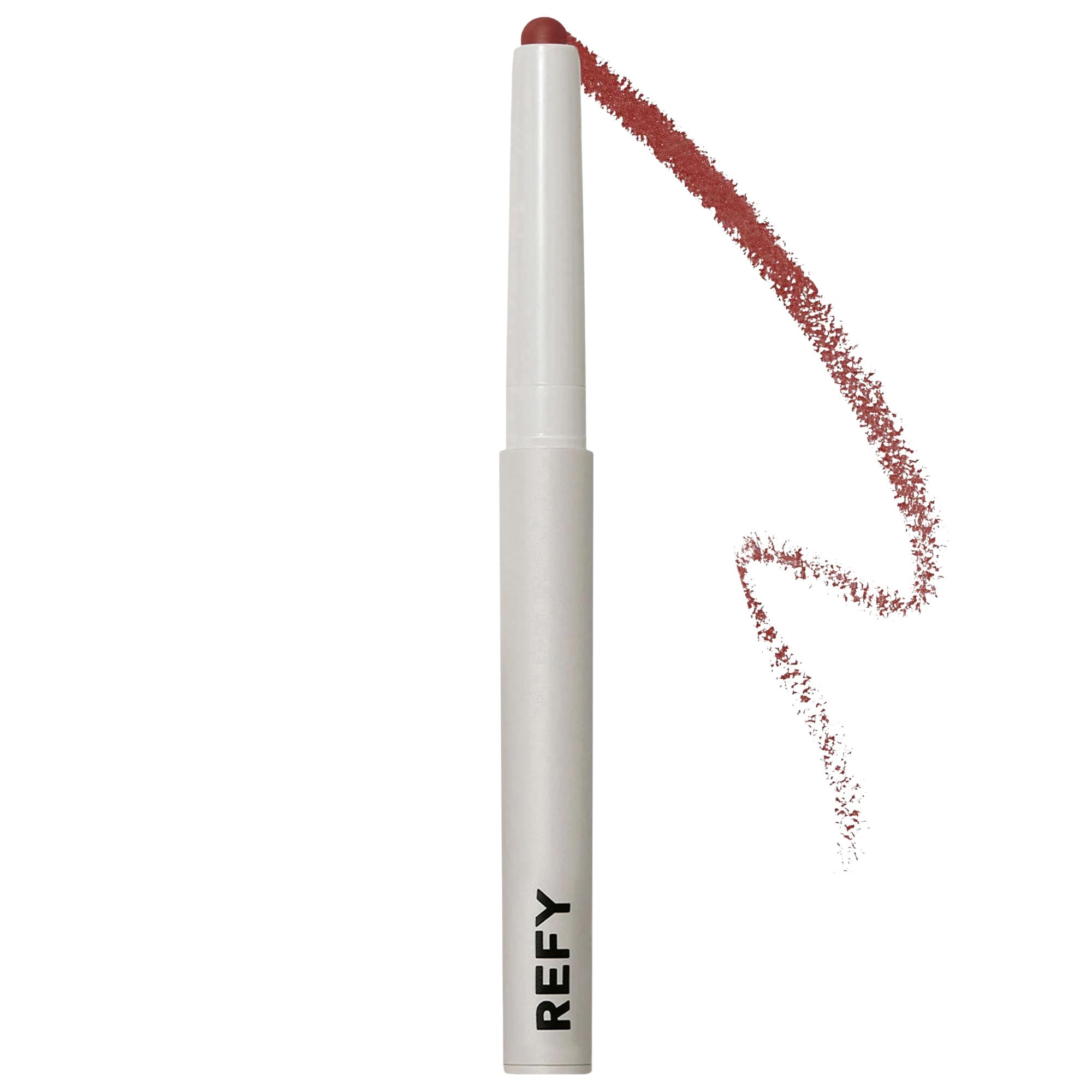

At a glance
Summary
The REFY Lip Blur Lip Liner contains a mix of synthetic ingredients, including dimethicone and PEG compounds, which are common in cosmetics but can be concerning due to potential skin irritation and environmental impact. However, it also includes beneficial components like iron oxides and titanium dioxide, which are generally considered safe for use in cosmetics. The presence of synthetic wax and other polymers suggests a moderate level of processing, which affects the overall score.
Key ingredients 19
PolymethylsilsesquioxaneNeutral
Polymethylsilsesquioxane is a silicone used for its film-forming properties, providing a smooth application. It is generally considered safe for use in cosmetics.
Risks
There are minimal risks associated with this ingredient, primarily related to potential skin sensitivity in rare cases.
Benefits
It enhances the texture and longevity of the product, providing a silky feel.
Synthetic WaxNeutral
Synthetic wax is used to provide structure and stability to cosmetic formulations. It is a common ingredient in lip products.
Risks
There are no significant risks associated with synthetic wax, though it may not be as environmentally friendly as natural alternatives.
Benefits
It helps in maintaining the shape and consistency of the product.
Phenyl TrimethiconeNeutral
Phenyl Trimethicone is a silicone that provides a glossy finish and improves spreadability. It is widely used in cosmetics for its conditioning properties.
Risks
Potential risks include skin irritation for sensitive individuals, though it is generally considered safe.
Benefits
It enhances the shine and smoothness of the product.
Caprylic/Capric TriglycerideNeutral
Caprylic/Capric Triglyceride is derived from coconut oil and glycerin, used for its emollient properties. It is a common ingredient in cosmetics.
Risks
There are minimal risks, though it may cause irritation in very sensitive skin.
Benefits
It helps to moisturize and soften the skin.
Polyglyceryl-2 TriisostearateNeutral
Polyglyceryl-2 Triisostearate is an emulsifier that helps blend oil and water-based ingredients. It is considered safe for use in cosmetics.
Risks
There are no significant risks associated with this ingredient.
Benefits
It improves the stability and consistency of the product.
Bis-Behenyl/Isostearyl/Phytosteryl Dimer Dilinoleyl Dimer DilinoleateNeutral
This complex ester is used for its emollient and conditioning properties. It is a synthetic ingredient commonly used in lip products.
Risks
There are minimal risks, primarily related to potential skin sensitivity.
Benefits
It provides a smooth application and enhances the moisturizing effect.
Isononyl IsononanoateNeutral
Isononyl Isononanoate is an emollient that provides a silky feel and enhances spreadability. It is widely used in cosmetics.
Risks
There are minimal risks, though it may cause irritation in sensitive individuals.
Benefits
It improves the texture and feel of the product on the skin.
Vinyl Dimethicone/Methicone Silsesquioxane CrosspolymerNeutral
This crosspolymer is used for its film-forming and texture-enhancing properties. It is a common ingredient in cosmetics.
Risks
There are minimal risks, primarily related to potential skin sensitivity.
Benefits
It provides a smooth, even application and enhances product longevity.
Cetyl PEG/PPG-10/1 DimethiconeNeutral
Cetyl PEG/PPG-10/1 Dimethicone is a silicone-based surfactant used for its emulsifying properties. It is considered safe for use in cosmetics.
Risks
There are minimal risks, though it may cause irritation in sensitive skin.
Benefits
It helps to stabilize the formulation and improve texture.
Diisostearyl MalateNeutral
Diisostearyl Malate is an emollient that provides a smooth, glossy finish. It is commonly used in lip products for its conditioning properties.
Risks
There are minimal risks, primarily related to potential skin sensitivity.
Benefits
It enhances the texture and moisturizing effect of the product.
Iron Oxides (CI 77491, CI 77492, CI 77499)Neutral
Iron oxides are pigments used to provide color in cosmetics. They are considered safe and are widely used in makeup products.
Risks
There are minimal risks, though contamination with heavy metals is a concern if not properly purified.
Benefits
They provide natural, stable color to the product.
Zinc StearateNeutral
Zinc Stearate is used as a lubricant and thickening agent in cosmetics. It is considered safe for use in personal care products.
Risks
There are minimal risks, primarily related to potential skin sensitivity.
Benefits
It helps to improve the texture and consistency of the product.
Silica SilylateNeutral
Silica Silylate is used for its thickening and mattifying properties. It is a common ingredient in cosmetics.
Risks
There are minimal risks, though inhalation of fine particles can be a concern.
Benefits
It provides a matte finish and improves product stability.
Titanium Dioxide (CI 77891)Neutral
Titanium Dioxide is used as a pigment and UV filter in cosmetics. It is considered safe and is widely used in makeup products.
Risks
There are minimal risks, though inhalation of fine particles can be a concern.
Benefits
It provides opacity and sun protection to the product.
Red 7 Lake (CI 15850)Neutral
Red 7 Lake is a synthetic dye used to provide color in cosmetics. It is considered safe for use in lip products.
Risks
There are minimal risks, primarily related to potential skin sensitivity.
Benefits
It provides vibrant color to the product.
Polyglyceryl-2 DiisostearateNeutral
Polyglyceryl-2 Diisostearate is an emulsifier that helps blend oil and water-based ingredients. It is considered safe for use in cosmetics.
Risks
There are no significant risks associated with this ingredient.
Benefits
It improves the stability and consistency of the product.
Pentaerythrityl Tetra-Di-T-Butyl HydroxyhydrocinnamateNeutral
This ingredient is an antioxidant used to stabilize formulations and prevent oxidation. It is considered safe for use in cosmetics.
Risks
There are minimal risks, primarily related to potential skin sensitivity.
Benefits
It helps to extend the shelf life of the product by preventing degradation.
DimethiconeBad
Occlusive silicone film-former — flagged under clean-beauty doctrine.
Risks
While generally safe, it can cause build-up on the skin, potentially leading to clogged pores.
Benefits
It provides a protective barrier and improves the texture of the product.
Dimethicone/Vinyl Dimethicone CrosspolymerBad
Processed additive flagged under Scout's ingredient doctrine.
Risks
There are minimal risks, primarily related to potential skin sensitivity.
Benefits
It provides a smooth, even application and enhances product longevity.
Get the full breakdown in the Scout appTake Scout shopping
Scan any product to see lab results, healthy alternatives, and your personalized analysis.
Download on theApp Store GET IT ONGoogle Play