
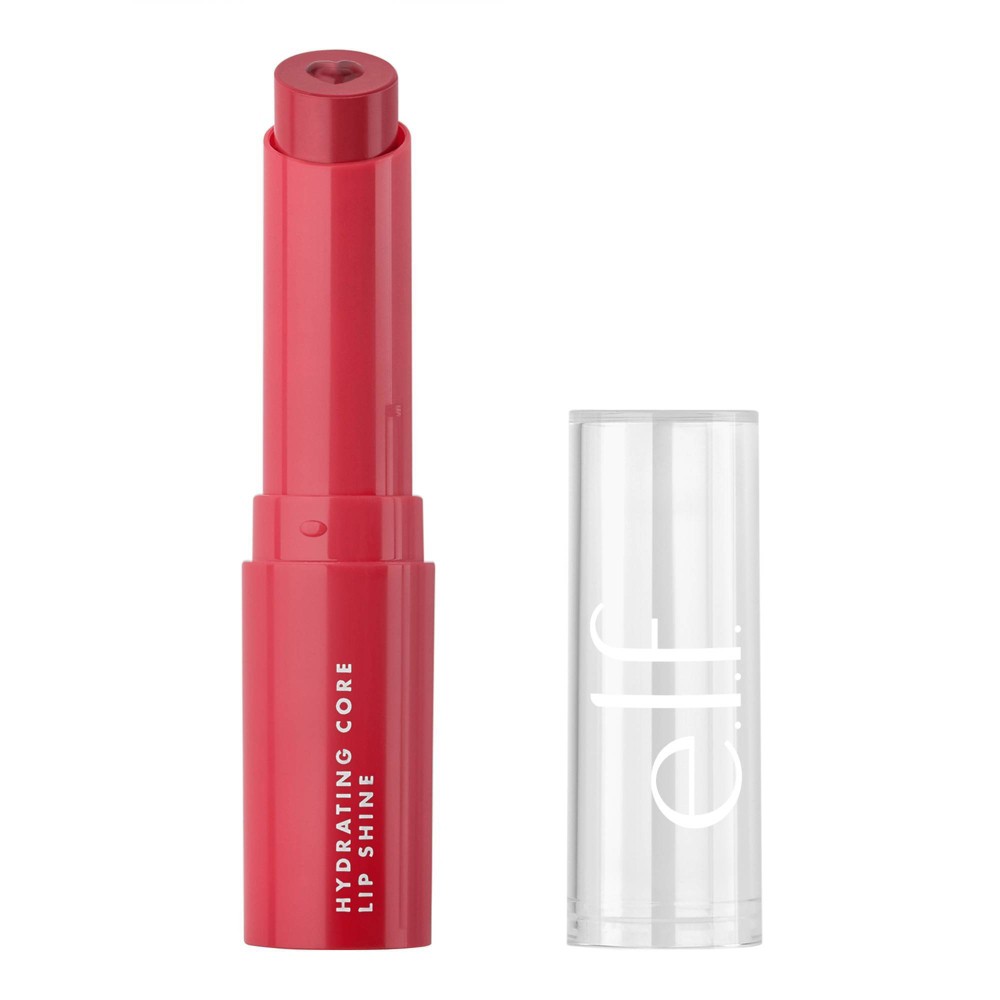


e.l.f. Hydrating Core Lip Shine Makeup - Lovely - 0.09oz: Paraben-Free, Vegan, High Shine
Analysis updated July 2026 · How Scout scores
At a glance
Summary
This lip shine product contains beneficial ingredients like glycerin and squalane, which provide moisturizing and emollient properties. However, the presence of polyethylene terephthalate, a type of plastic, raises environmental concerns due to its potential contribution to microplastic pollution. Additionally, the inclusion of synthetic colorants and acrylates copolymer indicates a moderate level of processing, which affects the overall score.
Key ingredients 20
SqualaneVery Good
Squalane is a highly effective emollient and natural antioxidant. It is known for its moisturizing properties and ability to mimic skin's natural oils. It is non-irritating and suitable for all skin types.
Risks
Generally considered safe with minimal risk of irritation.
Benefits
Provides deep hydration and helps maintain skin's moisture barrier.
GlycerinGood
Glycerin is a humectant that attracts moisture to the skin. It is widely used in skincare for its hydrating properties. It helps maintain skin's moisture balance.
Risks
Generally considered safe with minimal risk of irritation.
Benefits
Helps keep the skin hydrated and soft.
MicaGood
Beneficial ingredient — whole-food or functional value in this product class.
Risks
Potential for contamination with heavy metals if not properly purified.
Benefits
Enhances the visual appeal of cosmetic products with a shimmering effect.
Water (Aqua)Neutral
Water is a common solvent used in cosmetics to dissolve other ingredients. It helps in the application and absorption of the product. It is generally considered safe and non-irritating.
Risks
There are no significant risks associated with water in cosmetics.
Benefits
Water helps in hydrating the skin and improving the texture of the product.
Synthetic FluorphlogopiteNeutral
Synthetic Fluorphlogopite is a synthetic mica used for its shimmering effect. It is considered a safer alternative to natural mica. It is used to add shine and color to cosmetics.
Risks
Minimal risk of irritation; generally considered safe.
Benefits
Provides a shimmering effect and enhances the appearance of the product.
Polybutylene TerephthalateNeutral
Polybutylene Terephthalate is a synthetic polymer used for its film-forming properties. It helps in providing a smooth texture to the product. It is generally considered safe for use in cosmetics.
Risks
Environmental concerns due to its synthetic nature.
Benefits
Contributes to the smooth application and finish of the product.
Hydroxyethyl Acrylate/Sodium Acryloyldimethyl Taurate CopolymerNeutral
This copolymer is used as a thickening agent in cosmetics. It helps in stabilizing emulsions and improving product texture. It is generally considered safe for use in cosmetics.
Risks
Minimal risk of irritation; generally considered safe.
Benefits
Improves the texture and stability of cosmetic formulations.
1,2-HexanediolNeutral
1,2-Hexanediol is a synthetic preservative and moisture-binding agent. It helps in preventing microbial growth in cosmetics. It is generally considered safe for use in cosmetics.
Risks
Minimal risk of irritation; generally considered safe.
Benefits
Helps in preserving the product and maintaining its efficacy.
Sorbitan IsostearateNeutral
Sorbitan Isostearate is an emulsifier used in cosmetics. It helps in stabilizing formulations and improving texture. It is generally considered safe for use in cosmetics.
Risks
Minimal risk of irritation; generally considered safe.
Benefits
Enhances the texture and stability of cosmetic formulations.
Caprylyl GlycolNeutral
Caprylyl Glycol is a skin-conditioning agent and preservative. It helps in moisturizing the skin and enhancing product stability. It is generally considered safe for use in cosmetics.
Risks
Minimal risk of irritation; generally considered safe.
Benefits
Provides moisturizing benefits and helps preserve the product.
Tin OxideNeutral
Tin Oxide is used as an opacifying agent in cosmetics. It helps in providing a pearlescent effect. It is generally considered safe for use in cosmetics.
Risks
Minimal risk of irritation; generally considered safe.
Benefits
Enhances the visual appeal of cosmetic products with a pearlescent effect.
AluminumNeutral
Aluminum is used in cosmetics for its pigment properties. It helps in providing color and opacity. It is generally considered safe for use in cosmetics.
Risks
Concerns about aluminum exposure are more relevant to deodorants and antiperspirants.
Benefits
Provides color and opacity to cosmetic formulations.
Titanium Dioxide (CI 77891)Neutral
Titanium Dioxide is used as a pigment and UV filter in cosmetics. It provides opacity and sun protection. It is generally considered safe for use in cosmetics.
Risks
Inhalation of fine particles can be a concern in powder form.
Benefits
Provides sun protection and enhances product opacity.
Red Iron Oxide (CI 77491)Neutral
Red Iron Oxide is a pigment used for coloring cosmetics. It provides a red hue and is commonly used in makeup. It is generally considered safe for use in cosmetics.
Risks
Minimal risk of irritation; generally considered safe.
Benefits
Provides color to cosmetic products.
Red 40 Lake (CI 16035)Neutral
Red 40 Lake is a synthetic dye used for coloring cosmetics. It provides a vibrant red color. It is approved for use in cosmetics by regulatory agencies.
Risks
Potential for allergic reactions in sensitive individuals.
Benefits
Provides vibrant color to cosmetic products.
Yellow 5 Lake (CI 19140)Neutral
Yellow 5 Lake is a synthetic dye used for coloring cosmetics. It provides a yellow hue and is commonly used in makeup. It is approved for use in cosmetics by regulatory agencies.
Risks
Potential for allergic reactions in sensitive individuals.
Benefits
Provides color to cosmetic products.
Polyethylene TerephthalateBad
Polyethylene Terephthalate is a type of plastic used for its film-forming properties. It can contribute to microplastic pollution. Its use in cosmetics is controversial due to environmental concerns.
Risks
Potential environmental impact due to microplastic pollution.
Benefits
Provides a smooth, glossy finish to cosmetic products.
Acrylates CopolymerBad
Processed additive flagged under Scout's ingredient doctrine.
Risks
Minimal risk of irritation; generally considered safe.
Benefits
Contributes to the smooth application and long-lasting finish of the product.
Polysorbate 60Bad
Processed additive flagged under Scout's ingredient doctrine.
Risks
Minimal risk of irritation; generally considered safe.
Benefits
Improves the stability and consistency of cosmetic products.
PhenoxyethanolBad
Processed additive flagged under Scout's ingredient doctrine.
Risks
Potential for skin irritation in sensitive individuals.
Benefits
Helps in preserving the product and extending its shelf life.
Get the full breakdown in the Scout appTake Scout shopping
Scan any product to see lab results, healthy alternatives, and your personalized analysis.
Download on theApp Store GET IT ONGoogle PlayAmazon pricing & content
Amazon price as of . Product prices and availability are accurate as of the date/time indicated and are subject to change. Any price and availability information displayed on Amazon.com at the time of purchase will apply to the purchase of this product.
CERTAIN CONTENT THAT APPEARS ON THIS SITE COMES FROM AMAZON. THIS CONTENT IS PROVIDED “AS IS” AND IS SUBJECT TO CHANGE OR REMOVAL AT ANY TIME.