
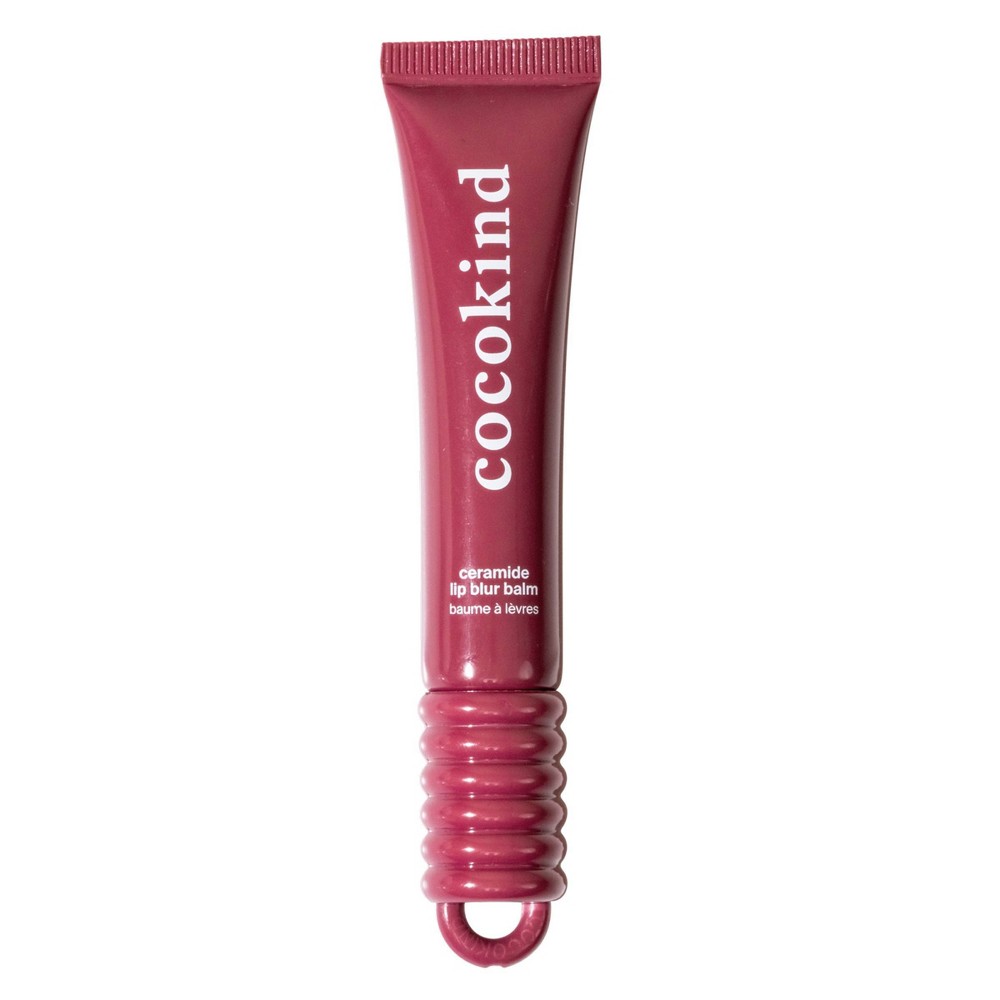



cocokind Ceramide Lip Blur Balm - Be Bold - 0.37 fl oz
Analysis updated August 2026 · How Scout scores
At a glance
Summary
This lip balm contains beneficial ingredients such as castor seed oil, ceramides, and cranberry seed oil, which provide moisturizing and protective benefits. However, the presence of synthetic colorants like Red 7 Lake and Blue 1 Lake, along with a processed formulation, slightly lowers its overall score. The product is mostly safe but includes some synthetic components that prevent it from achieving a higher rating.
Key ingredients 23
caprylic/capric triglycerideVery Good
Caprylic/capric triglyceride is derived from coconut oil and glycerin, used as an emollient and skin-repairing ingredient. It is lightweight and non-greasy, making it ideal for moisturizing. It is well-tolerated by most skin types.
Risks
There are minimal risks associated with this ingredient, as it is generally non-irritating.
Benefits
It provides excellent skin conditioning and helps to replenish the skin's surface.
ricinus communis (castor) seed oilVery Good
Castor seed oil is a natural oil known for its moisturizing properties. It is rich in fatty acids that are beneficial for skin health. It is widely used in lip care products for its ability to lock in moisture.
Risks
There is a minimal risk of allergic reactions, though it is uncommon.
Benefits
It deeply moisturizes and conditions the lips, helping to prevent dryness and chapping.
ceramide apVery Good
Ceramide AP is another type of ceramide that supports the skin's barrier function. It helps to lock in moisture and protect the skin from external aggressors. It is beneficial for maintaining healthy skin.
Risks
There are minimal risks, as ceramides are naturally occurring in the skin.
Benefits
It enhances the skin's natural barrier and improves hydration, making it ideal for dry skin.
tocopherolVery Good
Tocopherol, or Vitamin E, is a powerful antioxidant that helps to protect the skin from free radical damage. It is widely used in skincare for its moisturizing and protective properties. It is well-tolerated by most skin types.
Risks
There are minimal risks, as tocopherol is generally non-irritating.
Benefits
It provides antioxidant protection and helps to maintain skin hydration.
vaccinium macrocarpon (cranberry) seed oilVery Good
Cranberry seed oil is rich in antioxidants and essential fatty acids, making it beneficial for skin health. It helps to nourish and protect the skin. It is well-tolerated and provides moisturizing benefits.
Risks
There is a minimal risk of allergic reactions, though it is uncommon.
Benefits
It provides antioxidant protection and helps to improve skin hydration and texture.
helianthus annuus (sunflower) seed oilVery Good
Sunflower seed oil is a natural oil rich in essential fatty acids and Vitamin E. It is known for its moisturizing and skin-conditioning properties. It is widely used in skincare for its ability to improve skin health.
Risks
There are minimal risks, as it is generally non-irritating.
Benefits
It helps to moisturize and nourish the skin, improving its overall texture and appearance.
palmitoyl tripeptide-38Very Good
Palmitoyl tripeptide-38 is a peptide known for its anti-aging benefits. It helps to stimulate collagen production and improve skin elasticity. It is well-tolerated and effective in reducing the appearance of fine lines.
Risks
There are minimal risks, as peptides are generally safe for use in cosmetics.
Benefits
It helps to improve skin firmness and reduce the signs of aging.
glycerinGood
Glycerin is a humectant that attracts moisture to the skin, helping to keep it hydrated. It is a common ingredient in skincare due to its effectiveness and safety. It is well-tolerated by most skin types.
Risks
There are minimal risks, as glycerin is generally non-irritating.
Benefits
It helps to maintain skin hydration and improve the skin's barrier function.
ceramide npGood
Ceramide NP is a skin-identical ingredient that helps to restore the skin's natural barrier. It is crucial for maintaining skin hydration and protecting against environmental damage. It is highly beneficial for dry and sensitive skin.
Risks
There are minimal risks associated with ceramides, as they are naturally found in the skin.
Benefits
It strengthens the skin barrier and improves moisture retention, enhancing overall skin health.
portulaca pilosa extractGood
Portulaca pilosa extract is a botanical ingredient known for its soothing and anti-inflammatory properties. It is used in cosmetics for its ability to calm irritated skin. It is generally safe and well-tolerated.
Risks
There is a low risk of allergic reactions, though it is rare.
Benefits
It provides soothing benefits and helps to reduce redness and irritation.
polybuteneNeutral
Polybutene is a synthetic polymer used as a binder and film-forming agent in cosmetics. It is generally considered safe for use in cosmetics. It does not provide direct skin benefits but helps in product texture.
Risks
There are minimal risks associated with polybutene, primarily related to its synthetic nature.
Benefits
It helps in forming a smooth film on the lips, enhancing the product's application and wear.
ethylhexyl palmitateNeutral
Ethylhexyl palmitate is an ester of 2-ethylhexyl alcohol and palmitic acid, used as an emollient. It provides a smooth application and a non-greasy feel. It is generally considered safe for use in cosmetics.
Risks
There is a low risk of skin irritation, particularly for sensitive skin types.
Benefits
It helps to soften and smooth the skin, improving the texture of the product.
hydrogenated castor oilNeutral
Standard formulation ingredient — neither beneficial nor harmful at typical use.
Risks
There is a low risk of allergic reactions, though it is rare.
Benefits
It provides moisturizing benefits and helps to improve the consistency of the product.
cetearyl ethylhexanoateNeutral
Cetearyl ethylhexanoate is an ester used as an emollient and texture enhancer in cosmetics. It provides a smooth, silky feel to the product. It is generally considered safe for use in cosmetics.
Risks
There is a low risk of skin irritation, particularly for sensitive skin types.
Benefits
It helps to improve the texture and application of the product.
isostearyl isostearateNeutral
Isostearyl isostearate is an ester used as an emollient and skin-conditioning agent. It provides a smooth application and enhances the product's texture. It is generally considered safe for use in cosmetics.
Risks
There is a low risk of skin irritation, though it is uncommon.
Benefits
It helps to improve the product's texture and provides a non-greasy feel.
polyglyceryl-3 diisostearateNeutral
Polyglyceryl-3 diisostearate is an emulsifier used to stabilize formulations and improve texture. It is derived from natural sources and is generally considered safe. It does not provide direct skin benefits but aids in product formulation.
Risks
There are minimal risks associated with this ingredient.
Benefits
It helps to stabilize the product and improve its consistency.
polyglyceryl-3 polyricinoleateNeutral
Polyglyceryl-3 polyricinoleate is an emulsifier used to improve the texture and stability of cosmetic formulations. It is derived from natural sources and is generally considered safe. It does not provide direct skin benefits but aids in product formulation.
Risks
There are minimal risks associated with this ingredient.
Benefits
It helps to stabilize the product and improve its consistency.
sorbitan isostearateNeutral
Sorbitan isostearate is an emulsifier used to stabilize formulations and improve texture. It is derived from natural sources and is generally considered safe. It does not provide direct skin benefits but aids in product formulation.
Risks
There are minimal risks associated with this ingredient.
Benefits
It helps to stabilize the product and improve its consistency.
sucrose cocoateNeutral
Sucrose cocoate is an emulsifier and surfactant derived from sugar and coconut oil. It is used to improve the texture and stability of cosmetic formulations. It is generally considered safe for use in cosmetics.
Risks
There are minimal risks associated with this ingredient.
Benefits
It helps to stabilize the product and improve its consistency.
titanium dioxideNeutral
Titanium dioxide is a mineral used as a pigment and UV filter in cosmetics. It provides opacity and sun protection. It is generally considered safe for use in cosmetics, though concerns exist about inhalation in powder form.
Risks
Inhalation of titanium dioxide in powder form can pose respiratory risks.
Benefits
It provides UV protection and improves the opacity of the product.
iron oxides (ci 77491, 77492, 77499)Neutral
Iron oxides are pigments used to provide color in cosmetics. They are generally considered safe and non-irritating. They do not provide direct skin benefits but are essential for product coloration.
Risks
There are minimal risks associated with iron oxides.
Benefits
They provide natural coloration to the product.
red 7 lake (ci 15850)Neutral
Red 7 Lake is a synthetic pigment used to provide color in cosmetics. It is generally considered safe for use in cosmetics. It does not provide direct skin benefits but is essential for product coloration.
Risks
There are minimal risks associated with this pigment.
Benefits
It provides vibrant coloration to the product.
blue 1 lake (ci 42090)Neutral
Blue 1 Lake is a synthetic pigment used to provide color in cosmetics. It is generally considered safe for use in cosmetics. It does not provide direct skin benefits but is essential for product coloration.
Risks
There are minimal risks associated with this pigment.
Benefits
It provides vibrant coloration to the product.
Processing
Processed Foods
Get the full breakdown in the Scout appTake Scout shopping
Scan any product to see lab results, healthy alternatives, and your personalized analysis.
Download on theApp Store GET IT ONGoogle PlayAmazon pricing & content
Amazon price as of . Product prices and availability are accurate as of the date/time indicated and are subject to change. Any price and availability information displayed on Amazon.com at the time of purchase will apply to the purchase of this product.
CERTAIN CONTENT THAT APPEARS ON THIS SITE COMES FROM AMAZON. THIS CONTENT IS PROVIDED “AS IS” AND IS SUBJECT TO CHANGE OR REMOVAL AT ANY TIME.