
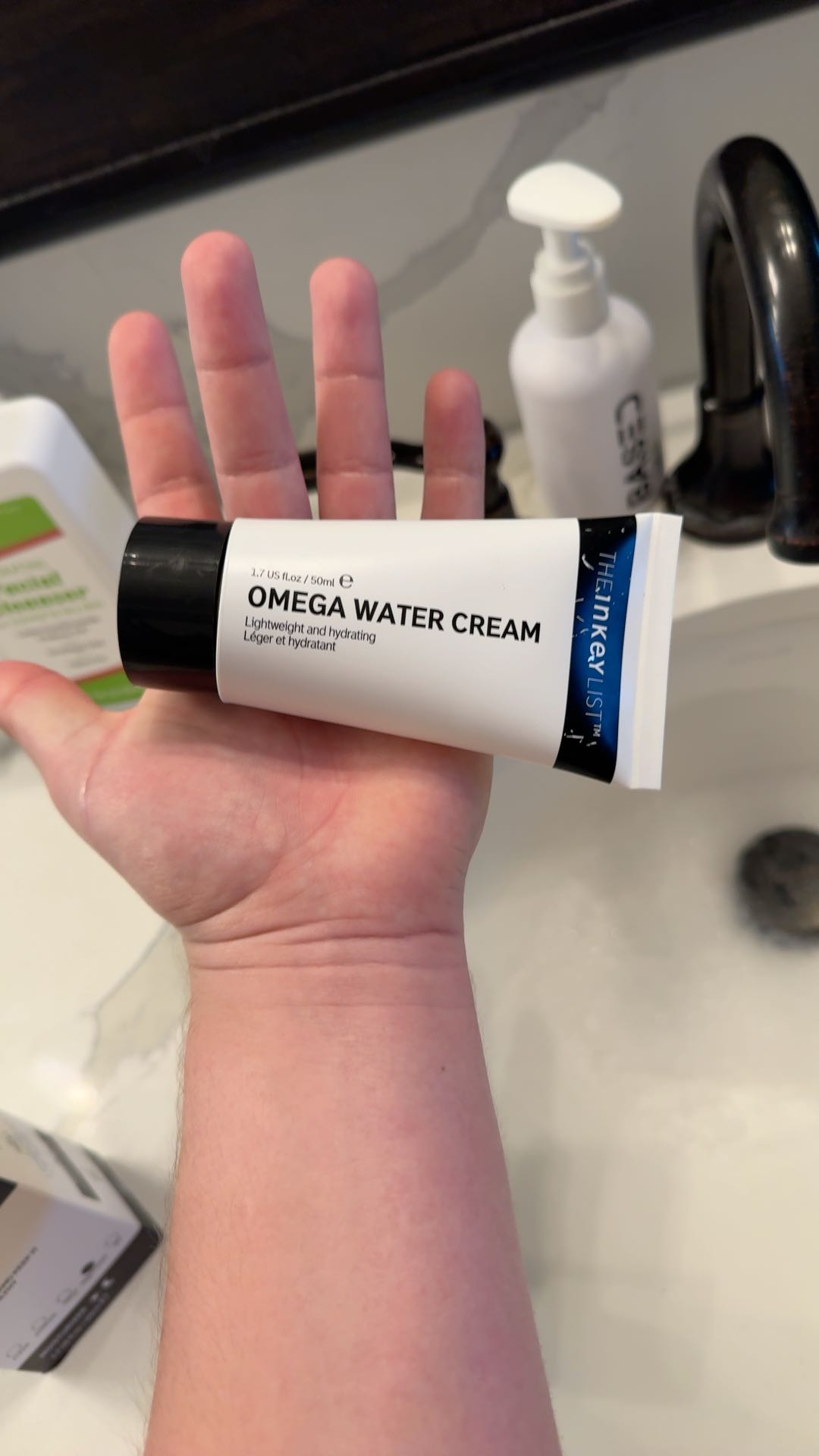
The INKEY List Omega Water Cream Oil-Free Moisturizer + Niacinamide, Size: 1.69 FL Oz, None
Summary
This moisturizer contains beneficial ingredients like niacinamide and glycerin, which are known for their hydrating and skin-soothing properties. The formulation avoids harsh chemicals and synthetic fragrances, which is a positive aspect. However, it includes some processed ingredients and preservatives like sodium benzoate and potassium sorbate, which slightly lower its overall score.
At a glance
Key ingredients 17
Water (Aqua/Eau)
Water is a universal solvent used to dissolve other ingredients in the formulation. It helps in spreading the product evenly on the skin. It is essential for hydration and acts as a base for the moisturizer.
Risks
There are no significant risks associated with water in cosmetic formulations.
Benefits
Water provides hydration and helps in the absorption of other beneficial ingredients.
Dicaprylyl Carbonate
Dicaprylyl Carbonate is an emollient that provides a smooth and silky feel to the skin. It helps in improving the spreadability of the product. It is often used to enhance the texture of skincare products.
Risks
There are minimal risks associated with this ingredient, though it may cause irritation in very sensitive skin.
Benefits
It enhances the skin's texture and provides a non-greasy finish.
Glycerin
Glycerin is a humectant that attracts moisture to the skin, keeping it hydrated. It is a common ingredient in moisturizers due to its ability to improve skin barrier function. It helps in maintaining skin softness and elasticity.
Risks
Glycerin is generally safe, but in very high concentrations, it may cause irritation.
Benefits
It effectively hydrates the skin and improves its resilience.
Niacinamide
Niacinamide is a form of Vitamin B3 that is known for its anti-inflammatory and brightening properties. It helps in reducing redness and improving skin texture. It is a popular ingredient for its ability to strengthen the skin barrier.
Risks
Niacinamide is well-tolerated, but in rare cases, it may cause mild irritation.
Benefits
It reduces inflammation, brightens the skin, and strengthens the skin barrier.
Propanediol
Propanediol is a glycol that acts as a solvent and humectant in skincare products. It helps in improving the penetration of other ingredients. It is often used as a natural alternative to propylene glycol.
Risks
Propanediol is generally safe, but it may cause irritation in sensitive individuals.
Benefits
It enhances ingredient absorption and provides moisture to the skin.
Betaine
Betaine is a natural amino acid derivative that acts as a humectant and anti-irritant. It helps in maintaining skin hydration and reducing the potential for irritation. It is often used in skincare for its soothing properties.
Risks
Betaine is considered safe with minimal risk of irritation.
Benefits
It hydrates the skin and reduces irritation.
Polyglyceryl-4 Isostearate
Polyglyceryl-4 Isostearate is an emulsifier that helps in mixing oil and water-based ingredients. It improves the texture and stability of the product. It is derived from natural sources and is considered mild.
Risks
There are minimal risks associated with this ingredient.
Benefits
It stabilizes the formulation and enhances texture.
Coco-Caprylate/Caprate
Coco-Caprylate/Caprate is an emollient derived from coconut oil that provides a silky feel to the skin. It helps in improving the spreadability of the product. It is often used for its lightweight and non-greasy properties.
Risks
There are minimal risks, though it may cause irritation in very sensitive skin.
Benefits
It provides a smooth texture and enhances skin feel.
Magnesium Sulfate
Magnesium Sulfate, also known as Epsom salt, is used as a thickening agent in cosmetics. It helps in improving the texture and consistency of the product. It is also known for its soothing properties.
Risks
There are minimal risks, but excessive use may lead to dryness.
Benefits
It improves product texture and provides soothing effects.
Glycosphingolipids
Glycosphingolipids are natural lipids that help in maintaining the skin barrier. They are known for their moisturizing and protective properties. They play a role in skin hydration and barrier function.
Risks
There are minimal risks associated with this ingredient.
Benefits
They enhance skin barrier function and provide moisture.
Glycolipids
Glycolipids are lipids with a carbohydrate attached, used for their moisturizing properties. They help in maintaining the skin's natural barrier. They are beneficial for skin hydration and protection.
Risks
There are minimal risks associated with this ingredient.
Benefits
They provide moisture and enhance the skin barrier.
Sodium Benzoate
Sodium Benzoate is a preservative used to prevent microbial growth in cosmetics. It helps in extending the shelf life of the product. It is commonly used due to its effectiveness and safety profile.
Risks
In high concentrations, it may cause irritation, but it is generally safe in cosmetics.
Benefits
It prevents microbial growth and extends product shelf life.
Disteardimonium Hectorite
Disteardimonium Hectorite is a thickening agent that helps in stabilizing emulsions. It improves the texture and consistency of the product. It is derived from clay and is used for its thickening properties.
Risks
There are minimal risks associated with this ingredient.
Benefits
It stabilizes formulations and enhances texture.
Oleic Acid
Oleic Acid is a fatty acid that acts as an emollient and thickening agent. It helps in improving the texture and moisturizing properties of the product. It is often used for its skin-softening effects.
Risks
In high concentrations, it may cause irritation, but it is generally safe.
Benefits
It softens the skin and enhances product texture.
Potassium Sorbate
Potassium Sorbate is a preservative used to inhibit the growth of mold and yeast. It helps in extending the shelf life of cosmetic products. It is considered safe and effective for use in cosmetics.
Risks
In high concentrations, it may cause irritation, but it is generally safe.
Benefits
It prevents microbial growth and extends product shelf life.
Citric Acid
Citric Acid is used to adjust the pH of cosmetic formulations. It helps in maintaining the stability and effectiveness of the product. It is also known for its mild exfoliating properties.
Risks
In high concentrations, it may cause irritation, but it is generally safe.
Benefits
It stabilizes pH and provides mild exfoliation.
Polyglycerin-3
Polyglycerin-3 is a humectant that helps in retaining moisture in the skin. It improves the hydration and texture of the product. It is derived from glycerin and is used for its moisturizing properties.
Risks
There are minimal risks associated with this ingredient.
Benefits
It provides moisture and enhances skin hydration.
Processing
Processed Foods
Get the full breakdown in the Scout app
Scan any product to see lab results, healthy alternatives, and your personalized analysis.
Download on theApp Store