
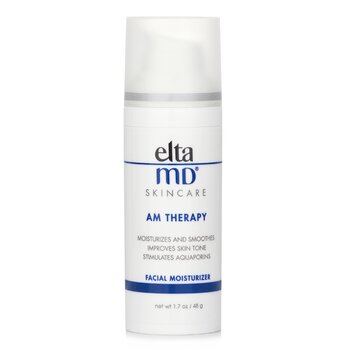

EltaMD AM Restore Face Moisturizer for Women and Men Light Moisturizer Face Cream Made with Niacinamide and Hyaluronic Acid 1.7 oz Pump
Analysis updated September 2026 · How Scout scores
At a glance
Summary
This moisturizer contains beneficial ingredients like niacinamide, hyaluronic acid, and willow bark extract, which offer anti-inflammatory and moisturizing benefits. The presence of phenoxyethanol as a preservative is a minor concern due to its potential for irritation, but it is balanced by the overall formulation's focus on skin-friendly components. The product's ingredient list is relatively clean, with a focus on effective skin actives and minimal synthetic additives.
Key ingredients 23
NiacinamideGood
Niacinamide is a form of Vitamin B3 that is known for its anti-inflammatory and skin-brightening properties. It helps to improve skin elasticity and reduce redness. It is highly beneficial in skincare products.
Risks
There are minimal risks, though high concentrations may cause irritation.
Benefits
It improves skin texture, reduces fine lines, and enhances skin barrier function.
Salix Alba (Willow) Bark ExtractGood
Willow Bark Extract is a natural source of salicylic acid, known for its exfoliating and anti-inflammatory properties. It helps to clear pores and reduce acne. It is beneficial in skincare formulations.
Risks
There are minimal risks, though it may cause irritation in sensitive skin.
Benefits
It helps to exfoliate the skin and reduce inflammation.
Caprylic/Capric TriglycerideGood
Caprylic/Capric Triglyceride is an emollient derived from coconut oil and glycerin. It helps to moisturize and soften the skin. It is beneficial in skincare products.
Risks
There are minimal risks, though it may cause irritation in sensitive skin.
Benefits
It provides a lightweight, non-greasy feel and enhances skin hydration.
GlycerinGood
Glycerin is a humectant that attracts moisture to the skin, helping to keep it hydrated. It is widely used in skincare products for its moisturizing properties. It is considered a beneficial ingredient.
Risks
There are minimal risks, though it may cause irritation in sensitive skin.
Benefits
It helps to maintain skin hydration and improve skin barrier function.
AllantoinGood
Allantoin is known for its soothing and skin-conditioning properties. It helps to calm irritated skin and promote healing. It is beneficial in skincare formulations.
Risks
There are minimal risks, though it may cause irritation in very sensitive skin.
Benefits
It soothes and protects the skin, promoting a healthy appearance.
Salicornia Herbacea ExtractGood
Salicornia Herbacea Extract is known for its moisturizing and antioxidant properties. It helps to improve skin hydration and protect against environmental stressors. It is beneficial in skincare formulations.
Risks
There are minimal risks, though it may cause irritation in sensitive skin.
Benefits
It helps to hydrate the skin and protect against environmental damage.
Sodium HyaluronateGood
Sodium Hyaluronate is a form of hyaluronic acid known for its excellent moisturizing properties. It helps to retain moisture and improve skin elasticity. It is highly beneficial in skincare products.
Risks
There are minimal risks, though it may cause irritation in sensitive skin.
Benefits
It provides deep hydration and improves skin texture and elasticity.
Ascorbyl PalmitateGood
Ascorbyl Palmitate is a stable form of Vitamin C used for its antioxidant properties. It helps to protect the skin from free radical damage and improve skin tone. It is beneficial in skincare formulations.
Risks
There are minimal risks, though it may cause irritation in sensitive skin.
Benefits
It helps to brighten the skin and protect against environmental damage.
TocopherolGood
Tocopherol, or Vitamin E, is known for its antioxidant and moisturizing properties. It helps to protect the skin from oxidative stress and improve skin hydration. It is beneficial in skincare products.
Risks
There are minimal risks, though it may cause irritation in sensitive skin.
Benefits
It helps to nourish and protect the skin, enhancing its appearance.
WaterNeutral
Water is a common solvent used in cosmetics to dissolve other ingredients. It helps in the application and absorption of the product. It does not provide direct benefits or risks.
Risks
There are no significant risks associated with water in cosmetics.
Benefits
Water helps in the even distribution of active ingredients on the skin.
CyclopentasiloxaneNeutral
Cyclopentasiloxane is a silicone that provides a smooth application and a silky feel. It evaporates quickly, leaving no residue. It is generally considered safe for use in cosmetics.
Risks
There are minimal risks, though some may experience skin irritation.
Benefits
It enhances the texture and spreadability of the product.
Ethylhexyl IsononanoateNeutral
Ethylhexyl Isononanoate is an emollient that helps to soften and smooth the skin. It is used to improve the texture of the product. It is generally considered safe for use in cosmetics.
Risks
There are minimal risks, though it may cause irritation in sensitive individuals.
Benefits
It provides a non-greasy feel and enhances skin softness.
Lauryl PEG-9 Polydimethylsiloxyethyl DimethiconeNeutral
This ingredient is a silicone-based surfactant that helps to stabilize emulsions. It improves the spreadability of the product. It is generally considered safe for use in cosmetics.
Risks
There are minimal risks, though it may cause irritation in sensitive skin.
Benefits
It enhances the texture and stability of the formulation.
Sodium ChlorideNeutral
Sodium Chloride is used as a thickening agent in cosmetics. It helps to improve the viscosity of the product. It is generally considered safe for use in cosmetics.
Risks
There are minimal risks, though it may cause irritation in high concentrations.
Benefits
It helps to stabilize the formulation and improve texture.
Butylene GlycolNeutral
Butylene Glycol is a humectant that helps to retain moisture in the skin. It improves the texture and spreadability of the product. It is generally considered safe for use in cosmetics.
Risks
There are minimal risks, though it may cause irritation in sensitive skin.
Benefits
It helps to keep the skin hydrated and improve product application.
Capryloyl GlycineNeutral
Capryloyl Glycine is an amino acid derivative used for its antimicrobial properties. It helps to maintain the skin's natural balance. It is generally considered safe for use in cosmetics.
Risks
There are minimal risks, though it may cause irritation in sensitive skin.
Benefits
It helps to control microbial growth and maintain skin health.
Undecylenoyl GlycineNeutral
Undecylenoyl Glycine is used for its antimicrobial and skin-conditioning properties. It helps to maintain the skin's natural balance. It is generally considered safe for use in cosmetics.
Risks
There are minimal risks, though it may cause irritation in sensitive skin.
Benefits
It helps to control microbial growth and improve skin texture.
CaffeineNeutral
Standard formulation ingredient — neither beneficial nor harmful at typical use.
Risks
There are minimal risks, though it may cause irritation in sensitive skin.
Benefits
It helps to reduce puffiness and improve the appearance of the skin.
Sodium HydroxideNeutral
Sodium Hydroxide is used to adjust the pH of cosmetics. It helps to maintain the stability and effectiveness of the product. It is generally considered safe for use in cosmetics when used in small amounts.
Risks
There are minimal risks, though it may cause irritation in high concentrations.
Benefits
It helps to maintain the desired pH level of the product.
DimethiconeBad
Occlusive silicone film-former — flagged under clean-beauty doctrine.
Risks
There are minimal risks, though it may cause breakouts in acne-prone skin.
Benefits
It helps to lock in moisture and improve the texture of the skin.
PhenoxyethanolBad
Phenoxyethanol is a preservative used to prevent microbial growth in cosmetics. It is effective but can be irritating to the skin and eyes. It is considered a moderate risk ingredient.
Risks
It may cause skin irritation and allergic reactions in sensitive individuals.
Benefits
It helps to preserve the product and extend its shelf life.
Dimethicone/PEG-10/15 CrosspolymerBad
Processed additive flagged under Scout's ingredient doctrine.
Risks
There are minimal risks, though it may cause irritation in sensitive skin.
Benefits
It enhances the texture and application of the product.
Disodium EDTABad
Processed additive flagged under Scout's ingredient doctrine.
Risks
There are minimal risks, though it may cause irritation in sensitive skin.
Benefits
It helps to stabilize the formulation and extend product shelf life.
Get the full breakdown in the Scout appTake Scout shopping
Scan any product to see lab results, healthy alternatives, and your personalized analysis.
Download on theApp Store GET IT ONGoogle PlayAmazon pricing & content
Amazon price as of . Product prices and availability are accurate as of the date/time indicated and are subject to change. Any price and availability information displayed on Amazon.com at the time of purchase will apply to the purchase of this product.
CERTAIN CONTENT THAT APPEARS ON THIS SITE COMES FROM AMAZON. THIS CONTENT IS PROVIDED “AS IS” AND IS SUBJECT TO CHANGE OR REMOVAL AT ANY TIME.