
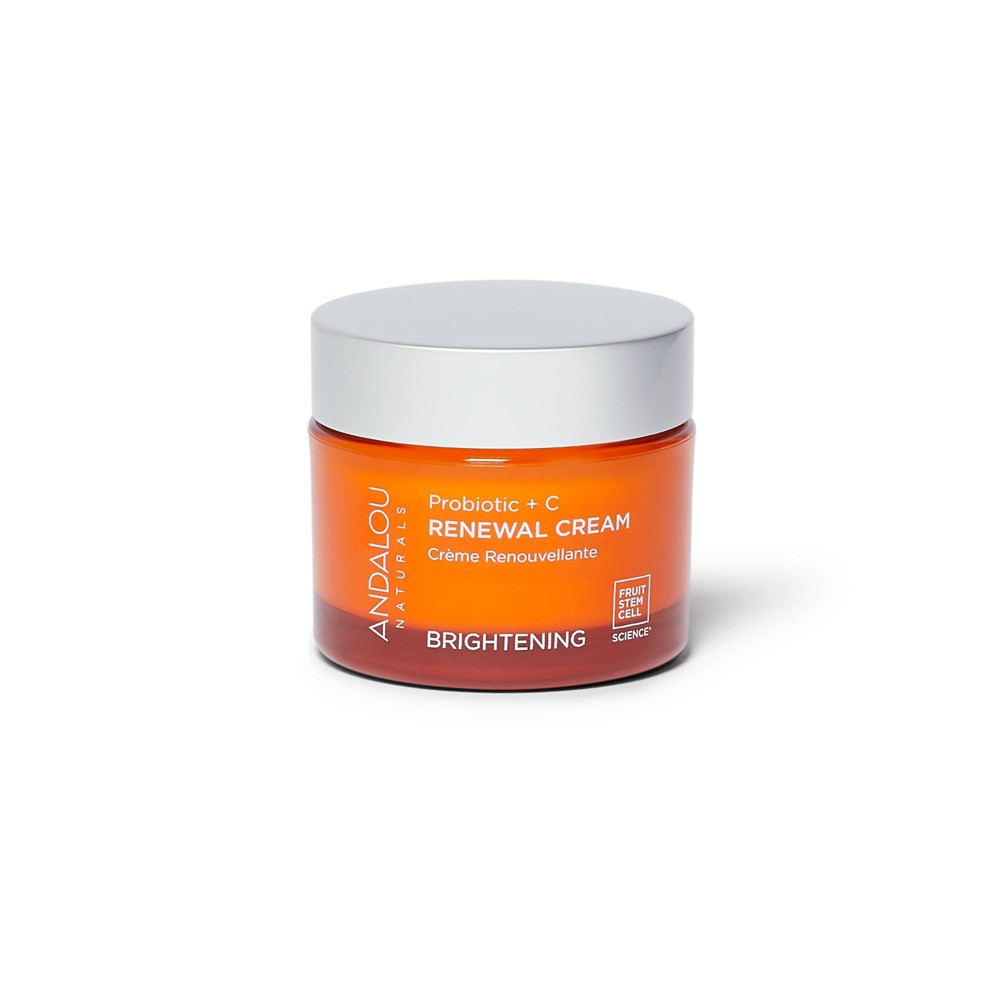

Andalou Naturals Brightening Probiotic + Vitamin C Renewal Cream - 1.7oz: Face Moisturizer, For Normal Skin, Unscented
Analysis updated July 2026 · How Scout scores
At a glance
Summary
This moisturizer contains a blend of natural and beneficial ingredients such as aloe vera, jojoba oil, and vitamin C, which are known for their skin-nourishing properties. The inclusion of probiotics and fruit extracts further enhances its appeal. However, the presence of phenethyl alcohol and ethylhexylglycerin, while generally considered safe, are synthetic preservatives that slightly lower the score due to their processed nature.
Key ingredients 32
Aloe Barbadensis Leaf JuiceVery Good
Aloe vera is known for its soothing and hydrating properties, making it beneficial for skin care. It helps to calm irritated skin and provides moisture.
Risks
There are minimal risks associated with aloe vera, though some individuals may experience allergic reactions.
Benefits
Aloe vera is excellent for soothing and hydrating the skin, promoting healing and reducing inflammation.
Simmondsia Chinensis (Jojoba) Seed OilVery Good
Jojoba oil is a natural oil that closely resembles the skin's sebum. It is highly moisturizing and helps to balance oil production.
Risks
There are minimal risks, though some individuals may experience mild irritation.
Benefits
Jojoba oil is excellent for moisturizing the skin and balancing oil levels, making it suitable for all skin types.
TocopherolVery Good
Tocopherol, or Vitamin E, is an antioxidant that helps to protect the skin from free radical damage. It also has moisturizing properties.
Risks
There are minimal risks, though high concentrations may cause irritation.
Benefits
Vitamin E is beneficial for protecting the skin and enhancing moisture retention.
Magnesium Ascorbyl PhosphateVery Good
Magnesium ascorbyl phosphate is a stable form of Vitamin C that brightens the skin and boosts collagen production. It is an effective antioxidant.
Risks
There are minimal risks, though high concentrations may cause irritation.
Benefits
It helps to brighten the skin and reduce signs of aging.
Olive SqualaneVery Good
Squalane is a highly effective moisturizer that mimics the skin's natural oils. It is non-comedogenic and suitable for all skin types.
Risks
There are minimal risks associated with squalane.
Benefits
It provides deep hydration and helps to maintain skin elasticity.
Calendula Officinalis Flower ExtractVery Good
Calendula extract is known for its anti-inflammatory and soothing properties. It helps to calm irritated skin and promote healing.
Risks
There are minimal risks, though some individuals may experience mild irritation.
Benefits
It is excellent for soothing and healing the skin, reducing redness and inflammation.
Rosa Canina (Rosehip) Fruit OilVery Good
Rosehip oil is rich in essential fatty acids and vitamins, which help to nourish and regenerate the skin. It is known for its anti-aging properties.
Risks
There are minimal risks, though some individuals may experience mild irritation.
Benefits
It helps to improve skin texture and reduce the appearance of scars and fine lines.
Vegetable GlycerinGood
Vegetable glycerin is a humectant that attracts moisture to the skin. It helps to keep the skin hydrated and soft.
Risks
There are minimal risks, though excessive use may lead to a sticky feeling on the skin.
Benefits
Glycerin is beneficial for maintaining skin hydration and improving skin barrier function.
AllantoinGood
Allantoin is known for its soothing and skin-conditioning properties. It helps to calm irritated skin and promote healing.
Risks
There are minimal risks, though some individuals may experience mild irritation.
Benefits
Allantoin is beneficial for soothing the skin and promoting a healthy skin barrier.
Malus DomesticaGood
Part of Fruit Stem Cells. Fruit stem cells are believed to have regenerative properties that can help to rejuvenate the skin. They are rich in antioxidants.
Risks
There are minimal risks, though efficacy may vary.
Benefits
They may help to protect the skin from environmental damage and promote a youthful appearance.
Solar VitisGood
Part of Fruit Stem Cells. Fruit stem cells are believed to have regenerative properties that can help to rejuvenate the skin. They are rich in antioxidants.
Risks
There are minimal risks, though efficacy may vary.
Benefits
They may help to protect the skin from environmental damage and promote a youthful appearance.
BioActive 8 Berry ComplexGood
This complex is rich in antioxidants, which help to protect the skin from free radical damage. It also provides nourishment to the skin.
Risks
There are minimal risks, though some individuals may experience mild irritation.
Benefits
It helps to protect and nourish the skin, promoting a healthy complexion.
Lycium Barbarum (Goji) Fruit ExtractGood
Goji fruit extract is rich in antioxidants and vitamins, which help to protect the skin and improve its appearance. It is known for its anti-aging properties.
Risks
There are minimal risks, though some individuals may experience mild irritation.
Benefits
It helps to protect the skin and promote a youthful complexion.
Alpha-Glucan OligosaccharideGood
Part of Probiotic Complex. Probiotics help to balance the skin's microbiome, promoting a healthy skin barrier. They can improve skin texture and reduce inflammation.
Risks
There are minimal risks, though efficacy may vary.
Benefits
They support a healthy skin microbiome and improve overall skin health.
Polymnia Sonchifolia RootGood
Part of Probiotic Complex. Probiotics help to balance the skin's microbiome, promoting a healthy skin barrier. They can improve skin texture and reduce inflammation.
Risks
There are minimal risks, though efficacy may vary.
Benefits
They support a healthy skin microbiome and improve overall skin health.
LactobacillusGood
Part of Probiotic Complex. Probiotics help to balance the skin's microbiome, promoting a healthy skin barrier. They can improve skin texture and reduce inflammation.
Risks
There are minimal risks, though efficacy may vary.
Benefits
They support a healthy skin microbiome and improve overall skin health.
Sodium HyaluronateGood
Sodium hyaluronate is a form of hyaluronic acid that provides intense hydration to the skin. It helps to plump the skin and reduce the appearance of fine lines.
Risks
There are minimal risks, though some individuals may experience mild irritation.
Benefits
It is excellent for hydrating the skin and improving its texture.
Helianthus Annuus (Sunflower) Seed OilGood
Sunflower seed oil is rich in vitamins and fatty acids, which help to nourish and protect the skin. It is a lightweight oil that absorbs easily.
Risks
There are minimal risks, though some individuals may experience mild irritation.
Benefits
It helps to moisturize and protect the skin, promoting a healthy complexion.
PanthenolGood
Panthenol, or provitamin B5, is known for its moisturizing and soothing properties. It helps to improve skin hydration and reduce irritation.
Risks
There are minimal risks, though some individuals may experience mild irritation.
Benefits
It is beneficial for soothing and hydrating the skin, promoting a healthy skin barrier.
Camellia Sinensis (White Tea) Leaf ExtractGood
White tea extract is rich in antioxidants, which help to protect the skin from free radical damage. It also has anti-inflammatory properties.
Risks
There are minimal risks, though some individuals may experience mild irritation.
Benefits
It helps to protect and soothe the skin, promoting a healthy complexion.
Purified WaterNeutral
Purified water is used as a solvent in cosmetic formulations. It helps to dissolve other ingredients and provides a base for the product.
Risks
There are no significant risks associated with purified water in cosmetics.
Benefits
Purified water acts as a carrier for active ingredients, ensuring they are evenly distributed.
Dicaprylyl CarbonateNeutral
Dicaprylyl carbonate is an emollient that provides a silky feel to the skin. It helps to improve the spreadability of the product.
Risks
There are minimal risks associated with this ingredient.
Benefits
It enhances the texture of the product, making it feel smooth and luxurious on the skin.
Cetyl AlcoholNeutral
Cetyl alcohol is a fatty alcohol used as an emollient and thickener in cosmetics. It helps to stabilize and improve the texture of formulations.
Risks
There are minimal risks, though it may cause irritation in sensitive individuals.
Benefits
It provides a creamy texture and helps to lock in moisture.
Glyceryl StearateNeutral
Glyceryl stearate is an emulsifier that helps to blend oil and water components. It also acts as a lubricant on the skin's surface.
Risks
There are minimal risks associated with this ingredient.
Benefits
It helps to stabilize formulations and provides a smooth application.
Stearic AcidNeutral
Stearic acid is a fatty acid used as an emulsifier and thickener. It helps to stabilize formulations and improve texture.
Risks
There are minimal risks, though it may cause irritation in sensitive individuals.
Benefits
It contributes to the creamy texture and stability of the product.
Myristyl MyristateNeutral
Myristyl myristate is an emollient that provides a smooth feel to the skin. It helps to improve the spreadability of the product.
Risks
There are minimal risks associated with this ingredient.
Benefits
It enhances the texture and application of the product.
Hydrolyzed Myrtus Communis Leaf ExtractNeutral
This extract is used for its antioxidant properties and potential skin-soothing effects. It helps to protect the skin from environmental stressors.
Risks
There are minimal risks, though efficacy may vary.
Benefits
It may help to soothe the skin and provide antioxidant protection.
MaltodextrinNeutral
Standard formulation ingredient — neither beneficial nor harmful at typical use.
Risks
There are minimal risks, though efficacy may vary.
Benefits
They support a healthy skin microbiome and improve overall skin health.
Phenethyl AlcoholNeutral
Phenethyl alcohol is used as a preservative and fragrance component in cosmetics. It helps to prevent microbial growth.
Risks
There are minimal risks, though it may cause irritation in sensitive individuals.
Benefits
It helps to preserve the product and maintain its quality.
EthylhexylglycerinNeutral
Ethylhexylglycerin is used as a preservative and skin-conditioning agent. It helps to enhance the efficacy of other preservatives.
Risks
There are minimal risks, though it may cause irritation in sensitive individuals.
Benefits
It helps to preserve the product and improve skin feel.
Citrus Tangerina (Tangerine) Peel OilNeutral
Tangerine peel oil is used for its fragrance and potential antioxidant properties. It provides a refreshing scent to the product.
Risks
There are minimal risks, though it may cause photosensitivity in some individuals.
Benefits
It provides a pleasant fragrance and may offer antioxidant benefits.
Citrus Aurantium Dulcis (Orange) Peel OilNeutral
Orange peel oil is used for its fragrance and potential antioxidant properties. It provides a refreshing scent to the product.
Risks
There are minimal risks, though it may cause photosensitivity in some individuals.
Benefits
It provides a pleasant fragrance and may offer antioxidant benefits.
Get the full breakdown in the Scout appTake Scout shopping
Scan any product to see lab results, healthy alternatives, and your personalized analysis.
Download on theApp Store GET IT ONGoogle PlayAmazon pricing & content
Amazon price as of . Product prices and availability are accurate as of the date/time indicated and are subject to change. Any price and availability information displayed on Amazon.com at the time of purchase will apply to the purchase of this product.
CERTAIN CONTENT THAT APPEARS ON THIS SITE COMES FROM AMAZON. THIS CONTENT IS PROVIDED “AS IS” AND IS SUBJECT TO CHANGE OR REMOVAL AT ANY TIME.