
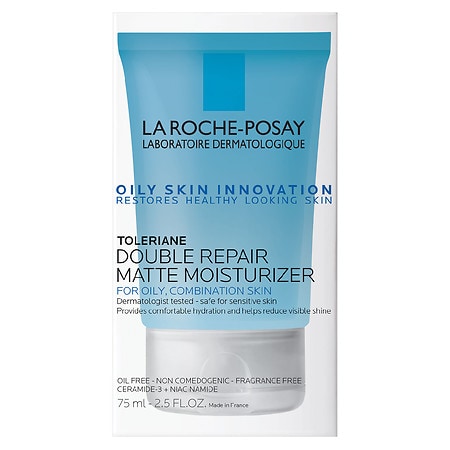



La Roche Posay, Toleriane Double Repair Matte Face Moisturizer, Daily Gel Face Moisturizer with Ceramide and Niacinamide for Oily Skin - 3.38 fl oz
La Roche-PosayAnalysis updated August 2026 · How Scout scores
At a glance
Summary
This moisturizer contains beneficial ingredients like glycerin, niacinamide, ceramide NP, and sodium hyaluronate, which are known for their hydrating and skin-repairing properties. The formulation is free from harsh chemicals and synthetic fragrances, making it suitable for sensitive skin. However, it is a processed product, which slightly limits its score despite the clean ingredient list.
Key ingredients 16
GlycerinGood
Glycerin is a humectant that attracts moisture to the skin, helping to keep it hydrated. It is widely used in skincare for its moisturizing properties. It is considered safe and beneficial for most skin types.
Risks
There are minimal risks associated with glycerin; it is generally well-tolerated.
Benefits
Glycerin helps to maintain skin hydration and improve skin barrier function.
BetaineGood
Betaine is a natural amino acid derivative that helps to maintain skin hydration and improve skin texture. It is known for its moisturizing and anti-irritant properties. It is considered safe and beneficial for sensitive skin.
Risks
Betaine is generally well-tolerated with minimal risk of irritation.
Benefits
Betaine helps to hydrate the skin and reduce irritation, making it suitable for sensitive skin.
NiacinamideGood
Niacinamide is a form of Vitamin B3 that offers multiple skin benefits, including improving skin tone, reducing inflammation, and enhancing barrier function. It is well-tolerated by most skin types. It is a popular ingredient in skincare for its versatility and effectiveness.
Risks
Niacinamide is generally safe, but in rare cases, it may cause mild irritation.
Benefits
Niacinamide helps to improve skin texture, reduce redness, and enhance the skin's barrier function.
Ceramide NPGood
Ceramide NP is a lipid that helps to restore and maintain the skin's natural barrier. It is essential for retaining moisture and protecting the skin from environmental damage. It is highly beneficial for dry and sensitive skin types.
Risks
Ceramide NP is generally well-tolerated with minimal risk of irritation.
Benefits
Ceramide NP helps to strengthen the skin barrier and retain moisture, improving overall skin health.
Sodium HyaluronateGood
Sodium Hyaluronate is a form of hyaluronic acid that provides intense hydration and plumps the skin. It is highly effective in retaining moisture and improving skin elasticity. It is well-tolerated by most skin types and is a popular ingredient in hydrating skincare products.
Risks
Sodium Hyaluronate is generally safe, but in rare cases, it may cause mild irritation.
Benefits
Sodium Hyaluronate helps to deeply hydrate the skin and improve its elasticity and texture.
Aqua/Water/EauNeutral
Water is a universal solvent used as a base in many cosmetic formulations. It helps dissolve other ingredients and provides hydration. It is generally considered safe and non-irritating.
Risks
There are no significant risks associated with water in cosmetics.
Benefits
Water helps to hydrate the skin and acts as a carrier for other beneficial ingredients.
SilicaNeutral
Silica is used in cosmetics for its oil-absorbing properties and to improve the texture of products. It is generally considered safe for use in skincare. It provides a matte finish, which is beneficial for oily skin types.
Risks
Inhalation of silica particles can be harmful, but this is not a concern in topical applications.
Benefits
Silica helps to control oil and shine, making it suitable for oily skin.
Cetearyl IsononanoateNeutral
Cetearyl Isononanoate is an emollient that helps to soften and smooth the skin. It is used to improve the texture and spreadability of cosmetic products. It is considered safe for use in skincare.
Risks
There are minimal risks associated with this ingredient; it is generally non-irritating.
Benefits
Cetearyl Isononanoate helps to improve skin texture and provide a smooth application.
Zea Mays Starch / Corn StarchNeutral
Corn starch is used in cosmetics for its absorbent properties and to improve product texture. It is generally considered safe and non-irritating. It helps to absorb excess oil and provide a matte finish.
Risks
There are minimal risks associated with corn starch in topical applications.
Benefits
Corn starch helps to control oil and improve the texture of cosmetic products.
CarbomerNeutral
Carbomer is a thickening agent used to stabilize and improve the texture of cosmetic formulations. It is considered safe for use in skincare products. It helps to create a smooth and consistent product texture.
Risks
There are minimal risks associated with carbomer; it is generally non-irritating.
Benefits
Carbomer helps to stabilize formulations and improve product texture.
Glyceryl Stearate CitrateNeutral
Glyceryl Stearate Citrate is an emulsifier that helps to blend oil and water components in formulations. It is considered safe and effective for use in cosmetics. It contributes to a smooth and stable product texture.
Risks
There are minimal risks associated with this ingredient; it is generally non-irritating.
Benefits
Glyceryl Stearate Citrate helps to stabilize emulsions and improve product texture.
Sodium HydroxideNeutral
Sodium Hydroxide is used to adjust the pH of cosmetic formulations. It is effective in small concentrations and is considered safe when used appropriately. It helps to maintain the stability and effectiveness of the product.
Risks
In high concentrations, Sodium Hydroxide can be irritating, but it is used in safe amounts in cosmetics.
Benefits
Sodium Hydroxide helps to balance the pH of formulations, ensuring product stability.
PerliteNeutral
Perlite is a natural mineral used for its exfoliating and oil-absorbing properties. It is considered safe for use in cosmetics. It helps to control oil and improve skin texture.
Risks
There are minimal risks associated with perlite in topical applications.
Benefits
Perlite helps to absorb excess oil and gently exfoliate the skin.
HydroxyacetophenoneNeutral
Hydroxyacetophenone is an antioxidant and preservative used to enhance the stability of cosmetic formulations. It is considered safe for use in skincare products. It helps to protect the product from degradation and extend its shelf life.
Risks
There are minimal risks associated with hydroxyacetophenone; it is generally non-irritating.
Benefits
Hydroxyacetophenone helps to stabilize formulations and protect against oxidative damage.
Caprylyl GlycolNeutral
Caprylyl Glycol is a skin-conditioning agent that also acts as a preservative booster. It is considered safe for use in cosmetics. It helps to improve skin hydration and enhance the effectiveness of preservatives.
Risks
There are minimal risks associated with caprylyl glycol; it is generally non-irritating.
Benefits
Caprylyl Glycol helps to condition the skin and enhance product preservation.
Xanthan GumNeutral
Xanthan Gum is a thickening agent used to stabilize and improve the texture of cosmetic formulations. It is considered safe for use in skincare products. It helps to create a smooth and consistent product texture.
Risks
There are minimal risks associated with xanthan gum; it is generally non-irritating.
Benefits
Xanthan Gum helps to stabilize formulations and improve product texture.
Get the full breakdown in the Scout appTake Scout shopping
Scan any product to see lab results, healthy alternatives, and your personalized analysis.
Download on theApp Store GET IT ONGoogle PlayAmazon pricing & content
Amazon price as of . Product prices and availability are accurate as of the date/time indicated and are subject to change. Any price and availability information displayed on Amazon.com at the time of purchase will apply to the purchase of this product.
CERTAIN CONTENT THAT APPEARS ON THIS SITE COMES FROM AMAZON. THIS CONTENT IS PROVIDED “AS IS” AND IS SUBJECT TO CHANGE OR REMOVAL AT ANY TIME.