
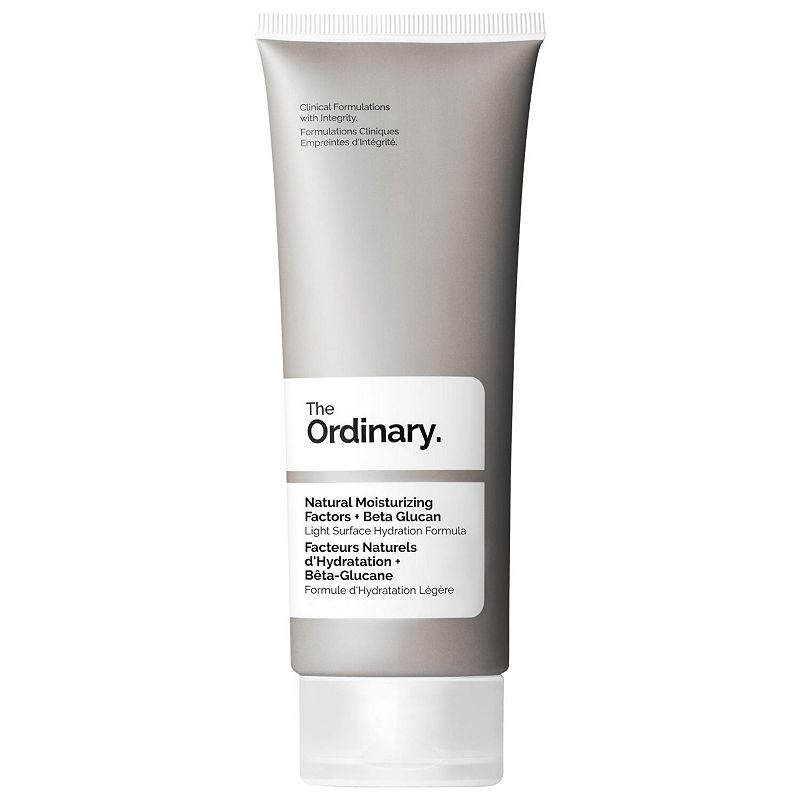


The Ordinary Natural Moisturizing Factors + Beta Glucan Lightweight Gel Moisturizer, Size: 3.3 FL Oz, None
Analysis updated August 2026 · How Scout scores
At a glance
Summary
This moisturizer contains beneficial ingredients like Beta-Glucan and Sodium Hyaluronate, which provide hydration and soothing properties. However, it includes Phenoxyethanol and Sodium Hydroxide, which can be irritating to some individuals. The product is moderately processed, which affects its overall rating despite the presence of several skin-friendly components.
Key ingredients 40
Beta-GlucanVery Good
Beta-Glucan is a polysaccharide with excellent skin-soothing and anti-aging properties. It helps to enhance the skin's natural barrier and reduce redness. It is highly beneficial for sensitive and irritated skin.
Risks
There are no significant risks associated with beta-glucan.
Benefits
It provides antioxidant protection and improves skin elasticity.
BetaineGood
Betaine is a naturally derived humectant and anti-irritant. It helps to maintain skin hydration and reduce irritation. It is well-tolerated by most skin types.
Risks
There are minimal risks associated with betaine in cosmetics.
Benefits
Betaine helps to improve skin moisture retention and soothe irritation.
ArginineGood
Arginine is an amino acid that helps to improve skin hydration and elasticity. It supports collagen production and skin repair. It is generally safe and beneficial for skin health.
Risks
There are minimal risks associated with arginine in cosmetics.
Benefits
Arginine enhances skin moisture and supports skin barrier function.
GlycineGood
Glycine is an amino acid that acts as a skin-conditioning agent. It helps to improve skin texture and hydration. It is safe and beneficial for maintaining healthy skin.
Risks
There are minimal risks associated with glycine in cosmetics.
Benefits
Glycine supports skin hydration and smoothness.
Sodium PCAGood
Sodium PCA is a naturally occurring humectant that helps to maintain skin hydration. It is highly effective at attracting moisture to the skin. It is safe and beneficial for all skin types.
Risks
There are minimal risks associated with sodium PCA in cosmetics.
Benefits
Sodium PCA enhances skin moisture retention and improves skin texture.
UreaGood
Urea is a powerful humectant and exfoliant that helps to maintain skin hydration and smoothness. It is effective at softening rough skin and improving texture. It is safe and beneficial for dry and rough skin types.
Risks
There are minimal risks associated with urea in cosmetics.
Benefits
Urea enhances skin moisture retention and smoothness.
AllantoinGood
Allantoin is a skin-soothing agent that helps to calm irritation and promote healing. It is effective at reducing redness and improving skin comfort. It is safe and beneficial for sensitive and irritated skin.
Risks
There are minimal risks associated with allantoin in cosmetics.
Benefits
Allantoin helps to soothe and protect the skin.
Sodium HyaluronateGood
Sodium Hyaluronate is a form of hyaluronic acid that provides intense hydration and plumping effects. It helps to improve skin elasticity and reduce the appearance of fine lines. It is highly beneficial for all skin types, especially dry and aging skin.
Risks
There are no significant risks associated with sodium hyaluronate.
Benefits
It provides deep hydration and enhances skin smoothness.
PhospholipidsGood
Phospholipids are natural components of cell membranes that help to improve skin barrier function. They enhance the delivery of active ingredients and improve skin hydration. They are safe and beneficial for maintaining healthy skin.
Risks
There are minimal risks associated with phospholipids in cosmetics.
Benefits
Phospholipids support skin barrier integrity and hydration.
SphingolipidsGood
Sphingolipids are natural lipids that help to strengthen the skin barrier and retain moisture. They are effective at improving skin texture and resilience. They are safe and beneficial for maintaining healthy skin.
Risks
There are minimal risks associated with sphingolipids in cosmetics.
Benefits
Sphingolipids enhance skin barrier function and hydration.
GlycerinGood
Glycerin is a well-known humectant that attracts moisture to the skin. It helps to maintain skin hydration and improve texture. It is safe and beneficial for all skin types.
Risks
There are minimal risks associated with glycerin in cosmetics.
Benefits
Glycerin enhances skin moisture retention and smoothness.
TocopherolGood
Tocopherol, or Vitamin E, is a powerful antioxidant that helps to protect the skin from oxidative stress. It is effective at improving skin texture and reducing signs of aging. It is safe and beneficial for all skin types.
Risks
There are minimal risks associated with tocopherol in cosmetics.
Benefits
Tocopherol provides antioxidant protection and enhances skin smoothness.
Aqua (Water)Neutral
Water is a common solvent used in cosmetic formulations. It helps dissolve other ingredients and provides a base for the product. It is generally considered safe and non-irritating.
Risks
There are no significant risks associated with water in cosmetics.
Benefits
Water helps hydrate the skin by providing moisture.
PPG-24-Glycereth-24Neutral
PPG-24-Glycereth-24 is a synthetic polymer used as an emollient and conditioning agent. It helps improve the texture and feel of the product. It is generally considered safe for use in cosmetics.
Risks
There is a low risk of skin irritation for sensitive individuals.
Benefits
It helps to soften and smooth the skin.
PropanediolNeutral
Propanediol is a glycol used as a solvent and humectant in cosmetics. It helps to improve the absorption of other ingredients. It is generally recognized as safe for use in skincare products.
Risks
Propanediol can cause mild irritation in sensitive skin types.
Benefits
It enhances skin hydration by attracting moisture.
AlanineNeutral
Alanine is an amino acid used as a skin-conditioning agent. It helps to improve the texture and feel of the skin. It is generally considered safe for use in cosmetics.
Risks
There are minimal risks associated with alanine in cosmetics.
Benefits
Alanine helps to maintain skin hydration and smoothness.
SerineNeutral
Serine is an amino acid that acts as a skin-conditioning agent. It helps to improve skin texture and hydration. It is safe and commonly used in skincare products.
Risks
There are minimal risks associated with serine in cosmetics.
Benefits
Serine supports skin hydration and smoothness.
ProlineNeutral
Proline is an amino acid used as a skin-conditioning agent. It helps to improve skin texture and hydration. It is generally considered safe for use in cosmetics.
Risks
There are minimal risks associated with proline in cosmetics.
Benefits
Proline helps to maintain skin hydration and smoothness.
ThreonineNeutral
Threonine is an amino acid that acts as a skin-conditioning agent. It helps to improve skin texture and hydration. It is safe and commonly used in skincare products.
Risks
There are minimal risks associated with threonine in cosmetics.
Benefits
Threonine supports skin hydration and smoothness.
Glutamic AcidNeutral
Glutamic Acid is an amino acid used as a skin-conditioning agent. It helps to improve skin texture and hydration. It is generally considered safe for use in cosmetics.
Risks
There are minimal risks associated with glutamic acid in cosmetics.
Benefits
Glutamic Acid helps to maintain skin hydration and smoothness.
Lysine HClNeutral
Lysine HCl is an amino acid used as a skin-conditioning agent. It helps to improve skin texture and hydration. It is generally considered safe for use in cosmetics.
Risks
There are minimal risks associated with lysine HCl in cosmetics.
Benefits
Lysine HCl helps to maintain skin hydration and smoothness.
MaltoseNeutral
Maltose is a sugar used as a humectant in cosmetics. It helps to attract moisture to the skin. It is generally considered safe for use in skincare products.
Risks
There are minimal risks associated with maltose in cosmetics.
Benefits
Maltose helps to improve skin hydration.
TrehaloseNeutral
Trehalose is a sugar used as a humectant and antioxidant in cosmetics. It helps to protect the skin from dehydration and oxidative stress. It is generally considered safe for use in skincare products.
Risks
There are minimal risks associated with trehalose in cosmetics.
Benefits
Trehalose helps to improve skin hydration and protect against environmental damage.
XylitolNeutral
Xylitol is a sugar alcohol used as a humectant in cosmetics. It helps to attract moisture to the skin. It is generally considered safe for use in skincare products.
Risks
There are minimal risks associated with xylitol in cosmetics.
Benefits
Xylitol helps to improve skin hydration.
AnhydroxylitolNeutral
Anhydroxylitol is a sugar alcohol used as a humectant in cosmetics. It helps to attract moisture to the skin. It is generally considered safe for use in skincare products.
Risks
There are minimal risks associated with anhydroxylitol in cosmetics.
Benefits
Anhydroxylitol helps to improve skin hydration.
XylitylglucosideNeutral
Xylitylglucoside is a sugar derivative used as a humectant in cosmetics. It helps to attract moisture to the skin. It is generally considered safe for use in skincare products.
Risks
There are minimal risks associated with xylitylglucoside in cosmetics.
Benefits
Xylitylglucoside helps to improve skin hydration.
PCANeutral
PCA is a naturally occurring component of the skin's natural moisturizing factor. It helps to maintain skin hydration. It is generally considered safe for use in cosmetics.
Risks
There are minimal risks associated with PCA in cosmetics.
Benefits
PCA helps to improve skin hydration and texture.
Sodium LactateNeutral
Sodium Lactate is a salt of lactic acid used as a humectant in cosmetics. It helps to attract moisture to the skin. It is generally considered safe for use in skincare products.
Risks
There are minimal risks associated with sodium lactate in cosmetics.
Benefits
Sodium Lactate helps to improve skin hydration.
Pentylene GlycolNeutral
Pentylene Glycol is a synthetic humectant and solvent used in cosmetics. It helps to improve the texture and feel of the product. It is generally considered safe for use in skincare products.
Risks
There is a low risk of skin irritation for sensitive individuals.
Benefits
It helps to enhance skin hydration and improve product stability.
Sodium HydroxideNeutral
Standard formulation ingredient — neither beneficial nor harmful at typical use.
Risks
It can cause skin irritation and dryness if used in high concentrations.
Benefits
It helps to maintain the desired pH level of the product.
Sodium ChlorideNeutral
Sodium Chloride, or table salt, is used as a thickening agent in cosmetics. It helps to improve the texture and viscosity of the product. It is generally considered safe for use in skincare products.
Risks
There are minimal risks associated with sodium chloride in cosmetics.
Benefits
It helps to enhance the consistency of the product.
Sodium CitrateNeutral
Sodium Citrate is a salt of citric acid used as a buffering agent in cosmetics. It helps to maintain the stability and pH of the product. It is generally considered safe for use in skincare products.
Risks
There are minimal risks associated with sodium citrate in cosmetics.
Benefits
It helps to stabilize the product and maintain its pH balance.
Citric AcidNeutral
Citric Acid is used as a pH adjuster and exfoliant in cosmetics. It helps to maintain the stability and effectiveness of the product. It is generally considered safe for use in skincare products.
Risks
It can cause mild irritation in sensitive skin types.
Benefits
It helps to improve skin texture and maintain product stability.
P-Anisic AcidNeutral
P-Anisic Acid is used as a preservative and fragrance ingredient in cosmetics. It helps to maintain the stability and safety of the product. It is generally considered safe for use in skincare products.
Risks
There is a low risk of skin irritation for sensitive individuals.
Benefits
It helps to preserve the product and maintain its effectiveness.
ChlorphenesinNeutral
Chlorphenesin is a preservative used to prevent microbial growth in cosmetics. It helps to maintain the safety and stability of the product. It is generally considered safe for use in skincare products.
Risks
There is a low risk of skin irritation for sensitive individuals.
Benefits
It helps to preserve the product and prevent contamination.
GlucoseBad
Processed additive flagged under Scout's ingredient doctrine.
Risks
There are minimal risks associated with glucose in cosmetics.
Benefits
Glucose helps to improve skin hydration.
FructoseBad
Processed additive flagged under Scout's ingredient doctrine.
Risks
There are minimal risks associated with fructose in cosmetics.
Benefits
Fructose helps to improve skin hydration.
Acrylates/C10-30 Alkyl Acrylate CrosspolymerBad
Processed additive flagged under Scout's ingredient doctrine.
Risks
There is a low risk of skin irritation for sensitive individuals.
Benefits
It helps to improve the consistency and stability of the product.
Aminomethyl PropanolBad
Processed additive flagged under Scout's ingredient doctrine.
Risks
There is a low risk of skin irritation for sensitive individuals.
Benefits
It helps to stabilize the product and maintain its pH balance.
PhenoxyethanolBad
Phenoxyethanol is a preservative used to prevent microbial growth in cosmetics. It can cause skin irritation and allergic reactions in some individuals. It is used in small amounts to ensure product safety.
Risks
It can cause skin irritation and allergic reactions in sensitive individuals.
Benefits
It helps to preserve the product and prevent contamination.
Get the full breakdown in the Scout appTake Scout shopping
Scan any product to see lab results, healthy alternatives, and your personalized analysis.
Download on theApp Store GET IT ONGoogle PlayAmazon pricing & content
Amazon price as of . Product prices and availability are accurate as of the date/time indicated and are subject to change. Any price and availability information displayed on Amazon.com at the time of purchase will apply to the purchase of this product.
CERTAIN CONTENT THAT APPEARS ON THIS SITE COMES FROM AMAZON. THIS CONTENT IS PROVIDED “AS IS” AND IS SUBJECT TO CHANGE OR REMOVAL AT ANY TIME.