


At a glance
Summary
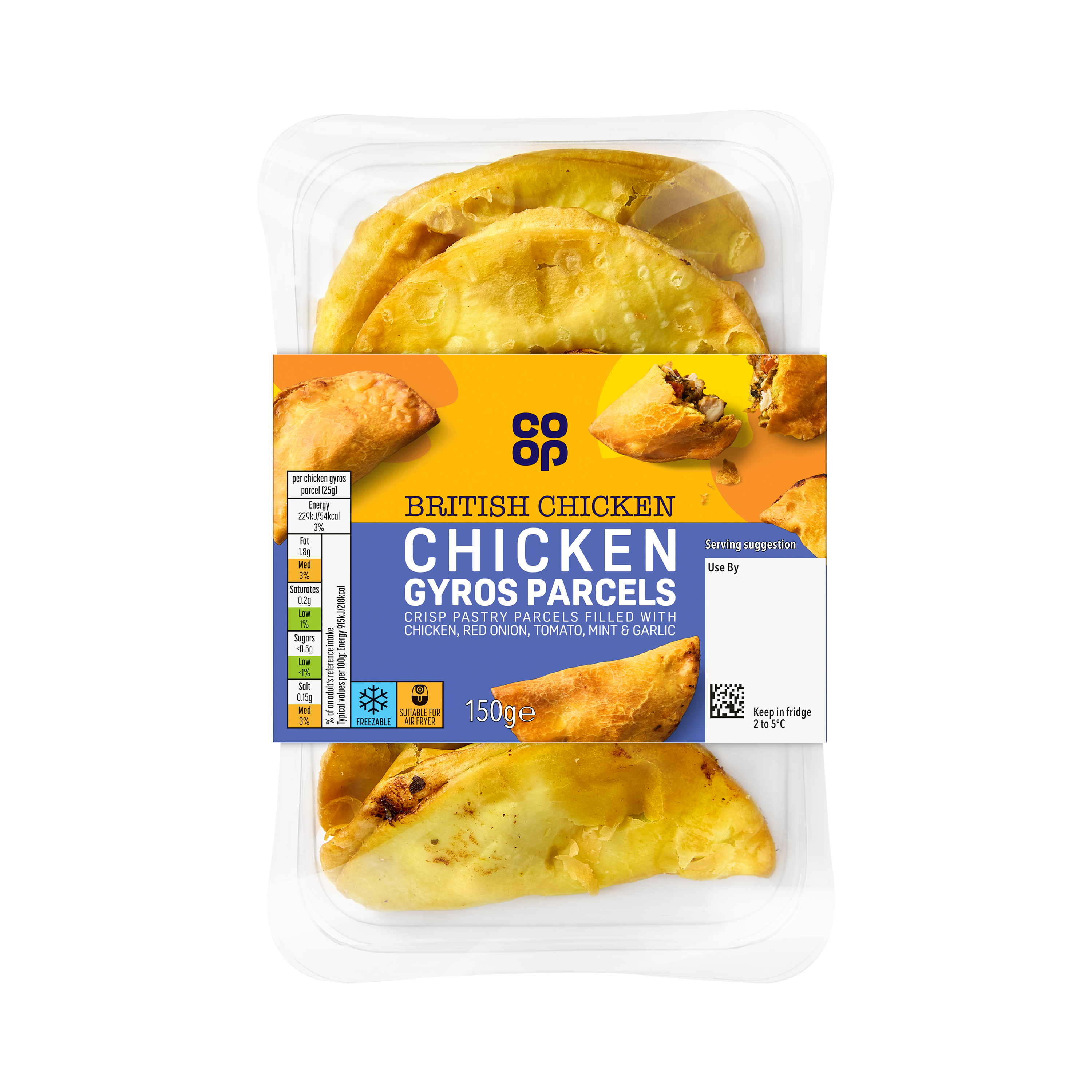
The Chicken Gyros Parcels contain beneficial ingredients such as chicken breast, tomatoes, and yogurt, which provide high-quality protein and essential nutrients. However, the presence of rapeseed oil, a seed oil high in omega-6 fatty acids, and added sugar detracts from its nutritional quality. The product is moderately processed, which limits its score despite the inclusion of several nutritious components.
Key ingredients 19
Chicken breastGood
Chicken breast is a lean source of high-quality protein. It contains essential amino acids necessary for muscle repair and growth. Compared to other meats, it is lower in fat and calories.
Benefits
Rich in protein and low in fat, supporting muscle health and weight management.
TomatoesGood
Tomatoes are rich in vitamins C and K, potassium, and antioxidants like lycopene. They support heart health and may reduce the risk of certain cancers. Their natural sweetness and acidity enhance flavor without added sugars.
Benefits
High in antioxidants and vitamins, promoting heart health and reducing inflammation.
Red onionsGood
Red onions are rich in antioxidants and flavonoids, which support immune function and reduce inflammation. They add flavor and nutrients without added calories. Their natural compounds may have heart-protective effects.
Benefits
Contains antioxidants that support immune health and reduce inflammation.
Chicken thighGood
Chicken thigh is a flavorful source of protein and contains more fat than breast, providing essential fatty acids. It offers a richer taste and is often more tender. The fat content can be beneficial for those needing higher energy intake.
Risks
Higher fat content may not be suitable for low-fat diets.
Benefits
Provides essential fatty acids and a rich source of protein, supporting energy needs.
YogurtGood
Yogurt is a good source of calcium and probiotics, supporting bone health and digestion. It contains beneficial bacteria that promote gut health. The fermentation process enhances its nutritional profile.
Risks
May cause issues for those with lactose intolerance.
Benefits
Rich in probiotics and calcium, supporting digestive and bone health.
OnionsGood
Onions are a low-calorie vegetable rich in vitamins, minerals, and antioxidants. They support heart health and have anti-inflammatory properties. Their natural compounds may help reduce cholesterol levels.
Benefits
Supports heart health and provides antioxidants that reduce inflammation.
HerbsGood
Herbs like parsley, coriander, mint, and oregano are rich in antioxidants and essential oils. They enhance flavor and provide health benefits without added calories. Their compounds may support digestion and reduce inflammation.
Benefits
Rich in antioxidants and essential oils, supporting digestion and reducing inflammation.
Garlic puréeGood
Garlic purée is rich in allicin, which has antimicrobial and heart-protective properties. It enhances flavor and provides health benefits without added calories. Its compounds may support immune function and reduce blood pressure.
Benefits
Contains allicin, supporting heart health and immune function.
SpicesGood
Spices add flavor and contain antioxidants that support health. They enhance the dish's taste without added calories. Their compounds may have anti-inflammatory and digestive benefits.
Benefits
Rich in antioxidants, supporting health and enhancing flavor.
Red chilliesGood
Red chillies are rich in capsaicin, which may boost metabolism and reduce inflammation. They add heat and flavor without added calories. Capsaicin may also support heart health and pain relief.
Risks
May cause digestive discomfort in sensitive individuals.
Benefits
Contains capsaicin, which may boost metabolism and support heart health.
Black pepperGood
Black pepper contains piperine, which enhances nutrient absorption and has antioxidant properties. It adds flavor and may support digestion. Piperine may also have anti-inflammatory effects.
Benefits
Enhances nutrient absorption and supports digestion.
Fortified wheat flourNeutral
Fortified wheat flour is enriched with vitamins and minerals like iron and folic acid. It provides essential nutrients but is a refined carbohydrate. The refining process removes fiber and some nutrients, which are then added back synthetically.
Risks
May contribute to blood sugar spikes due to its refined nature.
Benefits
Provides essential vitamins and minerals due to fortification, supporting overall health.
Caramelised onionNeutral
Caramelised onion adds flavor and sweetness, enhancing the dish's taste profile. The caramelization process involves sugar, which can increase calorie content. It provides some nutrients from onions but is less healthy due to added sugar.
Risks
Contains added sugar, which may contribute to calorie intake.
Benefits
Enhances flavor and provides some nutrients from onions.
Potato starchNeutral
Potato starch is used as a thickening agent and is a source of resistant starch. It provides texture without significant nutritional value. Resistant starch may support gut health by acting as a prebiotic.
Benefits
May support gut health due to resistant starch content.
Lemon juice from concentrateNeutral
Lemon juice from concentrate adds acidity and flavor, enhancing the dish's taste. It provides vitamin C but is less nutritious than fresh lemon juice. The concentration process may reduce some nutrient content.
Benefits
Adds flavor and provides some vitamin C.
SaltNeutral
Salt is used to enhance flavor and preserve food. It is essential for bodily functions but should be consumed in moderation. Excessive intake may lead to health issues like hypertension.
Risks
Excessive consumption may lead to high blood pressure.
Benefits
Essential for bodily functions and enhances flavor.
YeastNeutral
Yeast is used in baking to help dough rise and improve texture. It provides some B vitamins and minerals. Its nutritional contribution is minimal in small amounts used in recipes.
Benefits
Provides some B vitamins and minerals, enhancing dough texture.
SugarBad
Sugar is a refined carbohydrate that provides quick energy but lacks nutritional value. Excessive consumption can lead to health issues like obesity and diabetes. It is often added to enhance sweetness but should be limited.
Risks
May contribute to obesity, diabetes, and other metabolic disorders when consumed in excess.
Benefits
Provides quick energy but lacks significant nutritional benefits.
Rapeseed oilVery Bad
Rapeseed oil is a seed oil high in omega-6 fatty acids, which can promote inflammation. It is often highly processed, which may reduce its nutritional quality. Compared to healthier oils, it lacks beneficial compounds.
Risks
High omega-6 content may promote inflammation when consumed in excess.
Processing
Processed Foods
Get the full breakdown in the Scout appTake Scout shopping
Scan any product to see lab results, healthy alternatives, and your personalized analysis.
Download on theApp Store GET IT ONGoogle Play