
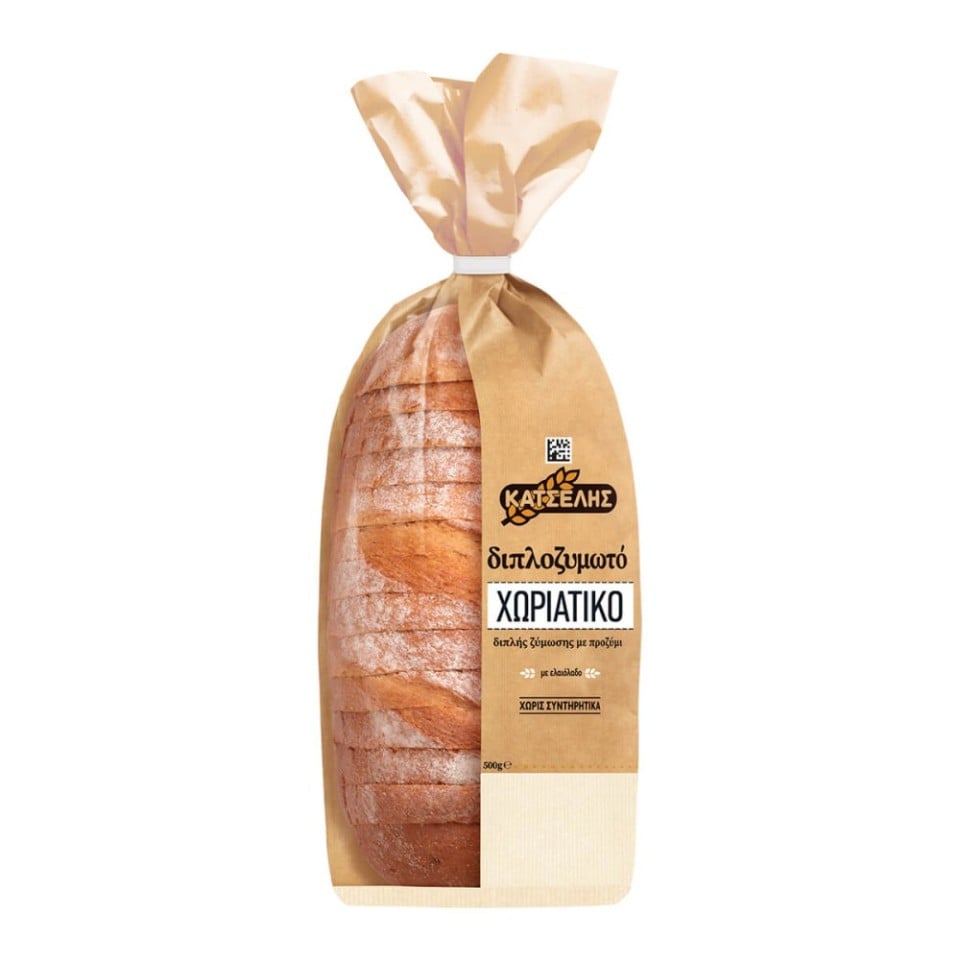


Διπλοζυμωτό Χωριάτικο
Summary
This bread features high-quality ingredients such as durum wheat flour, sourdough starter, and olive oil, which contribute to its nutritional value and flavor. The presence of sugar is a minor concern, but it is used in small amounts. Despite being processed, the clean ingredient list and beneficial components like probiotics and healthy fats support a favorable rating.
At a glance
Key ingredients 11
Durum wheat flourGood
Durum wheat flour is a high-protein flour that provides structure and texture to bread. It is minimally processed and retains more nutrients compared to refined flours. Its high gluten content makes it ideal for bread-making, contributing to a chewy texture.
Risks
Contains gluten, which can be problematic for individuals with celiac disease or gluten sensitivity.
Benefits
Rich in protein and essential nutrients, supporting muscle health and providing energy.
Sourdough starterGood
Sourdough starter is a natural leavening agent that enhances the flavor and texture of bread. It involves fermentation, which can improve digestibility and nutrient absorption. The fermentation process also contributes beneficial probiotics.
Benefits
Improves digestibility and provides beneficial probiotics that support gut health.
WaterNeutral
Water is a fundamental ingredient in bread-making, providing moisture and aiding in the activation of yeast. It is a natural and unprocessed component. Water quality can affect the final product, but it generally poses no health risks.
Benefits
Essential for hydration and activating yeast in bread-making.
Rye flourGood
Rye flour is a whole grain flour that adds a distinct flavor and nutritional benefits to bread. It is less processed than white flour and retains more fiber and nutrients. Rye flour can contribute to a denser texture and a richer taste.
Risks
Contains gluten, which can be problematic for individuals with celiac disease or gluten sensitivity.
Benefits
High in fiber and nutrients, supporting digestive health and providing sustained energy.
Wheat maltGood
Wheat malt is used to enhance the flavor and color of bread, providing a natural sweetness. It is minimally processed and retains beneficial nutrients. The malting process can also improve the digestibility of grains.
Risks
Contains gluten, which can be problematic for individuals with celiac disease or gluten sensitivity.
Benefits
Adds natural sweetness and enhances flavor while providing some nutritional benefits.
SugarBad
Sugar is added to enhance flavor and aid in fermentation, but it is a refined carbohydrate with minimal nutritional value. Excessive consumption of refined sugar can lead to health issues such as obesity and diabetes. In bread, it is typically used in small amounts, but it still contributes to overall sugar intake.
Risks
Excessive consumption can lead to health issues such as obesity, diabetes, and tooth decay.
Benefits
Provides energy and aids in the fermentation process, enhancing flavor.
YogurtGood
Yogurt adds moisture and a tangy flavor to bread, while also contributing beneficial probiotics. It is a source of protein and calcium, supporting bone health. The fermentation process in yogurt can improve digestibility and nutrient absorption.
Risks
Contains lactose, which can be problematic for individuals with lactose intolerance.
Benefits
Rich in probiotics, protein, and calcium, supporting gut and bone health.
YeastNeutral
Yeast is a natural leavening agent that helps bread rise by producing carbon dioxide during fermentation. It is a key ingredient in bread-making, contributing to texture and flavor. Yeast is generally considered safe and beneficial in moderate amounts.
Benefits
Essential for leavening bread and enhancing texture and flavor.
Wheat starchNeutral
Wheat starch is used to improve the texture and consistency of bread. It is a refined carbohydrate with limited nutritional value. While it contributes to the structure of baked goods, it does not provide significant health benefits.
Risks
Contains gluten, which can be problematic for individuals with celiac disease or gluten sensitivity.
Benefits
Improves texture and consistency in baked goods.
Wheat glutenNeutral
Wheat gluten is added to improve the elasticity and chewiness of bread. It is a concentrated source of gluten, which provides structure to baked goods. While beneficial for bread-making, it can be problematic for those with gluten sensitivities.
Risks
Contains gluten, which can be problematic for individuals with celiac disease or gluten sensitivity.
Benefits
Enhances elasticity and structure in bread, improving texture.
Olive oilVery Good
Olive oil is a healthy fat that adds flavor and moisture to bread. It is rich in monounsaturated fats and antioxidants, supporting heart health. Cold-pressed extraction preserves its beneficial compounds, making it a high-quality ingredient.
Benefits
Rich in monounsaturated fats and antioxidants, supporting heart health and providing anti-inflammatory properties.
Processing
Processed Foods
Get the full breakdown in the Scout app
Scan any product to see lab results, healthy alternatives, and your personalized analysis.
Download on theApp Store