
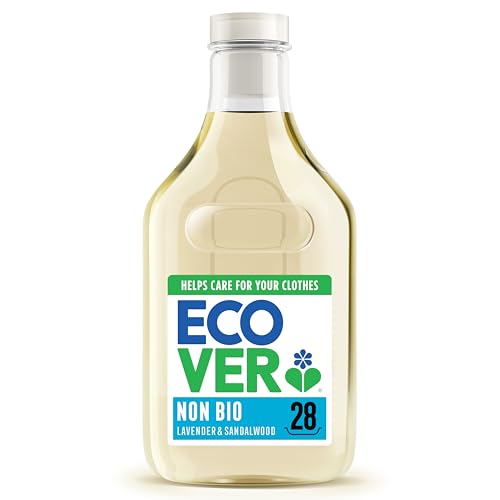


Ecover - Laundry Liquid Non Bio | 1500ml
Summary
This laundry liquid is primarily plant-based, featuring biodegradable ingredients and a fragrance-free formula, which enhances its safety for indoor use and minimizes environmental impact. The absence of harsh surfactants like sodium lauryl sulfate and synthetic fragrances contributes positively to its rating. Its minimal processing level further supports its eco-friendly and user-safe profile.
At a glance
Key ingredients 9
Aqua
Aqua is commonly used as a solvent in cleaning products. It helps to dissolve other ingredients and facilitate their application. It is a neutral and safe component.
Risks
There are no significant risks associated with water in cleaning products.
Benefits
Water is essential for dissolving and distributing cleaning agents effectively.
Ethoxylated Rapeseed Methyl Esters
This ingredient is a surfactant derived from rapeseed oil, used to reduce surface tension and improve cleaning efficiency. It is considered more environmentally friendly compared to synthetic surfactants. It is biodegradable and plant-based.
Risks
There are minimal risks, but ethoxylation can sometimes lead to trace amounts of 1,4-dioxane, a potential contaminant.
Benefits
Being plant-derived, it is more sustainable and less harmful to aquatic life.
Sodium Soap of coco and olein fatty acids
This is a natural soap derived from coconut and palm oils, used for its cleaning properties. It acts as a surfactant, helping to emulsify oils and dirt. It is biodegradable and considered safe.
Risks
There are minimal risks, primarily related to potential skin irritation in sensitive individuals.
Benefits
It is a natural and effective cleaning agent with a lower environmental impact.
Sodium Citrate
Sodium citrate is used as a water softener and pH regulator in cleaning products. It helps to enhance the effectiveness of surfactants by binding to metal ions. It is considered safe and environmentally friendly.
Risks
There are no significant risks associated with sodium citrate in cleaning products.
Benefits
It improves cleaning efficiency and is biodegradable.
Alcohol
Alcohol is used as a solvent and antibacterial agent in cleaning products. It helps to dissolve other ingredients and can enhance the product's cleaning power. It evaporates quickly, leaving no residue.
Risks
High concentrations can be drying to the skin and may cause irritation.
Benefits
It provides effective cleaning and disinfection properties.
Lauryl Polyglucose
Lauryl polyglucose is a mild, plant-derived surfactant used for its gentle cleaning properties. It is derived from glucose and fatty alcohols, making it biodegradable. It is considered safe and non-irritating.
Risks
There are minimal risks associated with this ingredient.
Benefits
It is gentle on the skin and environmentally friendly.
Tetrasodium glutamate diacetate
This ingredient is a chelating agent used to enhance the stability and effectiveness of cleaning products. It binds to metal ions, preventing them from interfering with the cleaning process. It is considered safe and biodegradable.
Risks
There are minimal risks associated with this ingredient.
Benefits
It improves product performance and is environmentally friendly.
Bio poly ethyleneglycol propyleneglycol oligo ester
This is a biodegradable polymer used to enhance the texture and performance of cleaning products. It helps to stabilize formulations and improve application. It is considered safe and environmentally friendly.
Risks
There are minimal risks associated with this ingredient.
Benefits
It contributes to the product's effectiveness and sustainability.
Citric acid
Citric acid is used as a pH adjuster and water softener in cleaning products. It helps to enhance cleaning efficiency by breaking down mineral deposits. It is safe, biodegradable, and derived from natural sources.
Risks
There are no significant risks associated with citric acid in cleaning products.
Benefits
It is effective in removing hard water stains and is environmentally friendly.
Processing
Unprocessed or Minimally Processed Foods
Get the full breakdown in the Scout app
Scan any product to see lab results, healthy alternatives, and your personalized analysis.
Download on theApp Store