
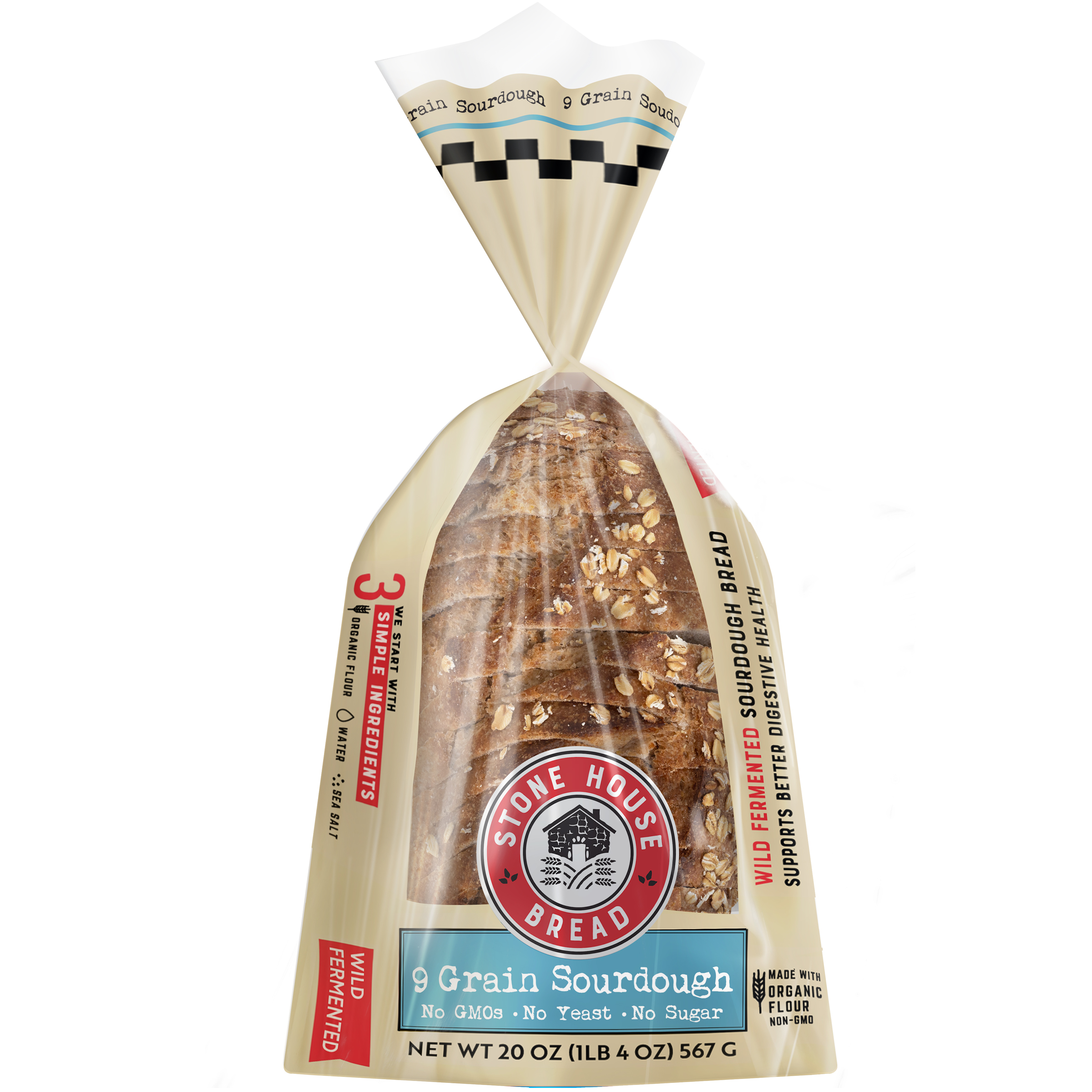


Stone House Bread SOURDOUGH BREAD
At a glance
Summary
This sourdough bread is made with high-quality organic ingredients, including unbleached stone-milled whole wheat flour and stone-ground whole rye flour, which provide fiber and nutrients. The use of sea salt and the absence of harmful additives contribute to its healthfulness. Despite its processed nature, the clean ingredient list and traditional preparation methods support a high score within its category.
Key ingredients 7
Organic unbleached stone-milled whole wheat flourGood
Whole wheat flour retains the bran and germ, providing more fiber and nutrients than refined flour. Stone-milling is a traditional method that preserves more nutrients. Being organic, it is free from synthetic chemicals.
Benefits
Rich in fiber and essential nutrients, supporting digestive health and providing sustained energy.
Organic stone-ground whole rye flourGood
Whole rye flour is high in fiber and nutrients, contributing to a denser bread texture. Stone-ground processing preserves more nutrients compared to conventional milling. Organic certification ensures no synthetic chemicals are used.
Benefits
Provides dietary fiber and essential nutrients, supporting heart health and digestion.
Sea saltGood
Sea salt is a natural source of sodium and trace minerals. It is less processed than table salt, retaining more natural minerals. It enhances flavor without the additives found in refined salts.
Risks
Excessive consumption can contribute to high blood pressure.
Benefits
Provides essential sodium and trace minerals, enhancing flavor naturally.
Certified organic unbleached wheat flourNeutral
This is a refined flour that provides structure and texture to bread. Being organic, it is free from synthetic pesticides and fertilizers. However, it lacks the fiber and nutrients found in whole grain flours.
Benefits
Provides carbohydrates for energy, though it lacks the nutritional benefits of whole grains.
WaterNeutral
Water is a basic ingredient used to hydrate the flour and activate yeast. It is essential for the dough formation process. It does not contribute any nutritional value.
Benefits
Essential for dough formation and hydration, but does not provide nutritional benefits.
Cultured wheatNeutral
Cultured wheat is used as a natural preservative due to its fermentation process. It helps extend shelf life without synthetic additives. It does not significantly alter the nutritional profile of the bread.
Benefits
Acts as a natural preservative, extending shelf life without synthetic additives.
Plant-based enzymeNeutral
Plant-based enzymes are used to improve dough texture and rise. They are derived from natural sources and aid in the bread-making process. They do not contribute nutritional value.
Benefits
Improves dough texture and rise, enhancing the bread-making process.
Processing
Processed Foods
Get the full breakdown in the Scout appTake Scout shopping
Scan any product to see lab results, healthy alternatives, and your personalized analysis.
Download on theApp Store GET IT ONGoogle PlayAmazon pricing & content
Amazon price as of . Product prices and availability are accurate as of the date/time indicated and are subject to change. Any price and availability information displayed on Amazon.com at the time of purchase will apply to the purchase of this product.
CERTAIN CONTENT THAT APPEARS ON THIS SITE COMES FROM AMAZON. THIS CONTENT IS PROVIDED “AS IS” AND IS SUBJECT TO CHANGE OR REMOVAL AT ANY TIME.