
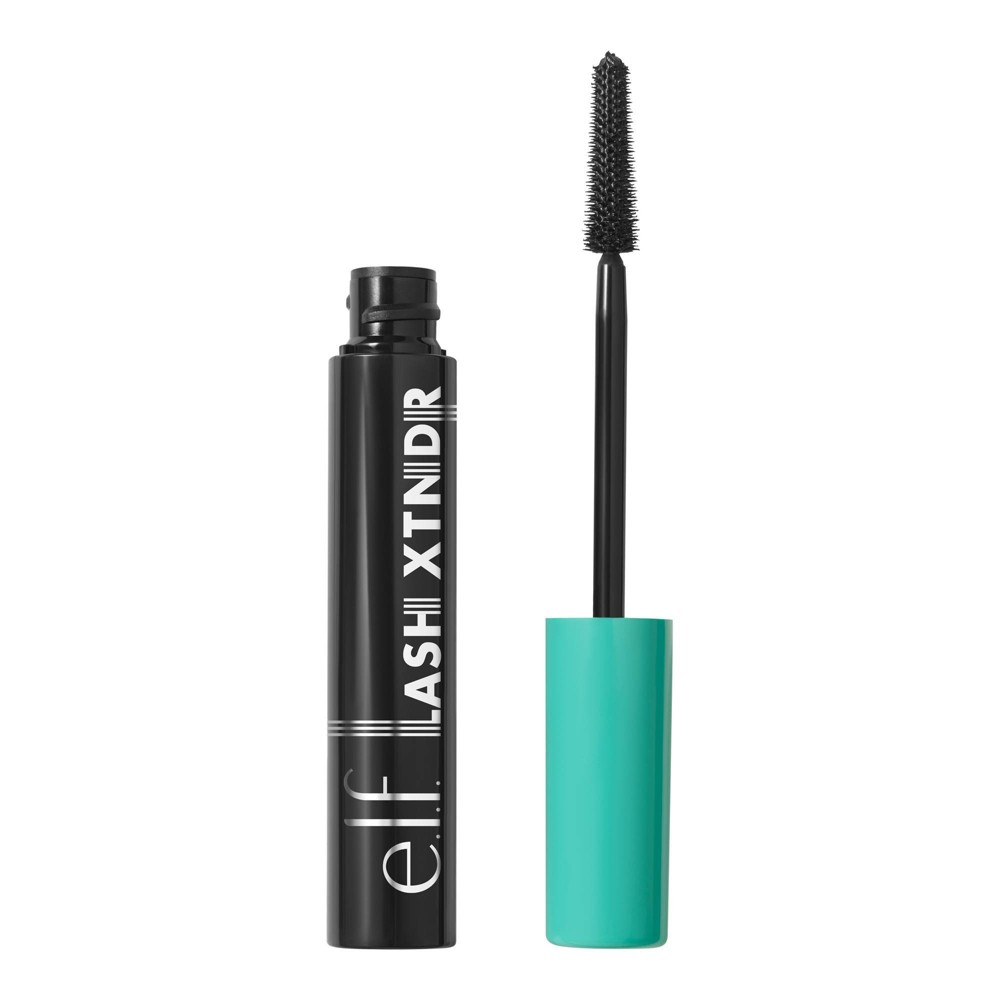
e.l.f. Lash XTNDR Tubing Mascara - Soft Black - 0.25oz: Lengthening, Finish, Paraben-Free, Vegan
Analysis updated August 2026 · How Scout scores
At a glance
Summary
This mascara contains beneficial ingredients like hydrogenated jojoba oil and carnauba wax, which are known for their moisturizing and thickening properties. However, the presence of acrylates copolymer and alcohol, along with other synthetic components, indicates a moderate level of processing. While it is paraben-free and vegan, the inclusion of synthetic ingredients and alcohol affects its overall safety profile.
Key ingredients 21
Hydrogenated Jojoba OilVery Good
Hydrogenated jojoba oil is a stable form of jojoba oil, known for its moisturizing properties. It is a natural oil that is beneficial for skin health. It is highly regarded in cosmetics for its emollient properties.
Risks
There are minimal risks associated with hydrogenated jojoba oil.
Benefits
It provides excellent moisturizing benefits and helps in maintaining skin hydration.
Copernicia Cerifera (Carnauba) Wax/CeraGood
Carnauba wax is a natural wax obtained from the leaves of the carnauba palm. It is used as a thickening agent and provides a glossy finish. It is considered safe and beneficial in cosmetics.
Risks
There are minimal risks associated with carnauba wax.
Benefits
It provides a smooth application and enhances the product's durability.
Water (Aqua)Neutral
Water is a common solvent used in cosmetics to dissolve other ingredients. It helps in forming the base of the product. It is generally considered safe and non-reactive.
Risks
There are no significant risks associated with water in cosmetics.
Benefits
Water helps in maintaining the consistency and texture of the product.
Glyceryl StearateNeutral
Glyceryl stearate is an emulsifier that helps in blending water and oils in cosmetics. It is derived from glycerin and stearic acid. It is generally considered safe for use in cosmetics.
Risks
There is a low risk of skin irritation in sensitive individuals.
Benefits
It helps in improving the texture and stability of the product.
PVPNeutral
PVP is a synthetic polymer used as a film-former in cosmetics. It helps in providing hold and stability to the product. It is generally considered safe for use in cosmetics.
Risks
There is a potential for skin irritation in sensitive individuals.
Benefits
It helps in enhancing the product's performance and longevity.
AlcoholNeutral
Alcohol is used as a solvent and preservative in cosmetics. It helps in the quick drying of the product. It is generally considered safe in small amounts.
Risks
Excessive use can lead to skin dryness and irritation.
Benefits
It aids in the quick drying and setting of the product.
Stearic AcidNeutral
Stearic acid is a fatty acid used as an emulsifier and thickener in cosmetics. It helps in stabilizing formulations. It is generally considered safe for use in cosmetics.
Risks
There is a low risk of skin irritation in sensitive individuals.
Benefits
It helps in improving the texture and consistency of the product.
Palmitic AcidNeutral
Palmitic acid is a fatty acid used as an emollient and thickener in cosmetics. It is derived from palm oil and is considered safe for use. It helps in providing a smooth texture to the product.
Risks
There is a low risk of skin irritation in sensitive individuals.
Benefits
It helps in enhancing the product's texture and moisturizing properties.
Ammonium Acrylates CopolymerNeutral
Ammonium acrylates copolymer is a film-forming agent used in cosmetics. It provides a smooth application and enhances the product's durability. It is generally considered safe for use.
Risks
There is a potential for skin irritation in sensitive individuals.
Benefits
It helps in providing a long-lasting effect and improves the product's performance.
Caprylyl GlycolNeutral
Caprylyl glycol is used as a skin conditioning agent and preservative in cosmetics. It helps in improving the product's shelf life. It is generally considered safe for use.
Risks
There is a low risk of skin irritation in sensitive individuals.
Benefits
It helps in enhancing the product's moisturizing properties and longevity.
HydroxyacetophenoneNeutral
Hydroxyacetophenone is used as an antioxidant and preservative in cosmetics. It helps in protecting the product from degradation. It is generally considered safe for use.
Risks
There is a low risk of skin irritation in sensitive individuals.
Benefits
It helps in maintaining the product's stability and effectiveness.
1,2-HexanediolNeutral
1,2-Hexanediol is used as a solvent and preservative in cosmetics. It helps in improving the product's texture and shelf life. It is generally considered safe for use.
Risks
There is a low risk of skin irritation in sensitive individuals.
Benefits
It helps in enhancing the product's stability and effectiveness.
Sodium DehydroacetateNeutral
Sodium dehydroacetate is used as a preservative in cosmetics. It helps in preventing microbial growth and extending the product's shelf life. It is generally considered safe for use.
Risks
There is a low risk of skin irritation in sensitive individuals.
Benefits
It helps in maintaining the product's safety and longevity.
Butylene GlycolNeutral
Butylene glycol is used as a solvent and humectant in cosmetics. It helps in improving the product's texture and moisture retention. It is generally considered safe for use.
Risks
There is a low risk of skin irritation in sensitive individuals.
Benefits
It helps in enhancing the product's moisturizing properties and texture.
Laureth-21Neutral
Laureth-21 is used as an emulsifier and surfactant in cosmetics. It helps in blending ingredients and improving the product's texture. It is generally considered safe for use.
Risks
There is a low risk of skin irritation in sensitive individuals.
Benefits
It helps in enhancing the product's texture and stability.
Trideceth-6 PhosphateNeutral
Trideceth-6 phosphate is used as an emulsifier and surfactant in cosmetics. It helps in blending ingredients and improving the product's texture. It is generally considered safe for use.
Risks
There is a low risk of skin irritation in sensitive individuals.
Benefits
It helps in enhancing the product's texture and stability.
Dipropylene GlycolNeutral
Dipropylene glycol is used as a solvent and humectant in cosmetics. It helps in improving the product's texture and moisture retention. It is generally considered safe for use.
Risks
There is a low risk of skin irritation in sensitive individuals.
Benefits
It helps in enhancing the product's moisturizing properties and texture.
Glyceryl CaprylateNeutral
Glyceryl caprylate is used as an emulsifier and skin conditioning agent in cosmetics. It helps in improving the product's texture and stability. It is generally considered safe for use.
Risks
There is a low risk of skin irritation in sensitive individuals.
Benefits
It helps in enhancing the product's texture and moisturizing properties.
Acrylates CopolymerBad
Processed additive flagged under Scout's ingredient doctrine.
Risks
There is a potential for skin irritation in sensitive individuals.
Benefits
It helps in providing a long-lasting effect and enhances the texture of the product.
Synthetic BeeswaxBad
Processed additive flagged under Scout's ingredient doctrine.
Risks
There are minimal risks associated with synthetic beeswax.
Benefits
It helps in providing structure and moisture retention in the product.
Aminomethyl PropanolBad
Processed additive flagged under Scout's ingredient doctrine.
Risks
There is a low risk of skin irritation in sensitive individuals.
Benefits
It helps in maintaining the product's stability and effectiveness.
Get the full breakdown in the Scout appTake Scout shopping
Scan any product to see lab results, healthy alternatives, and your personalized analysis.
Download on theApp Store GET IT ONGoogle PlayAmazon pricing & content
Amazon price as of . Product prices and availability are accurate as of the date/time indicated and are subject to change. Any price and availability information displayed on Amazon.com at the time of purchase will apply to the purchase of this product.
CERTAIN CONTENT THAT APPEARS ON THIS SITE COMES FROM AMAZON. THIS CONTENT IS PROVIDED “AS IS” AND IS SUBJECT TO CHANGE OR REMOVAL AT ANY TIME.