
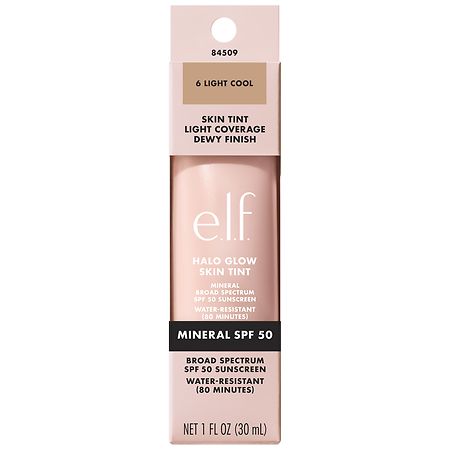
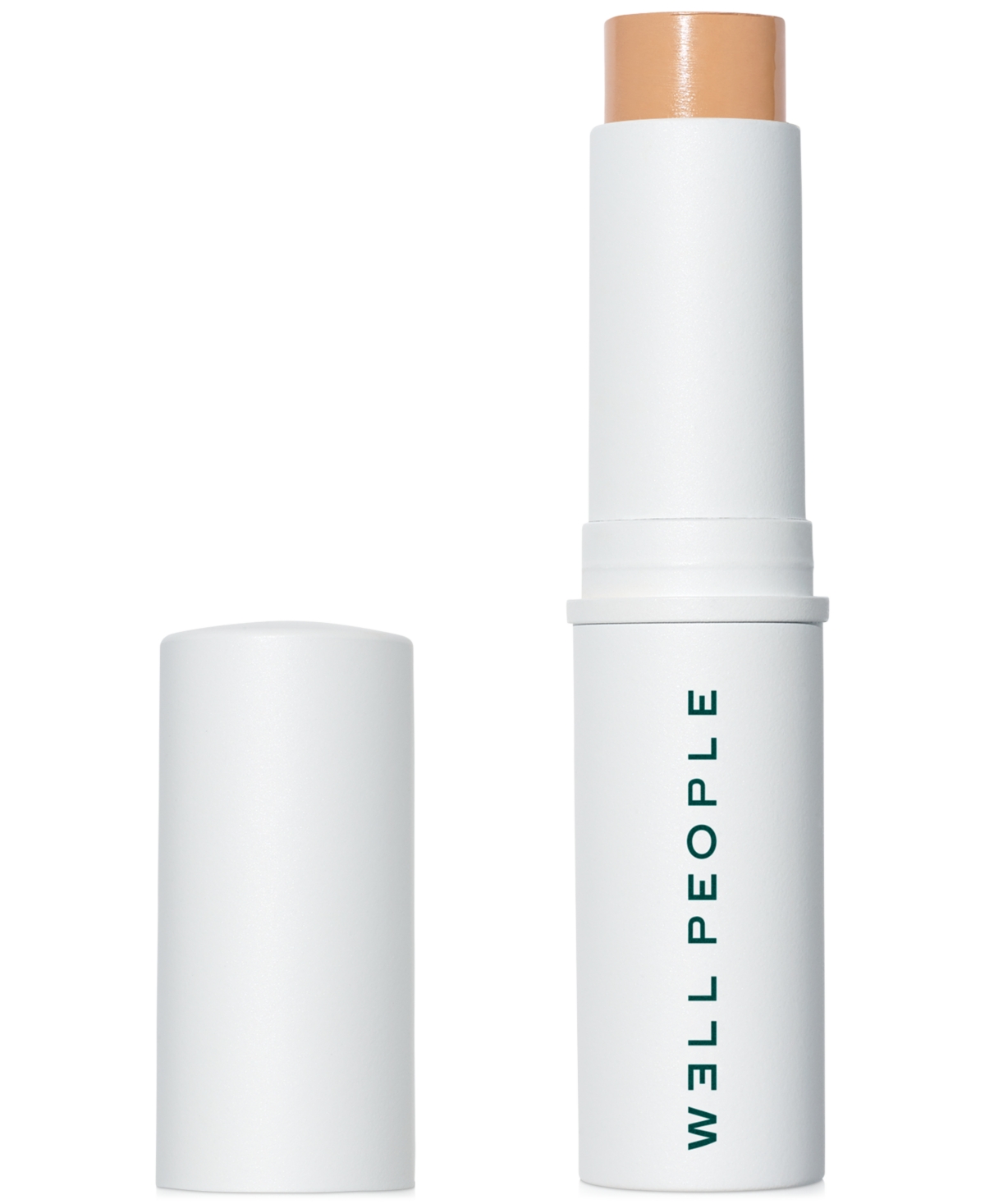
e.l.f. Halo Glow Skin Tint Light Coverage Foundation - Mineral SPF 50 - 6 Light Cool - 1 fl oz
Analysis updated September 2026 · How Scout scores
At a glance
Summary
This foundation features zinc oxide as a mineral sunscreen, which is a safe and effective ingredient for UV protection. It also includes niacinamide, known for its skin-soothing and barrier-strengthening properties. The presence of phenoxyethanol as a preservative is a minor concern, but overall, the product has a clean ingredient list with beneficial components and minimal processing.
Key ingredients 3
Zinc OxideGood
Zinc Oxide is a mineral sunscreen agent that provides broad-spectrum UV protection. It is considered safe and effective for sensitive skin. It is often used in creams and lotions for its protective properties.
Risks
There are minimal risks associated with Zinc Oxide, though it can sometimes leave a white cast on the skin.
Benefits
Zinc Oxide offers excellent protection against both UVA and UVB rays, making it a preferred choice for sun protection.
NiacinamideGood
Niacinamide is a form of Vitamin B3 that is known for its anti-inflammatory and skin-soothing properties. It helps improve skin texture and tone by reducing redness and blotchiness. It is also effective in strengthening the skin barrier.
Risks
Niacinamide is generally well-tolerated, but in rare cases, it may cause mild irritation or redness.
Benefits
It helps in reducing the appearance of enlarged pores, fine lines, and dullness, contributing to a more even skin tone.
PhenoxyethanolBad
Phenoxyethanol is a preservative used to prevent the growth of bacteria and mold in cosmetic products. It is considered a safer alternative to parabens. However, it can cause skin irritation in some individuals, especially those with sensitive skin.
Risks
Prolonged exposure to Phenoxyethanol can lead to skin irritation and allergic reactions in sensitive individuals.
Benefits
It effectively preserves the product, extending its shelf life and maintaining its efficacy.
Get the full breakdown in the Scout appTake Scout shopping
Scan any product to see lab results, healthy alternatives, and your personalized analysis.
Download on theApp Store GET IT ONGoogle Play