
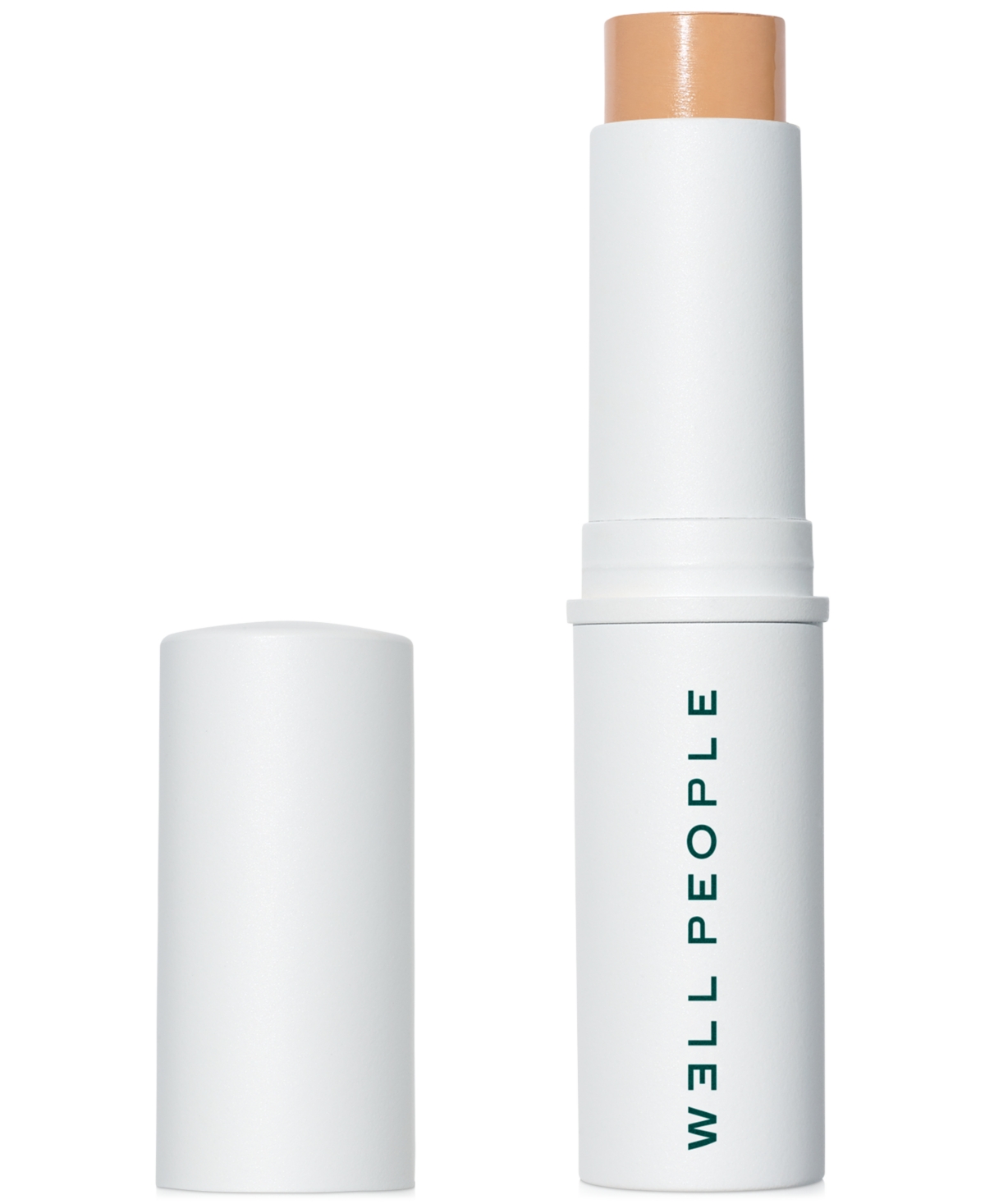

Well People Bio Stick Foundation
Analysis updated August 2026 · How Scout scores
At a glance
Summary
This foundation features a clean label with a high concentration of natural oils and beneficial ingredients like sunflower seed oil, castor oil, and jojoba oil, which are known for their moisturizing and skin-nourishing properties. The product avoids harsh chemicals and synthetic additives, making it suitable for sensitive skin and contributing to its high rating. The inclusion of natural waxes and antioxidants further enhances its safety and effectiveness, aligning with a minimally processed formulation.
Key ingredients 22
Helianthus Annuus Seed OilVery Good
Helianthus Annuus Seed Oil, commonly known as sunflower seed oil, is rich in vitamin E and fatty acids, which help to nourish and protect the skin. It is a natural emollient that helps to retain moisture in the skin. This oil is non-comedogenic and suitable for all skin types.
Risks
There are minimal risks associated with sunflower seed oil, though individuals with allergies should exercise caution.
Benefits
It provides antioxidant protection and helps to maintain skin hydration.
Ricinus Communis Seed OilVery Good
Ricinus Communis Seed Oil, or castor oil, is known for its moisturizing properties and ability to soothe irritated skin. It contains ricinoleic acid, which has anti-inflammatory effects. This oil is often used to enhance skin smoothness and softness.
Risks
Some individuals may experience allergic reactions or skin irritation.
Benefits
It deeply moisturizes the skin and can help reduce inflammation.
Carthamus Tinctorius Seed OilVery Good
Carthamus Tinctorius Seed Oil, also known as safflower oil, is high in linoleic acid, which helps to maintain the integrity of the skin barrier. It is lightweight and non-greasy, making it suitable for oily and acne-prone skin. This oil is beneficial for improving skin texture and tone.
Risks
There is a low risk of allergic reactions, but it is generally considered safe for topical use.
Benefits
It helps to balance skin oils and improve skin texture.
TocopherolVery Good
Tocopherol, or vitamin E, is a powerful antioxidant that helps to protect the skin from free radical damage. It also has moisturizing properties and supports skin healing. This ingredient is beneficial for maintaining healthy skin.
Risks
There are minimal risks, though high concentrations may cause irritation in sensitive individuals.
Benefits
It provides antioxidant protection and supports skin health.
Caprylic/Capric TriglycerideVery Good
Caprylic/Capric Triglyceride is derived from coconut oil and glycerin, used as an emollient and skin-replenishing ingredient. It is lightweight and non-greasy, making it suitable for all skin types. This ingredient helps to improve the spreadability of products and provides a silky feel.
Risks
There are minimal risks, though it may cause mild irritation in rare cases.
Benefits
It provides a lightweight, non-greasy moisturizing effect and enhances product texture.
Simmondsia Chinensis Seed OilVery Good
Simmondsia Chinensis Seed Oil, or jojoba oil, is a natural oil that closely resembles the skin's natural sebum. It is highly moisturizing and helps to balance oil production. This oil is non-comedogenic and suitable for all skin types.
Risks
There are minimal risks, though it may cause mild irritation in rare cases.
Benefits
It helps to balance skin oils and provides deep hydration.
Rosa Rubiginosa Seed OilVery Good
Rosa Rubiginosa Seed Oil, also known as rosehip oil, is rich in essential fatty acids and vitamins A and C. It is known for its regenerative properties and ability to improve skin texture and tone. This oil is beneficial for reducing the appearance of scars and fine lines.
Risks
There are minimal risks, though it may cause mild irritation in sensitive individuals.
Benefits
It helps to improve skin texture and reduce the appearance of scars.
Crambe Abyssinica Seed OilVery Good
Crambe Abyssinica Seed Oil is a natural oil rich in erucic acid, which provides excellent moisturizing properties. It is lightweight and easily absorbed, making it suitable for all skin types. This oil helps to improve skin elasticity and smoothness.
Risks
There are minimal risks, though it may cause mild irritation in rare cases.
Benefits
It provides deep hydration and improves skin elasticity.
Calendula Officinalis Flower ExtractVery Good
Calendula Officinalis Flower Extract is known for its soothing and anti-inflammatory properties. It is often used to calm irritated skin and promote healing. This extract is beneficial for sensitive and inflamed skin conditions.
Risks
There are minimal risks, though it may cause mild irritation in rare cases.
Benefits
It helps to soothe and calm irritated skin.
Camellia Sinensis Seed OilVery Good
Camellia Sinensis Seed Oil, or tea seed oil, is rich in antioxidants and essential fatty acids. It helps to nourish and protect the skin from environmental damage. This oil is lightweight and easily absorbed, making it suitable for all skin types.
Risks
There are minimal risks, though it may cause mild irritation in rare cases.
Benefits
It provides antioxidant protection and nourishes the skin.
Aloe Barbadensis Leaf JuiceVery Good
Aloe Barbadensis Leaf Juice, commonly known as aloe vera, is renowned for its soothing and hydrating properties. It helps to calm irritated skin and promote healing. This ingredient is beneficial for all skin types, especially sensitive and inflamed skin.
Risks
There are minimal risks, though it may cause mild irritation in rare cases.
Benefits
It provides soothing and hydrating effects, promoting skin healing.
Copernicia Cerifera CeraGood
Copernicia Cerifera Cera, or carnauba wax, is a natural wax derived from the leaves of the carnauba palm. It is used as a thickening agent and provides a protective barrier on the skin. This wax is hypoallergenic and suitable for sensitive skin.
Risks
There are minimal risks, though it may cause mild irritation in rare cases.
Benefits
It helps to create a smooth texture and provides a protective layer on the skin.
MicaGood
Beneficial ingredient — whole-food or functional value in this product class.
Risks
There are concerns about ethical sourcing and potential contamination with heavy metals.
Benefits
It provides a natural shimmer and enhances the visual appeal of makeup products.
Castor Isostearate SuccinateNeutral
Castor Isostearate Succinate is an ester of castor oil and isostearic acid, used as an emollient and conditioning agent. It helps to improve the texture and feel of cosmetic products. This ingredient is generally considered safe for use in cosmetics.
Risks
There are minimal risks, though it may cause mild irritation in sensitive individuals.
Benefits
It enhances the texture and spreadability of cosmetic products.
Polyhydroxystearic AcidNeutral
Polyhydroxystearic Acid is used as an emulsifier and thickening agent in cosmetic formulations. It helps to stabilize products and improve their texture. This ingredient is generally considered safe for use in cosmetics.
Risks
There are minimal risks, though it may cause mild irritation in sensitive individuals.
Benefits
It helps to stabilize formulations and improve product texture.
Isostearic AcidNeutral
Isostearic Acid is a fatty acid used as an emulsifier and thickening agent in cosmetics. It helps to stabilize formulations and improve their texture. This ingredient is generally considered safe for use in cosmetics.
Risks
There are minimal risks, though it may cause mild irritation in sensitive individuals.
Benefits
It helps to stabilize formulations and improve product texture.
Polyglyceryl-3 PolyricinoleateNeutral
Polyglyceryl-3 Polyricinoleate is an emulsifier derived from castor oil, used to stabilize cosmetic formulations. It helps to improve the texture and spreadability of products. This ingredient is generally considered safe for use in cosmetics.
Risks
There are minimal risks, though it may cause mild irritation in sensitive individuals.
Benefits
It helps to stabilize formulations and improve product texture.
MaltodextrinNeutral
Maltodextrin is a polysaccharide used as a binding and texturizing agent in cosmetics. It helps to improve the texture and stability of formulations. This ingredient is generally considered safe for use in cosmetics.
Risks
There are minimal risks, though it may cause mild irritation in sensitive individuals.
Benefits
It helps to improve product texture and stability.
Synthetic BeeswaxBad
Processed additive flagged under Scout's ingredient doctrine.
Risks
There are minimal risks associated with synthetic beeswax, though it may not provide the same benefits as natural beeswax.
Benefits
It helps to stabilize formulations and provides a smooth application.
LecithinBad
Processed additive flagged under Scout's ingredient doctrine.
Risks
There are minimal risks, though it may cause mild irritation in rare cases.
Benefits
It helps to maintain skin hydration and improve product stability.
Sodium BenzoateBad
Synthetic preservative that can form benzene in the presence of vitamin C.
Risks
There are minimal risks, though it may cause mild irritation in sensitive individuals.
Benefits
It helps to preserve products and prevent microbial growth.
Potassium SorbateBad
Synthetic preservative — flagged in daily-use products.
Risks
There are minimal risks, though it may cause mild irritation in sensitive individuals.
Benefits
It helps to preserve products and prevent microbial growth.
Get the full breakdown in the Scout appTake Scout shopping
Scan any product to see lab results, healthy alternatives, and your personalized analysis.
Download on theApp Store GET IT ONGoogle PlayAmazon pricing & content
Amazon price as of . Product prices and availability are accurate as of the date/time indicated and are subject to change. Any price and availability information displayed on Amazon.com at the time of purchase will apply to the purchase of this product.
CERTAIN CONTENT THAT APPEARS ON THIS SITE COMES FROM AMAZON. THIS CONTENT IS PROVIDED “AS IS” AND IS SUBJECT TO CHANGE OR REMOVAL AT ANY TIME.