
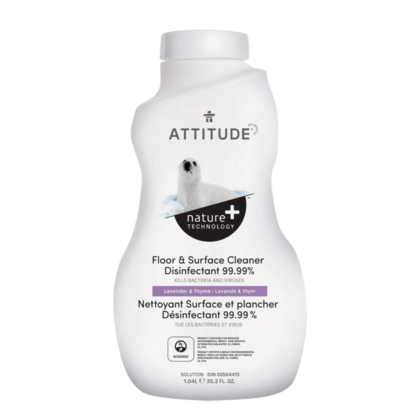


Nettoyant pour Surfaces de Sol,Désinfectant 99,99%,Carrelage & Bois,Thym & Lavande,1,04l- ATTITUDE
Analysis updated July 2026 · How Scout scores
At a glance
Summary
This cleaning product contains plant-derived surfactants like caprylyl glucoside and myristyl glucoside, which are generally considered safer and more environmentally friendly. However, the presence of synthetic fragrance can be a concern for indoor air quality and potential allergies. The product is moderately processed, which affects its overall score, but it still maintains a relatively clean ingredient list compared to more chemically-laden alternatives.
Key ingredients 14
caprylyl glucosideGood
Caprylyl glucoside is a plant-derived surfactant known for its mildness and effectiveness in cleaning. It is biodegradable and considered safe for use in personal care and cleaning products. Its plant origin makes it a preferred choice for eco-friendly formulations.
Risks
Minimal risks, generally considered safe.
Benefits
Biodegradable and gentle on skin.
myristyl glucosideGood
Myristyl glucoside is a mild, plant-derived surfactant used for its cleansing properties. It is biodegradable and often used in eco-friendly products. Its gentle nature makes it suitable for sensitive skin.
Risks
Minimal risks, generally considered safe.
Benefits
Biodegradable and effective in cleaning.
Sapindus Mukorossi Fruit ExtractGood
Sapindus Mukorossi, also known as soapberry, is a natural surfactant used for its gentle cleansing properties. It is biodegradable and eco-friendly, making it a popular choice in natural cleaning products. It is safe for use on sensitive surfaces.
Risks
Minimal risks, generally considered safe.
Benefits
Biodegradable and gentle on surfaces.
non-ionic surfactantsNeutral
Non-ionic surfactants are commonly used in cleaning products for their ability to remove dirt and grease. They are generally considered mild and less irritating compared to ionic surfactants. However, their environmental impact can vary depending on the specific compound used.
Risks
Potential environmental concerns if not biodegradable.
Benefits
Effective in cleaning and generally mild on skin.
Aqua, WaterNeutral
Water is a universal solvent used as a base in many cleaning products. It helps dissolve other ingredients and facilitates the cleaning process. It is essential but does not contribute to cleaning efficacy on its own.
Risks
No inherent risks.
Benefits
Essential for dissolving and mixing ingredients.
PropanediolNeutral
Propanediol is a solvent and humectant used to improve the texture and stability of cleaning products. It is generally considered safe and is derived from corn sugar. It helps in maintaining moisture balance in formulations.
Risks
Minimal risks, generally considered safe.
Benefits
Improves product texture and stability.
Sodium CarbonateNeutral
Sodium carbonate, also known as washing soda, is used to soften water and enhance cleaning efficiency. It is a common ingredient in household cleaning products. It can be irritating to skin and eyes in concentrated forms.
Risks
Can cause irritation if in contact with skin or eyes.
Benefits
Enhances cleaning efficiency by softening water.
Citric AcidNeutral
Common acidulant and preservative — safe at typical use levels, neither beneficial nor harmful.
Risks
Minimal risks, generally considered safe.
Benefits
Biodegradable and effective in removing stains.
Sodium HydroxideNeutral
Sodium hydroxide is a strong base used to adjust the pH of cleaning products. It is effective in breaking down grease and grime. However, it can be corrosive and irritating in high concentrations.
Risks
Can be corrosive and irritating to skin and eyes.
Benefits
Effective in breaking down grease and grime.
Terpineol AcetateNeutral
Terpineol acetate is a fragrance compound used to impart a pleasant scent to cleaning products. It is derived from natural sources but can cause allergic reactions in sensitive individuals. It is generally considered safe in low concentrations.
Risks
Potential allergen for sensitive individuals.
Benefits
Provides a pleasant scent to products.
TerpineolNeutral
Terpineol is a naturally occurring alcohol used for its fragrance and antimicrobial properties. It is found in many essential oils and is generally considered safe. However, it can cause irritation in high concentrations.
Risks
Can cause irritation if used in high concentrations.
Benefits
Provides fragrance and has antimicrobial properties.
TetrahydrolinaloolNeutral
Tetrahydrolinalool is a fragrance ingredient used to enhance the scent profile of cleaning products. It is synthetically derived and can cause allergic reactions in some individuals. It is generally considered safe in regulated amounts.
Risks
Potential allergen for sensitive individuals.
Benefits
Enhances the fragrance profile of products.
Triethyl CitrateNeutral
Triethyl citrate is used as a fragrance stabilizer and solvent in cleaning products. It is derived from citric acid and is considered safe for use. It helps maintain the fragrance integrity over time.
Risks
Minimal risks, generally considered safe.
Benefits
Stabilizes fragrance and enhances product longevity.
fragranceVery Bad
Fragrance in cleaning products often refers to a mixture of synthetic compounds used to impart a scent. These can include allergens and irritants, posing risks to sensitive individuals. The lack of transparency in fragrance components can be concerning.
Risks
Potential allergens and irritants, lack of transparency.
Benefits
Provides a pleasant scent to products.
Get the full breakdown in the Scout appTake Scout shopping
Scan any product to see lab results, healthy alternatives, and your personalized analysis.
Download on theApp Store GET IT ONGoogle Play