
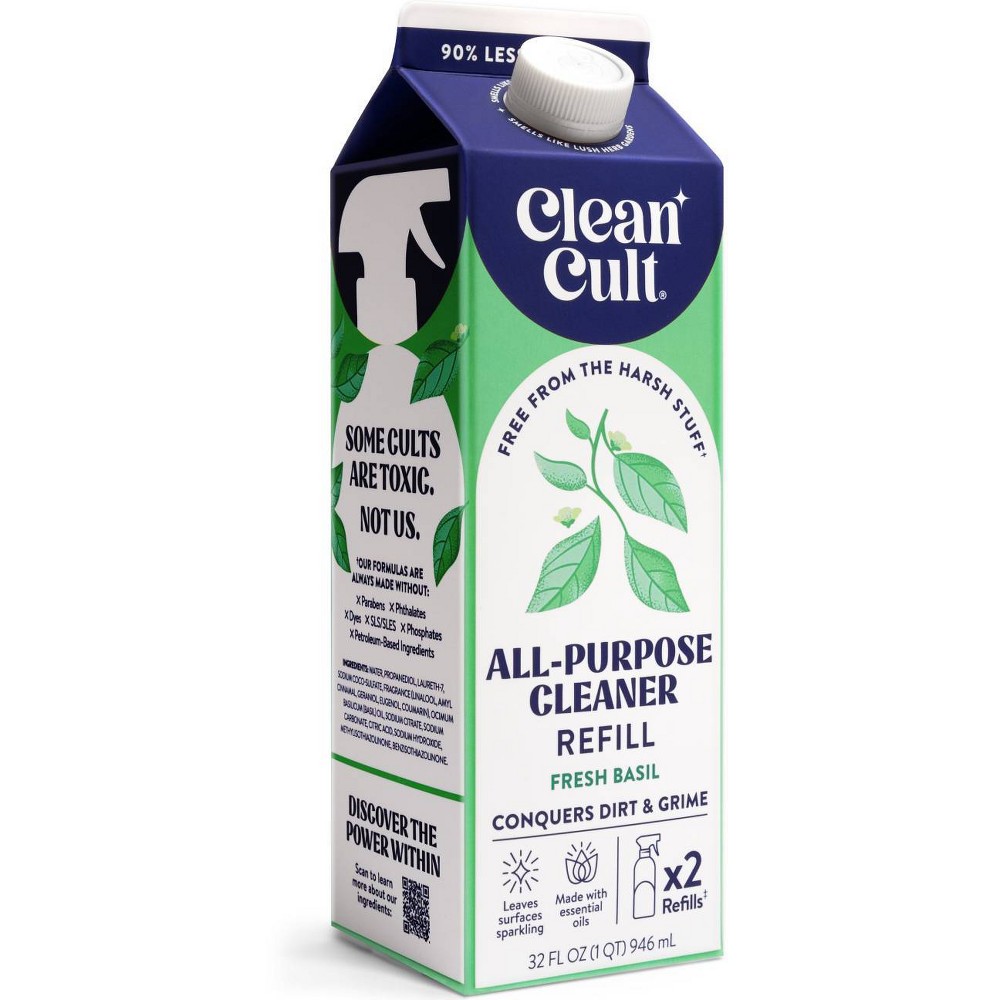

Clean Cult Fresh Basil All-Purpose Liquid Cleaner Refills - 32oz: Multi-Surface, Non-Porous, Countertops
Analysis updated August 2026 · How Scout scores
At a glance
Summary
This cleaning product contains beneficial plant-derived ingredients like coco-glucoside and aloe barbadensis leaf juice, which are gentle and environmentally friendly. However, the presence of sodium coco-sulfate, a harsher surfactant, and synthetic fragrances that can cause irritation, detracts from its overall safety and environmental impact. The product is moderately processed, which also influences its rating.
Key ingredients 14
Coco-GlucosideGood
Coco-Glucoside is a mild, plant-derived surfactant. It is known for being gentle on the skin and environmentally friendly. It is biodegradable and considered safe for use.
Risks
Generally considered safe with minimal risks.
Benefits
Provides effective cleaning while being gentle and biodegradable.
Hydrolyzed Jojoba EstersGood
Hydrolyzed Jojoba Esters are derived from jojoba oil and used for their moisturizing properties. They are biodegradable and considered safe. They help condition surfaces and reduce drying effects.
Risks
Generally safe with minimal risks.
Benefits
Provides conditioning and moisturizing benefits to surfaces.
Aloe Barbadensis Leaf JuiceGood
Aloe Barbadensis Leaf Juice is known for its soothing and moisturizing properties. It is often used to reduce irritation and provide a calming effect. It is safe and beneficial in cleaning products.
Risks
Generally considered safe with minimal risks.
Benefits
Soothes and moisturizes, reducing potential irritation from other ingredients.
WaterNeutral
Water is a universal solvent used in many cleaning products. It helps dissolve other ingredients and facilitates cleaning. It is generally safe and non-toxic.
Risks
There are no significant risks associated with water in cleaning products.
Benefits
Water is essential for dissolving and distributing cleaning agents effectively.
Cocamidopropyl BetaineNeutral
Cocamidopropyl Betaine is a surfactant derived from coconut oil. It is used to enhance foam and improve cleaning efficacy. It is generally considered mild but can cause irritation in some individuals.
Risks
May cause skin irritation in sensitive individuals.
Benefits
Enhances foam and cleaning power while being relatively mild.
GlycerinNeutral
Standard formulation ingredient — neither beneficial nor harmful at typical use.
Benefits
Helps maintain moisture balance and prevents drying of surfaces.
Guar Hydroxypropyltrimonium ChlorideNeutral
Guar Hydroxypropyltrimonium Chloride is a conditioning agent derived from guar gum. It is used to improve texture and reduce static. It is generally considered safe.
Risks
Minimal risks associated with its use in cleaning products.
Benefits
Improves texture and reduces static, enhancing product performance.
Citric AcidNeutral
Common acidulant and preservative — safe at typical use levels, neither beneficial nor harmful.
Risks
Generally safe with minimal risks.
Benefits
Enhances cleaning by dissolving mineral deposits and adjusting pH.
Sodium ChlorideNeutral
Sodium Chloride, or table salt, is used to thicken and stabilize cleaning products. It is safe and non-toxic. It helps improve the viscosity of the product.
Benefits
Improves product viscosity and stability.
Trisodium Ethylenediamine DisuccinateNeutral
Trisodium Ethylenediamine Disuccinate is a chelating agent used to enhance cleaning performance. It binds metal ions and improves product stability. It is considered safe and biodegradable.
Risks
Generally considered safe with minimal risks.
Benefits
Enhances cleaning performance by binding metal ions.
Sodium Coco-SulfateBad
Sodium Coco-Sulfate is a surfactant similar to SLS, derived from coconut oil. It can be harsh on the skin and cause irritation. Despite being coconut-derived, it shares similar concerns with SLS.
Risks
Potential skin irritation and dryness, especially with prolonged exposure.
Benefits
Effective at removing dirt and grease due to its surfactant properties.
Fragrance (Hexyl Cinnamal, Eugenol, Limonene, Linalool)Bad
Fragrances can cause allergic reactions and skin irritation. They often contain allergens like limonene and linalool. Synthetic fragrances are generally discouraged in cleaning products.
Risks
Potential allergens and skin irritants, especially for sensitive individuals.
Benefits
Provides a pleasant scent to the product.
Sodium BenzoateBad
Synthetic preservative that can form benzene in the presence of vitamin C.
Risks
Minimal risks when used in appropriate concentrations.
Benefits
Prevents microbial growth, extending product shelf life.
Potassium SorbateBad
Synthetic preservative — flagged in daily-use products.
Risks
Generally safe with minimal risks.
Benefits
Inhibits mold and yeast growth, ensuring product stability.
Get the full breakdown in the Scout appTake Scout shopping
Scan any product to see lab results, healthy alternatives, and your personalized analysis.
Download on theApp Store GET IT ONGoogle Play