
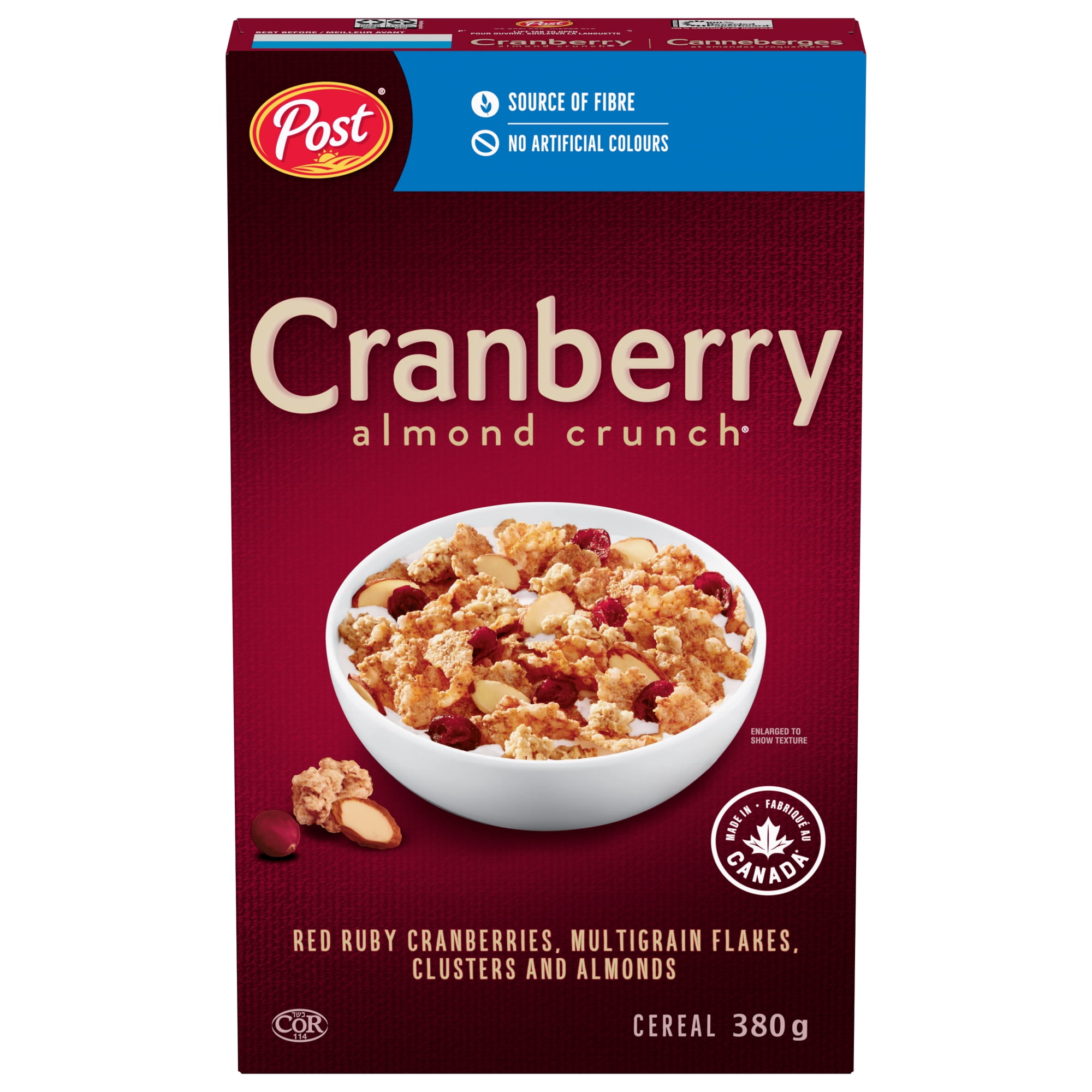



Post Cranberry Almond Crunch Retail Size Regular
Analysis updated May 2026 · How Scout scores
At a glance
Summary
This granola product contains beneficial whole grains and almonds, which provide fiber and essential nutrients. However, it also includes refined sugars and seed oils like sunflower and canola oil, which are highly processed and can contribute to inflammation. The presence of these processed ingredients and added sugars impacts its overall healthiness, despite the inclusion of some nutritious components.
Key ingredients 11
Whole Grain WheatVery Good
Whole grain wheat is a minimally processed ingredient rich in dietary fiber and essential nutrients. It supports digestive health and provides sustained energy. The presence of bran and germ enhances its nutritional profile.
Benefits
Rich in fiber, vitamins, and minerals, supporting digestive health and providing long-lasting energy.
Whole Grain Rolled OatsVery Good
Whole grain rolled oats are a nutritious source of soluble fiber, particularly beta-glucan, which can help lower cholesterol levels. They are minimally processed, retaining most of their natural nutrients. Oats provide a slow-release energy source, beneficial for blood sugar control.
Benefits
High in soluble fiber, which supports heart health and aids in blood sugar regulation.
Whole Grain BarleyVery Good
Whole grain barley is a good source of dietary fiber, particularly beta-glucan, which is beneficial for heart health. It is minimally processed, preserving its nutritional integrity. Barley also provides essential vitamins and minerals.
Benefits
Supports heart health and provides essential nutrients due to its high fiber content.
AlmondsVery Good
Almonds are a nutrient-dense nut rich in healthy fats, protein, and vitamins. They provide heart-healthy monounsaturated fats and are a good source of vitamin E. Almonds are minimally processed, retaining their natural nutrients.
Benefits
Rich in healthy fats, protein, and antioxidants, supporting heart health and overall nutrition.
Dried CranberriesGood
Dried cranberries are a source of antioxidants and vitamins, though often sweetened to enhance flavor. They provide some nutritional benefits but can be high in added sugars. The drying process concentrates their nutrients and flavors.
Risks
May contain added sugars, which can contribute to excessive sugar intake.
Benefits
Rich in antioxidants and vitamins, supporting overall health.
GlycerinNeutral
Glycerin is a sugar alcohol used as a humectant to retain moisture in foods. It is generally recognized as safe but provides no significant nutritional benefits. It is often used in small quantities in processed foods.
Benefits
Helps maintain moisture in food products, enhancing texture.
RiceNeutral
Rice is a staple grain that provides carbohydrates and some essential nutrients. It is minimally processed but offers limited nutritional diversity compared to whole grains. Rice is a versatile ingredient used in many food products.
Benefits
Provides carbohydrates for energy but lacks the fiber and nutrients of whole grains.
SugarBad
Refined sugar is a highly processed ingredient that provides empty calories with no nutritional benefits. Excessive consumption can lead to health issues such as obesity and diabetes. It is often used to enhance sweetness but lacks essential nutrients.
Risks
High intake can contribute to obesity, diabetes, and other metabolic disorders.
Brown SugarBad
Brown sugar is a refined sugar with a small amount of molasses, providing minimal additional nutrients. It is used to sweeten foods but contributes to added sugar intake. The nutritional difference from white sugar is negligible.
Risks
Excessive consumption can lead to health issues such as obesity and diabetes.
Sunflower OilVery Bad
Sunflower oil is a seed oil high in omega-6 fatty acids, which can promote inflammation if consumed in excess. It is often highly processed, which can degrade its nutritional quality. The high omega-6 content is a concern for balanced fatty acid intake.
Risks
High omega-6 content may promote inflammation when consumed in excess.
Canola OilVery Bad
Canola oil is a seed oil that is often highly processed and refined, leading to potential degradation of nutrients. It is high in omega-6 fatty acids, which can contribute to inflammation if consumed excessively. The processing methods can also involve chemical solvents.
Risks
High omega-6 content may promote inflammation when consumed in excess.
Processing
Processed Foods
Get the full breakdown in the Scout appTake Scout shopping
Scan any product to see lab results, healthy alternatives, and your personalized analysis.
Download on theApp Store GET IT ONGoogle Play