
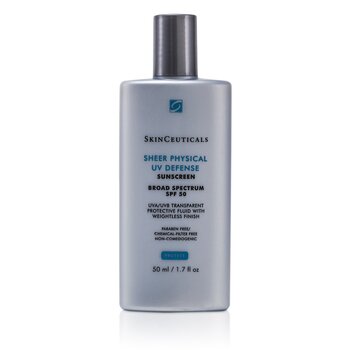

Skinceuticals Sheer Physical UV Defense SPF 50
Analysis updated August 2026 · How Scout scores
At a glance
Summary
This sunscreen contains beneficial ingredients like tocopherol, which is an antioxidant that protects the skin. However, it also includes talc, which is associated with health concerns, particularly when contaminated with asbestos. The presence of synthetic polymers and PEG compounds indicates a moderate level of processing, which affects the overall score.
Key ingredients 33
TocopherolGood
Tocopherol, also known as Vitamin E, is an antioxidant used to protect the skin from free radical damage. It helps to improve the overall health and appearance of the skin. It is generally considered beneficial for use in cosmetics.
Risks
There are minimal risks associated with tocopherol, though it may cause mild irritation in sensitive individuals.
Benefits
Tocopherol helps to nourish and protect the skin, improving its overall health and appearance.
WaterNeutral
Water is a common solvent used in many cosmetic formulations. It helps dissolve other ingredients and provides a base for the product. It is generally considered safe and non-irritating.
Risks
There are no significant risks associated with water in cosmetic formulations.
Benefits
Water helps in hydrating the skin and acts as a carrier for other beneficial ingredients.
IsododecaneNeutral
Isododecane is a lightweight, volatile solvent that helps in the even application of the product. It evaporates quickly, leaving a non-greasy finish. It is generally considered safe for use in cosmetics.
Risks
There are minimal risks associated with isododecane, though it may cause mild irritation if it comes into contact with the eyes.
Benefits
Isododecane provides a silky feel and enhances the spreadability of the product.
C12-15 Alkyl BenzoateNeutral
C12-15 Alkyl Benzoate is an emollient that helps to improve the texture and feel of the product. It is used to enhance the spreadability and provide a light, non-greasy finish. It is generally considered safe for use in cosmetics.
Risks
There are no significant risks associated with this ingredient.
Benefits
It helps to soften and smooth the skin, improving the overall feel of the product.
UndecaneNeutral
Undecane is a hydrocarbon used as a solvent and emollient in cosmetic formulations. It helps to improve the spreadability and texture of the product. It is generally considered safe for use in cosmetics.
Risks
There are minimal risks associated with undecane, though it may cause mild irritation if it comes into contact with the eyes.
Benefits
Undecane provides a lightweight feel and enhances the application of the product.
TriethylhexanoinNeutral
Triethylhexanoin is an emollient that helps to improve the texture and feel of the product. It is used to enhance the spreadability and provide a light, non-greasy finish. It is generally considered safe for use in cosmetics.
Risks
There are no significant risks associated with this ingredient.
Benefits
It helps to soften and smooth the skin, improving the overall feel of the product.
IsohexadecaneNeutral
Isohexadecane is a lightweight, volatile solvent that helps in the even application of the product. It evaporates quickly, leaving a non-greasy finish. It is generally considered safe for use in cosmetics.
Risks
There are minimal risks associated with isohexadecane, though it may cause mild irritation if it comes into contact with the eyes.
Benefits
Isohexadecane provides a silky feel and enhances the spreadability of the product.
Nylon-12Neutral
Nylon-12 is a synthetic polymer used to improve the texture and feel of cosmetic products. It provides a smooth, silky finish and helps to absorb excess oil. It is generally considered safe for use in cosmetics.
Risks
There are no significant risks associated with nylon-12.
Benefits
Nylon-12 helps to mattify the skin and improve the overall texture of the product.
Caprylyl MethiconeNeutral
Caprylyl Methicone is a silicone-based ingredient used to enhance the spreadability and texture of cosmetic products. It provides a lightweight, silky feel. It is generally considered safe for use in cosmetics.
Risks
There are minimal risks associated with caprylyl methicone.
Benefits
Caprylyl Methicone helps to improve the application and feel of the product on the skin.
Phenethyl BenzoateNeutral
Phenethyl Benzoate is an ester used to enhance the solubility and efficacy of sunscreen agents. It helps to improve the spreadability and feel of the product. It is generally considered safe for use in cosmetics.
Risks
There are no significant risks associated with phenethyl benzoate.
Benefits
It helps to improve the performance and feel of sunscreen products.
SilicaNeutral
Silica is a mineral used to improve the texture and feel of cosmetic products. It helps to absorb excess oil and provide a matte finish. It is generally considered safe for use in cosmetics.
Risks
There are no significant risks associated with silica.
Benefits
Silica helps to mattify the skin and improve the overall texture of the product.
TridecaneNeutral
Tridecane is a hydrocarbon used as a solvent and emollient in cosmetic formulations. It helps to improve the spreadability and texture of the product. It is generally considered safe for use in cosmetics.
Risks
There are minimal risks associated with tridecane, though it may cause mild irritation if it comes into contact with the eyes.
Benefits
Tridecane provides a lightweight feel and enhances the application of the product.
Dicaprylyl CarbonateNeutral
Dicaprylyl Carbonate is an emollient used to improve the texture and feel of cosmetic products. It provides a light, non-greasy finish and enhances the spreadability of the product. It is generally considered safe for use in cosmetics.
Risks
There are no significant risks associated with dicaprylyl carbonate.
Benefits
It helps to soften and smooth the skin, improving the overall feel of the product.
Dicaprylyl EtherNeutral
Dicaprylyl Ether is an emollient used to improve the texture and feel of cosmetic products. It provides a light, non-greasy finish and enhances the spreadability of the product. It is generally considered safe for use in cosmetics.
Risks
There are no significant risks associated with dicaprylyl ether.
Benefits
It helps to soften and smooth the skin, improving the overall feel of the product.
Aluminum StearateNeutral
Aluminum Stearate is a thickening agent used to improve the texture and stability of cosmetic products. It helps to provide a smooth, even application. It is generally considered safe for use in cosmetics.
Risks
There are no significant risks associated with aluminum stearate.
Benefits
It helps to improve the consistency and application of the product.
Pentylene GlycolNeutral
Pentylene Glycol is a humectant used to improve the moisture content of the skin. It helps to enhance the texture and feel of the product. It is generally considered safe for use in cosmetics.
Risks
There are no significant risks associated with pentylene glycol.
Benefits
It helps to hydrate the skin and improve the overall feel of the product.
PEG-9 Polydimethylsiloxyethyl DimethiconeNeutral
PEG-9 Polydimethylsiloxyethyl Dimethicone is a silicone-based ingredient used to enhance the texture and feel of cosmetic products. It provides a smooth, silky finish and improves the spreadability of the product. It is generally considered safe for use in cosmetics.
Risks
There are minimal risks associated with this ingredient.
Benefits
It helps to improve the application and feel of the product on the skin.
AluminaNeutral
Alumina is a mineral used to improve the texture and feel of cosmetic products. It helps to provide a smooth, matte finish and enhance the spreadability of the product. It is generally considered safe for use in cosmetics.
Risks
There are no significant risks associated with alumina.
Benefits
It helps to improve the texture and application of the product.
Polyhydroxystearic AcidNeutral
Polyhydroxystearic Acid is an emulsifier used to improve the texture and stability of cosmetic products. It helps to provide a smooth, even application. It is generally considered safe for use in cosmetics.
Risks
There are no significant risks associated with polyhydroxystearic acid.
Benefits
It helps to improve the consistency and application of the product.
Magnesium SulfateNeutral
Magnesium Sulfate is a mineral used to improve the texture and feel of cosmetic products. It helps to provide a smooth, even application. It is generally considered safe for use in cosmetics.
Risks
There are no significant risks associated with magnesium sulfate.
Benefits
It helps to improve the consistency and application of the product.
Caprylyl GlycolNeutral
Caprylyl Glycol is a humectant used to improve the moisture content of the skin. It helps to enhance the texture and feel of the product. It is generally considered safe for use in cosmetics.
Risks
There are no significant risks associated with caprylyl glycol.
Benefits
It helps to hydrate the skin and improve the overall feel of the product.
PEG-8 LaurateNeutral
PEG-8 Laurate is an emulsifier used to improve the texture and stability of cosmetic products. It helps to provide a smooth, even application. It is generally considered safe for use in cosmetics.
Risks
There are no significant risks associated with PEG-8 Laurate.
Benefits
It helps to improve the consistency and application of the product.
Disteardimonium HectoriteNeutral
Disteardimonium Hectorite is a thickening agent used to improve the texture and stability of cosmetic products. It helps to provide a smooth, even application. It is generally considered safe for use in cosmetics.
Risks
There are no significant risks associated with disteardimonium hectorite.
Benefits
It helps to improve the consistency and application of the product.
Propylene CarbonateNeutral
Propylene Carbonate is a solvent used to improve the texture and feel of cosmetic products. It helps to provide a smooth, even application. It is generally considered safe for use in cosmetics.
Risks
There are no significant risks associated with propylene carbonate.
Benefits
It helps to improve the consistency and application of the product.
Artemia ExtractNeutral
Artemia Extract is a marine extract used to improve the texture and feel of cosmetic products. It is believed to have skin-conditioning properties. It is generally considered safe for use in cosmetics.
Risks
There are no significant risks associated with artemia extract.
Benefits
It may help to condition and improve the overall appearance of the skin.
Benzoic AcidNeutral
Benzoic Acid is a preservative used to prevent microbial growth in cosmetic products. It helps to extend the shelf life and maintain the safety of the product. It is generally considered safe for use in cosmetics at low concentrations.
Risks
In high concentrations, benzoic acid may cause skin irritation or allergic reactions.
Benefits
It helps to preserve the product and prevent contamination.
PEG-9Neutral
PEG-9 is an emulsifier used to improve the texture and stability of cosmetic products. It helps to provide a smooth, even application. It is generally considered safe for use in cosmetics.
Risks
There are no significant risks associated with PEG-9.
Benefits
It helps to improve the consistency and application of the product.
DimethiconeBad
Occlusive silicone film-former — flagged under clean-beauty doctrine.
Risks
In rare cases, it may cause skin irritation or exacerbate acne in sensitive individuals.
Benefits
Dimethicone helps to lock in moisture and improve the texture of the skin.
Butyloctyl SalicylateBad
Processed additive flagged under Scout's ingredient doctrine.
Risks
There are no significant risks associated with butyloctyl salicylate.
Benefits
It helps to improve the performance and feel of sunscreen products.
Styrene/Acrylates CopolymerBad
Processed additive flagged under Scout's ingredient doctrine.
Risks
There are no significant risks associated with this ingredient.
Benefits
It helps to enhance the water resistance and longevity of the product.
Dimethicone/PEG-10/15 CrosspolymerBad
Processed additive flagged under Scout's ingredient doctrine.
Risks
There are minimal risks associated with this ingredient.
Benefits
It helps to improve the application and feel of the product on the skin.
PhenoxyethanolBad
Processed additive flagged under Scout's ingredient doctrine.
Risks
In high concentrations, phenoxyethanol may cause skin irritation or allergic reactions.
Benefits
It helps to preserve the product and prevent contamination.
TalcVery Bad
Talc is a mineral used to improve the texture and feel of cosmetic products. However, it has been associated with health concerns, particularly when contaminated with asbestos. It is heavily penalized in cosmetic formulations.
Risks
Talc may pose a risk of respiratory issues and has been linked to cancer concerns when contaminated with asbestos.
Benefits
Talc can help to absorb moisture and provide a smooth, matte finish.
Get the full breakdown in the Scout appTake Scout shopping
Scan any product to see lab results, healthy alternatives, and your personalized analysis.
Download on theApp Store GET IT ONGoogle Play