
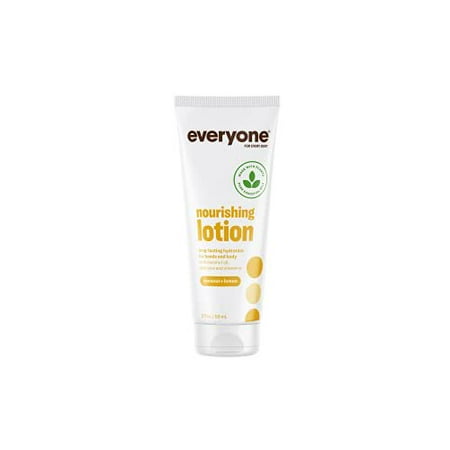


Everyone Coconut and Lemon 3 in 1 Lotion - Travel Size 2 Fluid Ounce -- 12 per case.
Analysis updated October 2026 · How Scout scores
At a glance
Summary
This body lotion contains beneficial ingredients like organic coconut oil, aloe vera juice, and glycerin, which are known for their moisturizing and soothing properties. The presence of benzyl alcohol as a preservative is a minor concern due to its potential to cause irritation, but it is used in low concentrations. Overall, the product has a clean label with mostly natural ingredients and minimal processing, contributing to its high score.
Key ingredients 12
Organic Cocos Nucifera (Coconut) OilVery Good
Coconut oil is a natural emollient that helps to moisturize and soften the skin. It contains fatty acids that are beneficial for skin health. It is often praised for its ability to improve skin barrier function and reduce inflammation.
Risks
Coconut oil may clog pores for some individuals, potentially leading to acne.
Benefits
Coconut oil provides deep hydration and has anti-inflammatory properties that can soothe irritated skin.
Aloe Barbadensis Leaf JuiceVery Good
Aloe vera juice is known for its soothing and hydrating properties. It helps to calm irritated skin and provides moisture. It is widely used in skincare for its anti-inflammatory and healing benefits.
Risks
There are minimal risks, though some individuals may experience allergic reactions.
Benefits
Aloe vera juice soothes and hydrates the skin, promoting healing and reducing inflammation.
GlycerinGood
Glycerin is a humectant that attracts moisture to the skin, helping to keep it hydrated. It is widely used in skincare products for its moisturizing properties. It is generally well-tolerated and beneficial for most skin types.
Risks
There are minimal risks associated with glycerin, though it may cause irritation in very sensitive skin.
Benefits
Glycerin helps maintain skin hydration and improves skin barrier function.
Caprylic/Capric TriglycerideGood
Caprylic/capric triglyceride is an emollient derived from coconut oil and glycerin. It helps to moisturize and condition the skin without leaving a greasy feel. It is well-tolerated and beneficial for most skin types.
Risks
There are minimal risks associated with caprylic/capric triglyceride.
Benefits
It provides lightweight hydration and improves the spreadability of the lotion.
WaterNeutral
Water is a common solvent used in cosmetics to dissolve other ingredients. It helps in the application and absorption of the product. It does not have any direct benefits or risks associated with its use in lotions.
Risks
There are no significant risks associated with water in cosmetic formulations.
Benefits
Water helps in hydrating the skin by acting as a vehicle for other moisturizing ingredients.
Cetearyl GlucosideNeutral
Cetearyl glucoside is an emulsifier that helps blend oil and water components in lotions. It is derived from natural sources and is considered safe for use in cosmetics. It does not provide direct skin benefits but aids in product stability.
Risks
There are no significant risks associated with cetearyl glucoside.
Benefits
It helps maintain the consistency and stability of the lotion.
Sorbitan StearateNeutral
Sorbitan stearate is an emulsifier used to stabilize formulations. It is derived from sorbitol and stearic acid and is considered safe for use in cosmetics. It does not have direct skin benefits but is essential for product formulation.
Risks
There are no significant risks associated with sorbitan stearate.
Benefits
It helps in maintaining the texture and consistency of the lotion.
Glyceryl StearateNeutral
Glyceryl stearate is an emulsifier and emollient that helps to soften and smooth the skin. It is commonly used in skincare products to improve texture and stability. It is generally considered safe and non-irritating.
Risks
There are minimal risks associated with glyceryl stearate.
Benefits
It helps in moisturizing the skin and improving the texture of the lotion.
Cetearyl AlcoholNeutral
Cetearyl alcohol is a fatty alcohol used as an emollient and thickener in lotions. It helps to soften the skin and improve the texture of the product. It is considered safe and non-irritating for most skin types.
Risks
There are minimal risks associated with cetearyl alcohol.
Benefits
It provides a smooth texture and helps in moisturizing the skin.
Cetyl AlcoholNeutral
Cetyl alcohol is a fatty alcohol used as an emollient and thickener in skincare products. It helps to soften the skin and improve the texture of the lotion. It is generally considered safe and non-irritating.
Risks
There are minimal risks associated with cetyl alcohol.
Benefits
It helps in moisturizing the skin and provides a creamy texture to the lotion.
Citric AcidNeutral
Citric acid is used to adjust the pH of cosmetic formulations. It is derived from citrus fruits and is considered safe for use in skincare. It does not provide direct skin benefits but is important for product stability.
Risks
In high concentrations, citric acid can cause skin irritation.
Benefits
It helps maintain the stability and effectiveness of the lotion by balancing pH levels.
Benzyl AlcoholBad
Benzyl alcohol is used as a preservative and solvent in cosmetics. While it is effective in preventing microbial growth, it can be irritating to the skin and eyes. It is often used in low concentrations to minimize irritation.
Risks
Benzyl alcohol can cause skin irritation and allergic reactions in sensitive individuals.
Benefits
It helps preserve the product by preventing microbial contamination.
Get the full breakdown in the Scout appTake Scout shopping
Scan any product to see lab results, healthy alternatives, and your personalized analysis.
Download on theApp Store GET IT ONGoogle PlayAmazon pricing & content
Amazon price as of . Product prices and availability are accurate as of the date/time indicated and are subject to change. Any price and availability information displayed on Amazon.com at the time of purchase will apply to the purchase of this product.
CERTAIN CONTENT THAT APPEARS ON THIS SITE COMES FROM AMAZON. THIS CONTENT IS PROVIDED “AS IS” AND IS SUBJECT TO CHANGE OR REMOVAL AT ANY TIME.