
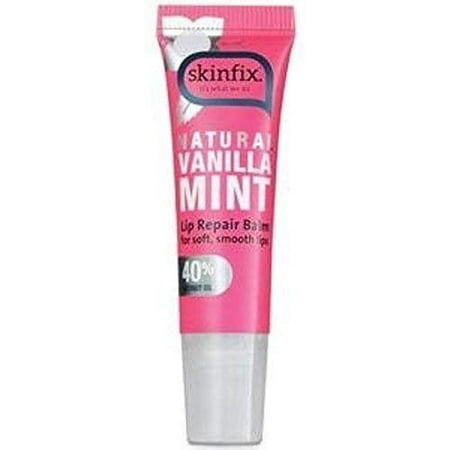

skinfix natural vanilla mint lip repair balm 0.35 oz
Analysis updated October 2026 · How Scout scores
At a glance
Summary
This lip balm contains several beneficial natural ingredients such as coconut oil, beeswax, and jojoba oil, which are known for their moisturizing and protective properties. However, the presence of petrolatum, a petroleum-derived ingredient, raises concerns due to potential contamination risks and its non-renewable nature. The overall formulation is a mix of natural and synthetic components, leading to a moderate score.
Key ingredients 6
Cocos Nucifera (Coconut) OilVery Good
Coconut oil is a natural emollient that helps to moisturize and protect the skin. It is rich in fatty acids that can improve skin barrier function.
Risks
There is a low risk of allergic reactions, but it is generally considered safe for most skin types.
Benefits
It provides deep hydration and has antimicrobial properties that can benefit skin health.
Beeswax (Cera Alba)Very Good
Beeswax is a natural wax produced by honey bees that acts as an excellent occlusive agent. It helps to form a protective barrier on the skin.
Risks
There is a minimal risk of allergic reactions, particularly in individuals with bee allergies.
Benefits
It provides moisture retention and has anti-inflammatory properties that can soothe the skin.
Simmondsia Chinensis (Jojoba) Seed OilVery Good
Jojoba oil is a natural oil that closely resembles the skin's sebum, making it an excellent moisturizer. It is non-comedogenic and suitable for all skin types.
Risks
There are minimal risks associated with jojoba oil, making it safe for most users.
Benefits
It helps to balance oil production and provides long-lasting hydration.
Glycine Soja (Soybean) OilGood
Soybean oil is a plant-derived oil rich in essential fatty acids and antioxidants. It helps to nourish and protect the skin.
Risks
There is a low risk of allergic reactions, particularly in individuals with soy allergies.
Benefits
It provides moisturizing benefits and can improve skin elasticity.
Natural FlavorBad
Umbrella term that can hide dozens of undisclosed synthetic constituents.
Risks
There is a potential risk of allergic reactions depending on the specific components of the flavor.
Benefits
It improves the product's appeal without synthetic additives.
PetrolatumVery Bad
Petrolatum is a petroleum-derived occlusive agent that can effectively lock in moisture. However, it is often criticized for being a non-renewable resource and potential contamination with harmful substances.
Risks
There is a risk of contamination with polycyclic aromatic hydrocarbons (PAHs), which are potentially carcinogenic.
Benefits
It is highly effective at preventing moisture loss and protecting the skin barrier.
Get the full breakdown in the Scout appTake Scout shopping
Scan any product to see lab results, healthy alternatives, and your personalized analysis.
Download on theApp Store GET IT ONGoogle Play