
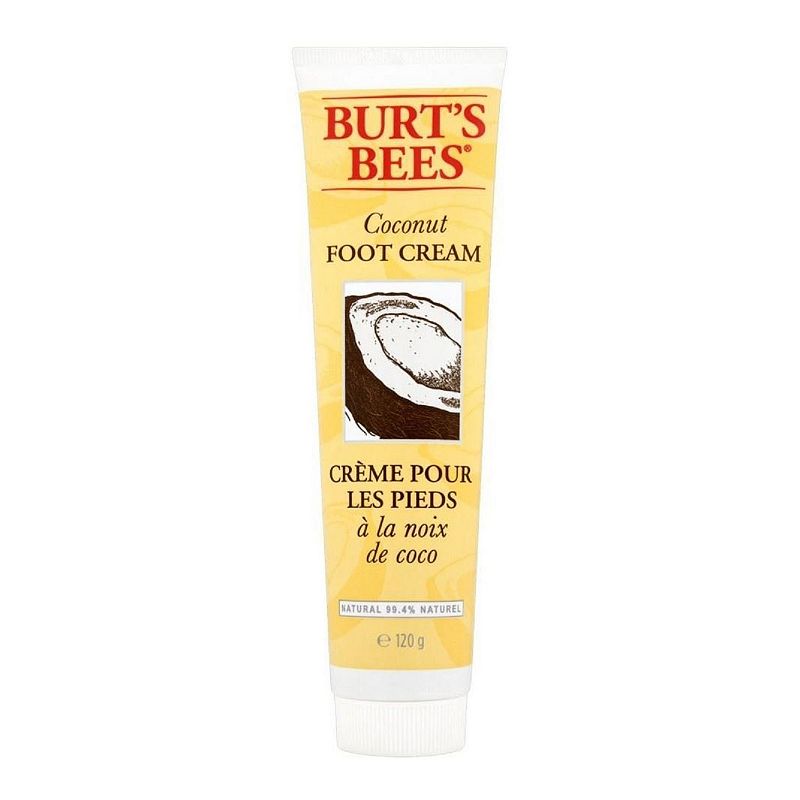

Burt s Bees Softening Foot Cream with Coconut Oil and Soap Bark 4.3 oz
Analysis updated August 2026 · How Scout scores
At a glance
Summary
This foot cream contains several beneficial natural ingredients such as olive fruit oil, coconut oil, and oat kernel oil, which provide moisturizing and soothing properties. However, the presence of fragrance and fragrance-related compounds like coumarin, limonene, and linalool, which can cause skin irritation and allergic reactions, detracts from its overall safety profile. The product is moderately processed, which also influences its rating.
Key ingredients 15
Olea Europaea (Olive Fruit Oil)Very Good
Olive Fruit Oil is rich in antioxidants and healthy fats, making it an excellent emollient for the skin. It helps to nourish and protect the skin barrier. Its natural composition and skin-conditioning properties make it highly beneficial.
Risks
There is a low risk of allergic reactions, but it is generally considered safe for most skin types.
Benefits
It provides deep moisturization and has anti-inflammatory properties.
Avena Sativa (Oat Kernel Flour)Very Good
Oat Kernel Flour is known for its soothing and anti-inflammatory properties, making it ideal for sensitive skin. It helps to relieve itching and irritation. Its natural origin and skin-calming effects make it a valuable ingredient.
Risks
Rarely, it may cause allergic reactions in individuals sensitive to oats.
Benefits
It soothes irritated skin and provides gentle exfoliation.
LanolinVery Good
Lanolin is a natural emollient derived from sheep's wool, known for its ability to lock in moisture. It is highly effective in treating dry, rough skin. Its natural origin and excellent moisturizing properties make it a beneficial ingredient.
Risks
Some individuals may experience allergic reactions to lanolin.
Benefits
It provides long-lasting hydration and helps repair the skin barrier.
Avena Sativa (Oat Kernel Oil)Very Good
Oat Kernel Oil is rich in lipids and antioxidants, providing excellent moisturizing and soothing properties. It is particularly beneficial for sensitive and dry skin. Its natural composition and skin-calming effects make it highly beneficial.
Risks
There is a low risk of allergic reactions, but it is generally considered safe.
Benefits
It soothes and moisturizes the skin, reducing inflammation.
TocopherolVery Good
Tocopherol, or Vitamin E, is a powerful antioxidant that helps protect the skin from free radical damage. It also has moisturizing and anti-inflammatory properties. Its beneficial effects on skin health make it a highly favorable ingredient.
Risks
It is generally safe, but high concentrations may cause irritation.
Benefits
It protects the skin from oxidative damage and improves hydration.
GlycerinGood
Glycerin is a well-known humectant that attracts moisture to the skin, helping to keep it hydrated. It is commonly used in skincare products for its ability to improve skin barrier function. Its natural origin and effectiveness in moisturizing make it a beneficial ingredient.
Risks
Glycerin is generally safe, but in rare cases, it can cause irritation if used in high concentrations.
Benefits
It helps to maintain skin hydration and improve skin texture.
Cocos Nucifera (Coconut Oil)Good
Coconut Oil is a natural moisturizer that is rich in fatty acids, providing deep hydration and nourishment to the skin. It also has antimicrobial properties. Its natural origin and multiple skin benefits make it highly favorable.
Risks
It may clog pores in some individuals, leading to acne.
Benefits
It deeply moisturizes and has antibacterial properties.
Quillaja Saponaria (Quillaja Bark Extract)Good
Quillaja Bark Extract is a natural surfactant and foaming agent that is gentle on the skin. It is derived from the soapbark tree and is used for its cleansing properties. Its natural origin and mildness make it a beneficial ingredient.
Risks
In rare cases, it may cause skin irritation.
Benefits
It provides gentle cleansing without stripping the skin's natural oils.
Rosmarinus Officinalis (Rosemary Leaf Extract)Good
Rosemary Leaf Extract is known for its antioxidant properties, helping to protect the skin from environmental damage. It also has antimicrobial effects. Its natural origin and protective benefits make it a valuable ingredient.
Risks
It may cause irritation in sensitive individuals.
Benefits
It protects the skin from oxidative stress and has antimicrobial properties.
Canola OilNeutral
Canola Oil is a common emollient used in skincare for its moisturizing properties. It is rich in fatty acids but is less favored compared to other natural oils. Its neutral impact on skin health makes it a standard ingredient.
Risks
There is a low risk of allergic reactions.
Benefits
It provides basic moisturization to the skin.
Glycine Soja (Soybean) OilNeutral
Soybean Oil is used for its emollient properties, providing basic moisturization to the skin. It is rich in fatty acids but is less effective compared to other oils. Its neutral impact on skin health makes it a common ingredient.
Risks
There is a low risk of allergic reactions.
Benefits
It provides basic moisturization and is a source of essential fatty acids.
CoumarinBad
Coumarin is a fragrance ingredient that can cause skin irritation and allergic reactions. It is often used for its sweet scent but poses a risk of sensitization. Its potential for irritation makes it a concerning ingredient.
Risks
It can cause skin irritation and allergic reactions.
Benefits
It provides a sweet fragrance to the product.
LimoneneBad
Limonene is a fragrance compound that can oxidize and cause skin irritation and allergic reactions. It is commonly used for its citrus scent but poses a risk of sensitization. Its potential for irritation makes it a concerning ingredient.
Risks
It can cause skin irritation and allergic reactions, especially when oxidized.
Benefits
It provides a fresh citrus scent to the product.
LinaloolBad
Linalool is a fragrance ingredient that can cause skin irritation and allergic reactions upon oxidation. It is used for its floral scent but poses a risk of sensitization. Its potential for irritation makes it a concerning ingredient.
Risks
It can cause skin irritation and allergic reactions, especially when oxidized.
Benefits
It provides a floral fragrance to the product.
Parfum (Fragrance)Very Bad
Fragrance is often a mixture of various chemicals that can cause skin irritation and allergic reactions. It is a common cause of contact dermatitis. The potential for irritation and lack of transparency in its composition make it a concerning ingredient.
Risks
It can cause skin irritation and allergic reactions, especially in sensitive individuals.
Benefits
It provides a pleasant scent to the product.
Get the full breakdown in the Scout appTake Scout shopping
Scan any product to see lab results, healthy alternatives, and your personalized analysis.
Download on theApp Store GET IT ONGoogle PlayAmazon pricing & content
Amazon price as of . Product prices and availability are accurate as of the date/time indicated and are subject to change. Any price and availability information displayed on Amazon.com at the time of purchase will apply to the purchase of this product.
CERTAIN CONTENT THAT APPEARS ON THIS SITE COMES FROM AMAZON. THIS CONTENT IS PROVIDED “AS IS” AND IS SUBJECT TO CHANGE OR REMOVAL AT ANY TIME.