
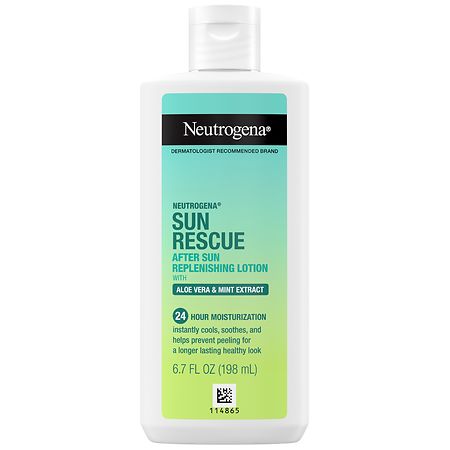




Neutrogena Sun Rescue Rehydrating Lotion 6.7oz
Analysis updated August 2026 · How Scout scores
At a glance
Summary
This body lotion contains beneficial ingredients like shea butter, sesame oil, and aloe vera, which provide moisturizing and soothing benefits. However, the presence of paraffinum liquidum, a mineral oil with potential contamination risks, and synthetic fragrance, which can cause irritation, detracts from its overall safety profile. The product is moderately processed with a mix of natural and synthetic components, leading to a balanced score.
Key ingredients 19
Butyrospermum Parkii ButterVery Good
Butyrospermum Parkii Butter, or shea butter, is a natural fat extracted from the nuts of the shea tree. It is rich in vitamins and fatty acids, making it an excellent moisturizer and emollient. It also has anti-inflammatory properties that can soothe irritated skin.
Risks
There are minimal risks; however, individuals with nut allergies should perform a patch test.
Benefits
Shea butter deeply moisturizes and nourishes the skin, providing anti-inflammatory benefits.
Sesamum Indicum Seed OilVery Good
Sesamum Indicum Seed Oil, or sesame oil, is a natural oil rich in antioxidants and essential fatty acids. It provides moisturizing and nourishing benefits to the skin. It also has anti-inflammatory properties that can help soothe skin.
Risks
There are minimal risks; it is generally safe for most skin types.
Benefits
Sesame oil moisturizes and nourishes the skin while providing antioxidant protection.
Aloe Barbadensis Leaf JuiceVery Good
Aloe Barbadensis Leaf Juice, or aloe vera, is known for its soothing and moisturizing properties. It is rich in vitamins and antioxidants, making it beneficial for skin health. It is widely used in skincare for its calming effects on irritated skin.
Risks
There are minimal risks; it is generally safe for all skin types.
Benefits
Aloe vera soothes and hydrates the skin, providing antioxidant protection.
TocopherolVery Good
Tocopherol, or Vitamin E, is a powerful antioxidant that helps protect the skin from free radical damage. It also has moisturizing properties and can improve skin texture. It is widely used in skincare for its protective benefits.
Risks
There are minimal risks; it is generally safe for all skin types.
Benefits
Vitamin E protects the skin from oxidative stress and provides moisturizing benefits.
GlycerinGood
Glycerin is a humectant that attracts moisture to the skin, helping to keep it hydrated. It is widely used in skincare for its moisturizing properties. It is generally well-tolerated and beneficial for most skin types.
Risks
There are minimal risks associated with glycerin; it is generally safe for all skin types.
Benefits
Glycerin helps to maintain skin hydration by attracting moisture.
Tocopheryl AcetateGood
Tocopheryl Acetate is a form of Vitamin E, a powerful antioxidant that helps protect the skin from free radical damage. It also has moisturizing properties and can improve skin texture. It is widely used in skincare for its protective benefits.
Risks
There are minimal risks; it is generally safe for all skin types.
Benefits
Vitamin E protects the skin from oxidative stress and provides moisturizing benefits.
Ascorbyl PalmitateGood
Ascorbyl Palmitate is a stable form of Vitamin C used in cosmetics for its antioxidant properties. It helps to protect the skin from oxidative damage and improve skin tone. It is beneficial for maintaining healthy skin.
Risks
There are minimal risks; it is generally safe for all skin types.
Benefits
It provides antioxidant protection and helps to improve skin tone.
WaterNeutral
Water is a common solvent used in cosmetics to dissolve other ingredients. It helps in the application and absorption of the product. It does not provide direct benefits or risks.
Risks
There are no significant risks associated with water in cosmetics.
Benefits
Water helps in the application and absorption of the product.
CarbomerNeutral
Carbomer is a synthetic polymer used to thicken and stabilize cosmetic formulations. It helps to create a smooth texture and improve product consistency. It does not provide direct skin benefits or risks.
Risks
There are no significant risks associated with carbomer in cosmetics.
Benefits
Carbomer helps to stabilize and thicken the product, improving its texture.
Potassium Cetyl PhosphateNeutral
Potassium Cetyl Phosphate is an emulsifying agent that helps to blend oil and water components in formulations. It stabilizes the product and improves its texture. It does not provide direct skin benefits or risks.
Risks
There are no significant risks associated with this ingredient.
Benefits
It helps to stabilize and emulsify the product, ensuring a consistent texture.
Hydrogenated Palm GlyceridesNeutral
Hydrogenated Palm Glycerides are used as emollients and thickeners in cosmetic formulations. They help to improve the texture and consistency of the product. They do not provide direct skin benefits or risks.
Risks
There are no significant risks associated with this ingredient.
Benefits
They improve the texture and consistency of the product.
Caprylyl GlycolNeutral
Caprylyl Glycol is a skin-conditioning agent that also acts as a preservative booster. It helps to improve the moisture content of the skin. It is generally well-tolerated and safe for use in cosmetics.
Risks
There are minimal risks associated with caprylyl glycol.
Benefits
It improves skin moisture and enhances preservative efficacy.
Sodium HydroxideNeutral
Sodium Hydroxide is used to adjust the pH of cosmetic formulations. It is a strong base that helps to neutralize acidic components. In small amounts, it is safe and effective for pH adjustment.
Risks
In high concentrations, it can be irritating, but it is used in safe amounts in cosmetics.
Benefits
It helps to maintain the desired pH level of the product.
P-Anisic AcidNeutral
P-Anisic Acid is used as a preservative and fragrance ingredient in cosmetics. It helps to protect the product from microbial contamination. It is generally considered safe for use in cosmetics.
Risks
There are minimal risks associated with this ingredient.
Benefits
It acts as a preservative and contributes to the product's scent.
Mentha Spicata Flower/Leaf/Stem ExtractNeutral
Mentha Spicata Extract, or spearmint extract, is used for its fragrance and potential soothing properties. It can provide a refreshing scent to cosmetic products. However, it may cause irritation in sensitive individuals.
Risks
It may cause irritation in sensitive individuals.
Benefits
It provides a refreshing scent and potential soothing effects.
Paraffinum LiquidumBad
Processed additive flagged under Scout's ingredient doctrine.
Risks
Potential concerns include being a petroleum derivative, which some consumers prefer to avoid.
Benefits
It effectively locks in moisture and prevents skin dehydration.
ParfumBad
Parfum, or fragrance, is used to add scent to cosmetic products. It can cause skin irritation and allergic reactions in sensitive individuals. Fragrance is often criticized for its potential to cause contact dermatitis.
Risks
Fragrance can cause skin irritation and allergic reactions.
Benefits
It provides a pleasant scent to the product.
PhenoxyethanolBad
Processed additive flagged under Scout's ingredient doctrine.
Risks
It can cause irritation in sensitive individuals.
Benefits
It helps to preserve the product and prevent microbial growth.
LecithinBad
Processed additive flagged under Scout's ingredient doctrine.
Risks
There are minimal risks associated with lecithin.
Benefits
It helps to stabilize the product and condition the skin.
Get the full breakdown in the Scout appTake Scout shopping
Scan any product to see lab results, healthy alternatives, and your personalized analysis.
Download on theApp Store GET IT ONGoogle PlayAmazon pricing & content
Amazon price as of . Product prices and availability are accurate as of the date/time indicated and are subject to change. Any price and availability information displayed on Amazon.com at the time of purchase will apply to the purchase of this product.
CERTAIN CONTENT THAT APPEARS ON THIS SITE COMES FROM AMAZON. THIS CONTENT IS PROVIDED “AS IS” AND IS SUBJECT TO CHANGE OR REMOVAL AT ANY TIME.