
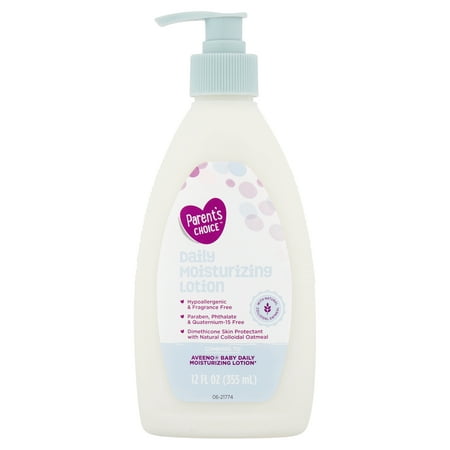

Parents Choice Daily Moisturizing / Dimethicone / LOTION
Analysis updated August 2026 · How Scout scores
At a glance
Summary
This lotion contains beneficial ingredients like oat kernel flour and glycerin, which are known for their soothing and moisturizing properties. However, the presence of petrolatum, a petroleum-derived ingredient with potential contamination risks, lowers the score. The product also includes synthetic components like dimethicone and carbomer, which contribute to a moderate level of processing.
Key ingredients 15
Avena Sativa (Oat) Kernel FlourVery Good
Oat kernel flour is known for its soothing and anti-inflammatory properties, making it beneficial for sensitive skin. It helps to relieve dry, itchy skin and can improve the skin barrier function.
Risks
There are minimal risks associated with oat kernel flour, though rare allergic reactions may occur.
Benefits
It provides soothing and anti-inflammatory benefits, ideal for sensitive skin.
GlycerinGood
Glycerin is a humectant that attracts moisture to the skin, helping to keep it hydrated. It is widely used in skincare for its moisturizing properties. It is generally considered safe and beneficial for all skin types.
Risks
There are minimal risks associated with glycerin.
Benefits
It provides excellent moisturizing benefits, keeping the skin hydrated.
WaterNeutral
Water is a common solvent used in cosmetics to dissolve other ingredients. It helps in the application and absorption of the product. It does not provide any direct skin benefits or risks.
Risks
There are no significant risks associated with water in cosmetics.
Benefits
Water helps in the application and absorption of the product.
Cetyl AlcoholNeutral
Cetyl alcohol is a fatty alcohol used as an emollient and thickener in lotions. It helps to soften and smooth the skin. It is generally considered safe and non-irritating.
Risks
There are minimal risks, though some individuals may experience mild irritation.
Benefits
It acts as an emollient, helping to soften and smooth the skin.
Distearyldimonium ChlorideNeutral
Distearyldimonium chloride is a conditioning agent used to improve the texture and feel of lotions. It helps to reduce static and improve spreadability. It is generally considered safe for use in cosmetics.
Risks
There are minimal risks, though it may cause irritation in sensitive individuals.
Benefits
It improves the texture and spreadability of lotions.
EthylhexylglycerinNeutral
Ethylhexylglycerin is used as a skin-conditioning agent and preservative enhancer. It helps to improve the efficacy of preservatives in the product. It is generally considered safe for use in cosmetics.
Risks
There are minimal risks, though it may cause irritation in sensitive individuals.
Benefits
It enhances the efficacy of preservatives and conditions the skin.
Isopropyl PalmitateNeutral
Isopropyl palmitate is an emollient that helps to soften and smooth the skin. It is used to improve the texture and spreadability of lotions. It is generally considered safe for use in cosmetics.
Risks
There are minimal risks, though it may cause breakouts in acne-prone skin.
Benefits
It softens and smooths the skin, improving texture.
Stearic AcidNeutral
Stearic acid is a fatty acid used as an emulsifier and thickener in lotions. It helps to stabilize formulations and improve texture. It is generally considered safe for use in cosmetics.
Risks
There are minimal risks, though it may cause irritation in sensitive individuals.
Benefits
It stabilizes formulations and improves texture.
Glyceryl StearateNeutral
Glyceryl stearate is an emulsifier that helps to blend oil and water components in lotions. It also acts as a skin-conditioning agent. It is generally considered safe for use in cosmetics.
Risks
There are minimal risks, though it may cause irritation in sensitive individuals.
Benefits
It helps to blend ingredients and conditions the skin.
Cetearyl AlcoholNeutral
Cetearyl alcohol is a fatty alcohol used as an emollient and thickener in lotions. It helps to soften and smooth the skin. It is generally considered safe and non-irritating.
Risks
There are minimal risks, though some individuals may experience mild irritation.
Benefits
It acts as an emollient, helping to soften and smooth the skin.
CarbomerNeutral
Carbomer is a thickening agent used to create gel-like textures in lotions. It helps to stabilize formulations and improve texture. It is generally considered safe for use in cosmetics.
Risks
There are minimal risks, though it may cause irritation in sensitive individuals.
Benefits
It stabilizes formulations and improves texture.
Sodium ChlorideNeutral
Sodium chloride, or table salt, is used as a thickening agent in lotions. It helps to improve the texture and stability of formulations. It is generally considered safe for use in cosmetics.
Risks
There are minimal risks associated with sodium chloride.
Benefits
It improves the texture and stability of formulations.
DimethiconeBad
Occlusive silicone film-former — flagged under clean-beauty doctrine.
Risks
Some individuals may experience mild irritation or breakouts.
Benefits
It helps to lock in moisture and provides a smooth texture.
Benzyl AlcoholBad
Processed additive flagged under Scout's ingredient doctrine.
Risks
There are minimal risks, though it may cause irritation in sensitive individuals.
Benefits
It acts as a preservative, preventing microbial growth.
PetrolatumVery Bad
Petrolatum is a petroleum-derived occlusive agent used to lock in moisture. It is effective in preventing moisture loss but can be comedogenic and may contain impurities. It is heavily penalized in cosmetics due to its synthetic origin and potential contamination.
Risks
It may clog pores and contain impurities if not properly refined.
Benefits
It effectively locks in moisture, preventing skin dehydration.
Get the full breakdown in the Scout appTake Scout shopping
Scan any product to see lab results, healthy alternatives, and your personalized analysis.
Download on theApp Store GET IT ONGoogle Play