
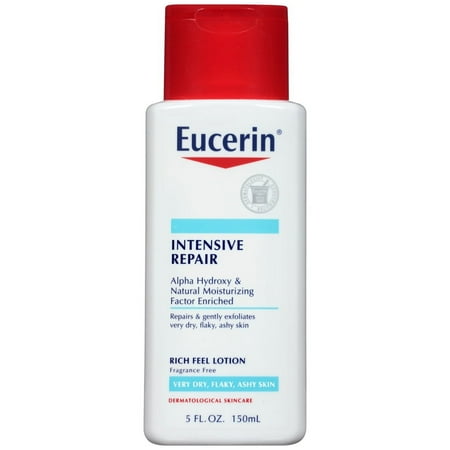


Eucerin Intensive Repair Very Dry Skin Lotion 5 fl. oz.
EucerinAnalysis updated September 2026 · How Scout scores
At a glance
Summary
This body lotion contains beneficial ingredients like caprylic/capric triglyceride, sodium lactate, urea, glycerin, and lactic acid, which are known for their moisturizing and exfoliating properties. However, the presence of mineral oil and multiple PEG compounds, which are associated with potential contamination risks, along with benzyl alcohol, which can cause irritation, lowers the overall safety profile. The product is moderately processed with a mix of beneficial and concerning ingredients, resulting in a balanced score.
Key ingredients 19
Caprylic/Capric TriglycerideGood
Caprylic/Capric Triglyceride is derived from coconut oil and glycerin. It is used as an emollient and helps to replenish the skin's surface. It is lightweight and non-greasy, making it suitable for all skin types.
Risks
There are no significant risks associated with this ingredient.
Benefits
It helps to moisturize and soften the skin without leaving a greasy residue.
UreaGood
Urea is a natural moisturizing factor that helps to maintain skin hydration. It has keratolytic properties, which help to exfoliate and soften the skin. It is beneficial for very dry or rough skin.
Risks
High concentrations may cause irritation in sensitive skin.
Benefits
Improves skin hydration and smoothness, making it effective for dry skin.
GlycerinGood
Glycerin is a well-known humectant that attracts water to the skin. It helps to maintain skin hydration and improve skin barrier function. It is safe and widely used in skincare products.
Risks
There are no significant risks associated with glycerin.
Benefits
Enhances skin moisture and helps maintain a healthy skin barrier.
WaterNeutral
Water is a common solvent used in cosmetic formulations. It helps dissolve other ingredients and provides a base for the lotion. It does not have any direct benefits or risks associated with its use in this context.
Risks
There are no significant risks associated with water in cosmetic products.
Benefits
Water helps in hydrating the skin by providing moisture.
OctyldodecanolNeutral
Octyldodecanol is a fatty alcohol used as an emollient and thickening agent. It helps improve the texture and spreadability of the lotion. It is generally considered safe and non-irritating.
Risks
There are minimal risks associated with octyldodecanol, though it may cause irritation in very sensitive skin.
Benefits
It provides a smooth application and helps maintain skin softness.
Isopropyl PalmitateNeutral
Isopropyl Palmitate is an ester of isopropyl alcohol and palmitic acid. It is used to enhance the texture and spreadability of products. It is generally safe but can cause acne in some individuals.
Risks
May contribute to acne or clogged pores in acne-prone skin.
Benefits
Improves the texture and feel of the lotion on the skin.
Sodium LactateNeutral
Standard formulation ingredient — neither beneficial nor harmful at typical use.
Risks
There are no significant risks associated with sodium lactate.
Benefits
It enhances skin hydration and improves moisture retention.
PEG-7 Hydrogenated Castor OilNeutral
PEG-7 Hydrogenated Castor Oil is an ethoxylated form of castor oil used as an emulsifier. It helps to stabilize formulations and improve texture. It is generally considered safe but may have contamination concerns.
Risks
Potential contamination with 1,4-dioxane, a byproduct of ethoxylation.
Benefits
Improves product stability and texture.
Methoxy PEG-22/Dodecyl Glycol CopolymerNeutral
This ingredient is used as an emulsifier and surfactant in cosmetic formulations. It helps to stabilize the product and improve texture. It is generally considered safe but may have contamination concerns.
Risks
Potential contamination with 1,4-dioxane, a byproduct of ethoxylation.
Benefits
Enhances product stability and texture.
PEG-45/Dodecyl Glycol CopolymerNeutral
Similar to Methoxy PEG-22, this ingredient acts as an emulsifier and surfactant. It helps to blend ingredients and improve product consistency. It is generally safe but may have contamination concerns.
Risks
Potential contamination with 1,4-dioxane, a byproduct of ethoxylation.
Benefits
Improves product consistency and stability.
Magnesium SulfateNeutral
Magnesium Sulfate, also known as Epsom salt, is used as a thickening agent in cosmetics. It helps to improve the texture and consistency of the product. It is generally considered safe and non-irritating.
Risks
There are no significant risks associated with magnesium sulfate.
Benefits
Enhances product texture and consistency.
Lactic AcidNeutral
Standard formulation ingredient — neither beneficial nor harmful at typical use.
Risks
May cause irritation or sensitivity, especially in high concentrations.
Benefits
Improves skin texture and promotes a smoother complexion.
OzokeriteNeutral
Ozokerite is a mineral wax used as a thickening agent in cosmetics. It helps to stabilize formulations and improve texture. It is generally considered safe and non-irritating.
Risks
There are no significant risks associated with ozokerite.
Benefits
Enhances product stability and texture.
PEG-2 Hydrogenated Castor OilNeutral
PEG-2 Hydrogenated Castor Oil is used as an emulsifier and surfactant. It helps to blend ingredients and improve product consistency. It is generally safe but may have contamination concerns.
Risks
Potential contamination with 1,4-dioxane, a byproduct of ethoxylation.
Benefits
Improves product consistency and stability.
Sorbitan IsostearateNeutral
Sorbitan Isostearate is an emulsifier used to stabilize formulations. It helps to blend oil and water components in cosmetics. It is generally considered safe and non-irritating.
Risks
There are no significant risks associated with sorbitan isostearate.
Benefits
Enhances product stability and texture.
Hydrogenated Castor OilNeutral
Hydrogenated Castor Oil is used as an emollient and thickening agent. It helps to improve the texture and spreadability of products. It is generally considered safe and non-irritating.
Risks
There are no significant risks associated with hydrogenated castor oil.
Benefits
Improves product texture and provides emollient properties.
Mineral OilBad
Processed additive flagged under Scout's ingredient doctrine.
Risks
Some individuals may experience clogged pores or breakouts with mineral oil.
Benefits
It effectively locks in moisture, making it beneficial for dry skin.
Benzyl AlcoholBad
Benzyl Alcohol is used as a preservative and solvent in cosmetics. It can cause skin irritation and allergic reactions in some individuals. It is necessary for product preservation but should be used with caution.
Risks
May cause skin irritation or allergic reactions, especially in sensitive individuals.
Benefits
Acts as a preservative to prevent microbial growth in the product.
DimethiconeBad
Occlusive silicone film-former — flagged under clean-beauty doctrine.
Risks
May cause a temporary occlusive effect, potentially trapping impurities.
Benefits
Provides a smooth application and helps retain skin moisture.
Get the full breakdown in the Scout appTake Scout shopping
Scan any product to see lab results, healthy alternatives, and your personalized analysis.
Download on theApp Store GET IT ONGoogle PlayAmazon pricing & content
Amazon price as of . Product prices and availability are accurate as of the date/time indicated and are subject to change. Any price and availability information displayed on Amazon.com at the time of purchase will apply to the purchase of this product.
CERTAIN CONTENT THAT APPEARS ON THIS SITE COMES FROM AMAZON. THIS CONTENT IS PROVIDED “AS IS” AND IS SUBJECT TO CHANGE OR REMOVAL AT ANY TIME.