
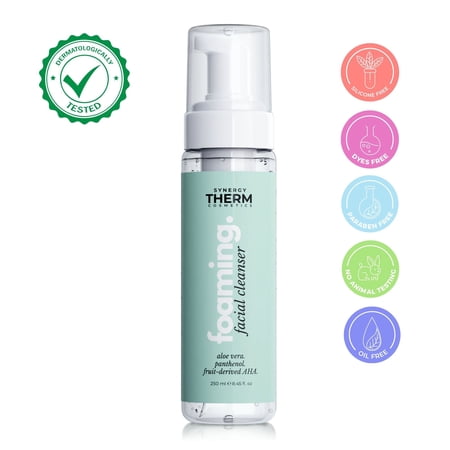

Synergy Therm Foaming Facial Cleanser with Fruit-Derived Acids Aloe Vera and Panthenol – 250ml
Analysis updated October 2026 · How Scout scores
At a glance
Summary
This facial cleanser contains beneficial ingredients like panthenol and aloe vera, which provide moisturizing and soothing effects. However, the presence of 'parfum' is a concern due to its potential to cause skin irritation and allergic reactions, especially since its composition is often undisclosed. The product is moderately processed with a mix of natural and synthetic ingredients, which affects its overall safety profile.
Key ingredients 15
PanthenolVery Good
Panthenol is a form of Vitamin B5 that is used as a moisturizer and skin conditioning agent. It penetrates the skin easily and helps to retain moisture. It is known for its soothing and anti-inflammatory properties.
Risks
There are minimal risks associated with panthenol, though it may cause mild irritation in rare cases.
Benefits
It improves skin hydration, reduces inflammation, and enhances skin barrier function.
Aloe Barbadensis Leaf JuiceVery Good
Aloe Vera is a natural extract known for its soothing and moisturizing properties. It contains vitamins, enzymes, and amino acids that benefit the skin. It is widely used for its anti-inflammatory and healing effects.
Risks
There are minimal risks, but some individuals may experience allergic reactions.
Benefits
It soothes irritated skin, provides hydration, and promotes healing.
Vaccinium Myrtillus Fruit ExtractGood
This extract is rich in antioxidants and vitamins, which help protect the skin from environmental damage. It is derived from bilberries and is known for its anti-aging properties. It also helps to improve skin tone and texture.
Risks
There are minimal risks, but it may cause irritation in sensitive skin.
Benefits
It provides antioxidant protection and improves skin appearance.
Aqua/Thermal WaterNeutral
Aqua or thermal water is commonly used as a solvent in cosmetic formulations. It helps dissolve other ingredients and provides a base for the product. It is generally considered safe and non-irritating.
Risks
There are no significant risks associated with water in cosmetics.
Benefits
It hydrates the skin and helps in the application of the product.
Polyglyceryl-4 CaprateNeutral
Polyglyceryl-4 Caprate is an emulsifier and surfactant derived from natural sources. It helps to mix oil and water components in formulations. It is generally considered safe for use in cosmetics.
Risks
There are minimal risks associated with this ingredient, though it may cause irritation in very sensitive skin.
Benefits
It helps to stabilize the formulation and improve texture.
Saccharum Officinarum ExtractNeutral
Saccharum Officinarum Extract, or sugarcane extract, is used for its exfoliating properties. It contains glycolic acid, which helps to remove dead skin cells. It is generally considered safe for use in cosmetics.
Risks
Overuse can lead to skin irritation or sensitivity.
Benefits
It helps to exfoliate the skin and improve texture.
EthylhexylglycerinNeutral
Ethylhexylglycerin is used as a skin conditioning agent and preservative enhancer. It is often used in combination with phenoxyethanol to boost its effectiveness. It is generally considered safe for use in cosmetics.
Risks
There are minimal risks, but it may cause irritation in sensitive skin.
Benefits
It enhances the effectiveness of preservatives and conditions the skin.
Citrus Aurantium Dulcis Fruit ExtractNeutral
This extract is derived from oranges and is used for its antioxidant properties. It contains Vitamin C, which helps to brighten the skin. It is generally considered safe for use in cosmetics.
Risks
There is a potential for irritation, especially in sensitive skin.
Benefits
It provides antioxidant protection and helps to brighten the skin.
Citrus Limon Fruit ExtractNeutral
Lemon extract is used for its astringent and antioxidant properties. It contains Vitamin C and citric acid, which help to brighten and exfoliate the skin. It is generally considered safe for use in cosmetics.
Risks
It may cause irritation or photosensitivity, especially in sensitive skin.
Benefits
It helps to brighten the skin and provides antioxidant protection.
Acer Saccharum ExtractNeutral
Acer Saccharum Extract, or sugar maple extract, is used for its exfoliating properties. It contains natural alpha hydroxy acids (AHAs) that help to remove dead skin cells. It is generally considered safe for use in cosmetics.
Risks
Overuse can lead to skin irritation or sensitivity.
Benefits
It helps to exfoliate the skin and improve texture.
Citric AcidNeutral
Citric acid is used to adjust the pH of cosmetic formulations. It also has mild exfoliating properties due to its AHA content. It is generally considered safe for use in cosmetics.
Risks
It may cause irritation in sensitive skin or if used in high concentrations.
Benefits
It helps to maintain the stability of the product and provides mild exfoliation.
PhenoxyethanolBad
Processed additive flagged under Scout's ingredient doctrine.
Risks
Potential risks include skin irritation and allergic reactions, especially in sensitive individuals.
Benefits
It extends the shelf life of the product by preventing microbial contamination.
ParfumBad
Parfum, or fragrance, is used to impart scent to cosmetic products. It is a common cause of allergic reactions and skin irritation. The exact composition is often undisclosed, which can be concerning for sensitive individuals.
Risks
Potential risks include skin irritation, allergic reactions, and respiratory issues.
Benefits
It enhances the sensory experience of the product.
Sodium BenzoateBad
Synthetic preservative that can form benzene in the presence of vitamin C.
Risks
There are minimal risks, but it may cause irritation in sensitive skin.
Benefits
It extends the shelf life of the product by preventing microbial contamination.
Potassium SorbateBad
Synthetic preservative — flagged in daily-use products.
Risks
There are minimal risks, but it may cause irritation in sensitive skin.
Benefits
It extends the shelf life of the product by preventing microbial contamination.
Get the full breakdown in the Scout appTake Scout shopping
Scan any product to see lab results, healthy alternatives, and your personalized analysis.
Download on theApp Store GET IT ONGoogle Play