
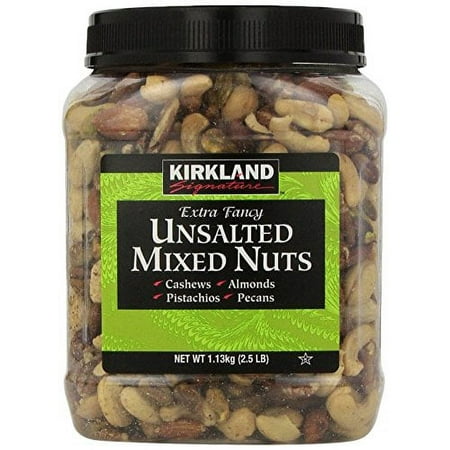
Kirkland Signature Extra Fancy Unsalted Mixed Nuts 2.5 (LB) (Pack of 2 Totaling 5 Pounds)
Near you
Kirkland Signature is carried at Costco stores. Find one within 25 miles.
Summary
This product contains a mix of nutrient-dense nuts like cashews, almonds, pistachios, pecans, and peanuts, which are rich in healthy fats, protein, and essential minerals. However, the presence of sulfites as a preservative is a concern due to potential allergic reactions and respiratory issues in sensitive individuals. Despite being processed, the overall ingredient quality is high, but the processing level and the use of sulfites prevent it from achieving a top score.
At a glance
Key ingredients 13
CashewsVery Good
Cashews are a nutrient-dense nut rich in healthy fats, protein, and essential minerals. They provide a good source of magnesium, which supports bone health and metabolic functions. Their creamy texture and mild flavor make them a versatile ingredient in various dishes.
Benefits
Rich in monounsaturated fats and essential minerals like magnesium and copper, supporting heart health and bone strength.
AlmondsVery Good
Almonds are a highly nutritious nut known for their high content of healthy fats, fiber, and vitamin E. They are beneficial for heart health and may help in managing blood sugar levels. Almonds are also a good source of antioxidants, which protect against oxidative stress.
Benefits
High in vitamin E and antioxidants, almonds support heart health and may improve cholesterol levels.
PistachiosVery Good
Pistachios are a nutrient-rich nut that provides a good balance of protein, healthy fats, and fiber. They are particularly high in antioxidants, which can help reduce inflammation and support heart health. Their unique green color is due to their high lutein content, beneficial for eye health.
Benefits
Rich in antioxidants and lutein, pistachios support heart and eye health while providing a good source of protein.
PecansVery Good
Pecans are a rich source of healthy fats, particularly monounsaturated fats, and contain important vitamins and minerals. They are known for their antioxidant properties, which can help reduce inflammation and protect against chronic diseases. Pecans also provide a good amount of dietary fiber, supporting digestive health.
Benefits
High in monounsaturated fats and antioxidants, pecans support heart health and provide anti-inflammatory benefits.
PeanutsGood
Peanuts are a legume that is high in protein, healthy fats, and various vitamins and minerals. They are a good source of niacin and folate, which are important for brain health. Peanuts also contain resveratrol, an antioxidant that may have protective effects on the heart.
Risks
Potential allergen for some individuals, which can cause severe allergic reactions.
Benefits
Rich in protein and healthy fats, peanuts support heart health and provide essential nutrients like niacin.
Highly refined peanut oilNeutral
Highly refined peanut oil is a cooking oil that is often used for its high smoke point and neutral flavor. The refining process removes most allergens, making it safe for those with peanut allergies. However, it lacks the nutritional benefits found in less processed oils.
Benefits
Provides a high smoke point for cooking, making it suitable for frying and high-heat applications.
Other tree nutsNeutral
The term 'other tree nuts' refers to a variety of nuts that may be included in the mix, each with its own nutritional profile. These nuts generally provide healthy fats, protein, and essential nutrients. However, without specific identification, it's challenging to assess their individual benefits or risks.
Risks
Potential allergen for some individuals, which can cause allergic reactions.
Benefits
Generally rich in healthy fats and nutrients, supporting overall health.
MilkNeutral
Milk is a common ingredient that provides calcium, protein, and other essential nutrients. It is beneficial for bone health and muscle function. However, it can be a concern for those with lactose intolerance or dairy allergies.
Risks
Potential allergen for some individuals and may cause digestive issues for those with lactose intolerance.
Benefits
Rich in calcium and protein, supporting bone health and muscle function.
SesameNeutral
Sesame seeds are a source of healthy fats, protein, and various vitamins and minerals. They contain lignans and phytosterols, which may support heart health. However, sesame is a common allergen and can cause reactions in sensitive individuals.
Risks
Potential allergen for some individuals, which can cause allergic reactions.
Benefits
Contains healthy fats and lignans, which may support heart health.
SoyNeutral
Soy is a legume that provides a complete protein source and is rich in isoflavones, which may have health benefits. It is often used in various forms in food products. However, soy can be a concern for those with allergies or sensitivities.
Risks
Potential allergen for some individuals and may affect hormone levels due to isoflavones.
Benefits
Provides a complete protein source and contains isoflavones, which may offer health benefits.
WheatNeutral
Wheat is a staple grain that provides carbohydrates, fiber, and some essential nutrients. It is a common ingredient in many food products. However, it can be problematic for those with gluten intolerance or celiac disease.
Risks
Potential allergen for some individuals and can cause issues for those with gluten intolerance or celiac disease.
Benefits
Provides carbohydrates and fiber, supporting energy levels and digestive health.
MustardNeutral
Mustard is a condiment made from mustard seeds, which contain compounds that may have anti-inflammatory properties. It is used for flavoring in various dishes. However, mustard can be an allergen for some individuals.
Risks
Potential allergen for some individuals, which can cause allergic reactions.
Benefits
Contains compounds that may have anti-inflammatory properties.
SulfitesBad
Sulfites are preservatives used to prevent spoilage and maintain color in foods. They can cause allergic reactions and respiratory issues in sensitive individuals. Their use is often limited due to potential health concerns.
Risks
Can cause allergic reactions and respiratory issues in sensitive individuals.
Processing
Processed Foods
Get the full breakdown in the Scout app
Scan any product to see lab results, healthy alternatives, and your personalized analysis.
Download on theApp Store