
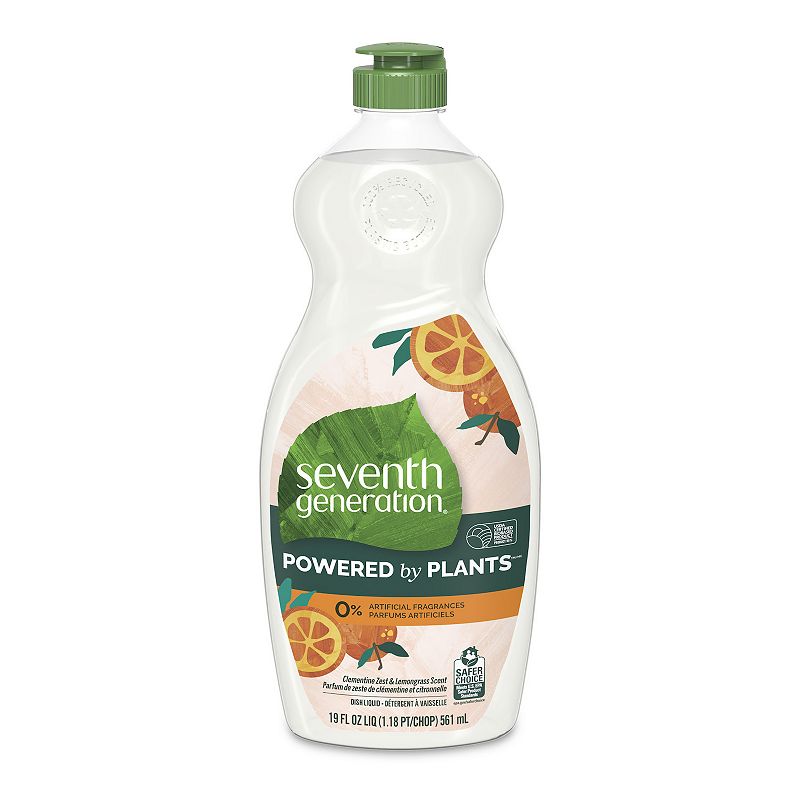


Seventh Generation Dish Liquid Soap Clementine Zest & Lemongrass, 25 oz
Summary
This dish liquid soap contains a mix of natural and synthetic ingredients. While it includes beneficial components like glycerin and essential oils that are biodegradable and environmentally friendly, it also contains harsher chemicals such as sodium lauryl sulfate and preservatives like benzisothiazolinone and methylisothiazolinone, which can cause skin irritation and allergic reactions. The presence of these synthetic additives and preservatives affects the overall safety and environmental impact of the product.
At a glance
Key ingredients 17
WaterNeutral
Water is used as a solvent to dissolve other ingredients and to provide the desired consistency. It is a common base in liquid products. It does not contribute to the cleaning action directly.
Risks
There are no significant risks associated with water in this context.
Benefits
Water helps in diluting other ingredients, making the product easier to use.
Sodium Lauryl SulfateBad
Sodium Lauryl Sulfate is a surfactant used for its cleaning and foaming properties. It is effective in removing oils and residues. However, it can be harsh on the skin and cause irritation.
Risks
Potential skin irritation and dryness with prolonged exposure.
Benefits
Effective in breaking down grease and cleaning surfaces.
Lauramine OxideNeutral
Lauramine Oxide is a surfactant and foam booster used in cleaning products. It helps to stabilize foam and enhance cleaning performance. It is generally considered safe for use in household products.
Risks
May cause mild irritation in sensitive individuals.
Benefits
Enhances the cleaning power and foaming ability of the product.
GlycerinGood
Glycerin is a humectant that helps to retain moisture in the skin. It is often used in personal care products for its moisturizing properties. It is derived from natural sources and is considered safe.
Risks
Generally considered safe with minimal risk.
Benefits
Helps to keep skin moisturized and prevent dryness.
Decyl GlucosideGood
Decyl Glucoside is a mild non-ionic surfactant derived from glucose and coconut oil. It is used for its gentle cleansing properties. It is biodegradable and considered environmentally friendly.
Risks
Low risk of irritation compared to other surfactants.
Benefits
Provides gentle cleansing without stripping natural oils.
Magnesium ChlorideNeutral
Magnesium Chloride is used as a stabilizer in formulations. It helps to maintain the consistency and effectiveness of the product. It is generally recognized as safe for use in household products.
Risks
Minimal risk when used in typical concentrations.
Benefits
Contributes to product stability and performance.
Citric AcidGood
Citric Acid is used to adjust the pH of products and as a preservative. It is naturally found in citrus fruits and is biodegradable. It helps to enhance the effectiveness of cleaning agents.
Risks
May cause mild irritation if in contact with eyes.
Benefits
Improves cleaning efficiency and product stability.
BenzisothiazolinoneBad
Benzisothiazolinone is a preservative used to prevent microbial growth. It is effective in extending the shelf life of products. However, it can cause skin sensitization and allergic reactions in some individuals.
Risks
Potential allergen and skin sensitizer.
Benefits
Prevents microbial contamination and extends product shelf life.
MethylisothiazolinoneBad
Methylisothiazolinone is a synthetic preservative used to inhibit microbial growth. It is effective in low concentrations but is known to cause allergic reactions and skin irritation. Its use is restricted in some regions due to these concerns.
Risks
High potential for causing allergic reactions and skin irritation.
Benefits
Provides effective preservation against microbial growth.
Cymbopogon citratus (lemongrass) leaf oilGood
Lemongrass oil is a natural essential oil used for its fragrance and antibacterial properties. It is derived from the leaves of the lemongrass plant. It is considered safe and adds a pleasant scent to products.
Risks
May cause irritation in sensitive individuals if used in high concentrations.
Benefits
Provides a natural fragrance and has antibacterial properties.
Citrus aurantifolia (lime) oilGood
Lime oil is a natural essential oil used for its fresh scent and antibacterial properties. It is extracted from lime peels and is biodegradable. It enhances the fragrance profile of the product.
Risks
Potential for skin irritation if used undiluted.
Benefits
Adds a refreshing scent and has antibacterial properties.
Cinnamomum cassia (cinnamon) leaf oilGood
Cinnamon leaf oil is used for its warm fragrance and antimicrobial properties. It is derived from the leaves of the cinnamon tree. It is a natural ingredient that contributes to the product's scent.
Risks
May cause skin irritation in sensitive individuals.
Benefits
Provides a warm, spicy scent and has antimicrobial properties.
Cinnamomum zeylanicum (cinnamon) bark extractGood
Cinnamon bark extract is used for its aromatic properties and potential antimicrobial effects. It is derived from the bark of the cinnamon tree. It is a natural ingredient that enhances the product's fragrance.
Risks
Potential for skin irritation if used in high concentrations.
Benefits
Adds a pleasant aroma and may have antimicrobial benefits.
CitralNeutral
Citral is a natural compound found in citrus oils, used for its lemon scent. It is commonly used in fragrances and flavorings. It is generally recognized as safe in small concentrations.
Risks
May cause skin sensitization in some individuals.
Benefits
Contributes a fresh, lemon-like scent to products.
CitronellolNeutral
Citronellol is a natural fragrance compound found in essential oils like rose and geranium. It is used for its floral scent in personal care products. It is considered safe in typical concentrations.
Risks
Potential allergen for sensitive individuals.
Benefits
Provides a floral fragrance to enhance product appeal.
LimoneneNeutral
Limonene is a natural compound found in citrus oils, used for its fresh scent. It is commonly used in cleaning products for its fragrance and potential solvent properties. It is biodegradable and considered safe in small amounts.
Risks
May cause skin irritation or sensitization in some individuals.
Benefits
Adds a citrus scent and may enhance cleaning properties.
LinaloolNeutral
Linalool is a naturally occurring terpene alcohol found in many flowers and spice plants. It is used for its pleasant floral scent in personal care products. It is generally recognized as safe in typical concentrations.
Risks
Potential allergen for some individuals.
Benefits
Contributes a floral fragrance to enhance product appeal.
Processing
Processed Foods
Get the full breakdown in the Scout app
Scan any product to see lab results, healthy alternatives, and your personalized analysis.
Download on theApp Store