
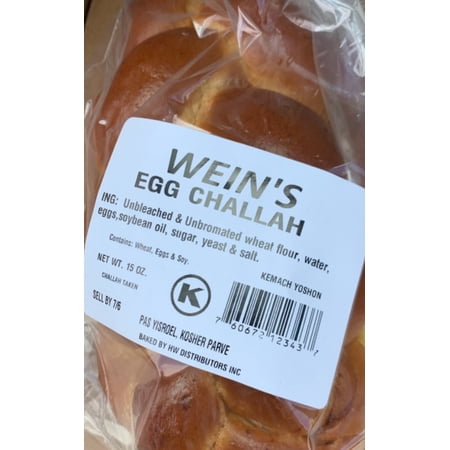


Weins Challa
Summary
This bread contains a mix of beneficial and less desirable ingredients. The inclusion of eggs and honey provides nutritional benefits and natural sweetness, while sugar, although functional for yeast activation, is a refined carbohydrate that can contribute to health issues if consumed excessively. The product is moderately processed, which limits its score despite the absence of artificial additives or seed oils.
At a glance
Key ingredients 8
Active dry yeastNeutral
Active dry yeast is a leavening agent used to make dough rise. It is a processed form of yeast that is dehydrated for shelf stability. It does not provide significant nutritional benefits but is essential for bread texture.
Benefits
Facilitates the fermentation process, contributing to the bread's texture and flavor.
Warm waterNeutral
Warm water is used to activate yeast and hydrate the dough. It is a basic ingredient with no nutritional value. Its primary role is functional in the dough-making process.
Benefits
Essential for activating yeast and ensuring proper dough consistency.
SugarBad
Sugar is a refined carbohydrate that provides sweetness and feeds yeast for fermentation. It is highly processed and can contribute to health issues like obesity and diabetes when consumed in excess. Its role in bread is primarily functional for yeast activation.
Risks
Excessive consumption can lead to health issues such as obesity, diabetes, and dental problems.
Benefits
Provides energy and aids in yeast fermentation, enhancing the bread's rise and flavor.
EggsGood
Eggs are a high-quality source of protein and essential nutrients. They contribute to the bread's structure and richness. Eggs also provide vitamins and minerals, enhancing the nutritional profile of the bread.
Risks
Potential allergen for some individuals.
Benefits
Rich in protein and essential nutrients like vitamin D and choline, supporting overall health.
HoneyGood
Honey is a natural sweetener with antioxidant properties. It is less processed than refined sugar and contains trace nutrients. Honey adds flavor and moisture to the bread.
Risks
High in sugars, which can contribute to health issues if consumed in large amounts.
Benefits
Contains antioxidants and trace nutrients, offering a more natural alternative to refined sugar.
OilNeutral
Oil is used to add moisture and improve the texture of the bread. The type of oil is unspecified, which affects its health impact. It is a processed ingredient with no significant nutritional benefits.
Risks
Potential health concerns depend on the type of oil used, especially if it is a seed oil.
Benefits
Improves texture and moisture content of the bread.
SaltNeutral
Salt is used to enhance flavor and control yeast activity in bread. It is a basic culinary ingredient with no significant nutritional benefits. Excessive salt intake can lead to health issues, but it is essential in moderation.
Risks
Excessive consumption can lead to high blood pressure and cardiovascular issues.
Benefits
Enhances flavor and regulates yeast activity in the dough.
All-purpose flourNeutral
All-purpose flour is a refined wheat flour used as the base for bread. It is processed to remove bran and germ, reducing fiber and nutrient content. It provides structure and texture to the bread but lacks whole grain benefits.
Risks
Lacks fiber and nutrients found in whole grain flours, potentially impacting blood sugar levels.
Benefits
Provides structure and texture essential for bread making.
Processing
Processed Foods
Get the full breakdown in the Scout app
Scan any product to see lab results, healthy alternatives, and your personalized analysis.
Download on theApp Store