
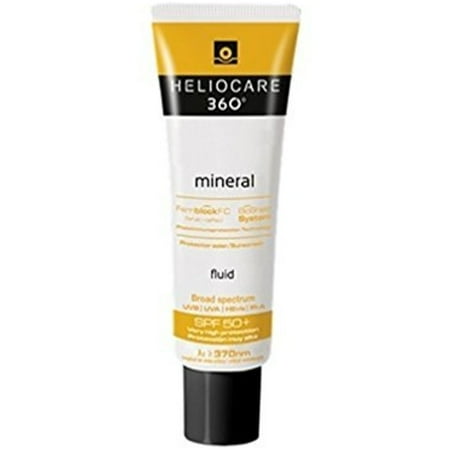
Heliocare 360 ??Mineral SPF 50 50ml
Analysis updated August 2026 · How Scout scores
At a glance
Summary
This sunscreen product contains beneficial mineral filters like titanium dioxide and zinc oxide, which provide effective broad-spectrum UV protection. It also includes natural antioxidants such as Polypodium Leucotomos leaf extract and Camelia Sinensis Extract, which are beneficial for skin health. However, the presence of phenoxyethanol, a preservative that can cause skin irritation, slightly lowers the overall safety profile of the product.
Key ingredients 7
Polypodium Leucotomos leaf extractVery Good
Polypodium Leucotomos leaf extract is a natural antioxidant that helps protect the skin from UV-induced damage. It has been shown to reduce the harmful effects of sun exposure. It is considered beneficial for skin health.
Risks
There are minimal risks associated with this extract, though allergic reactions are possible.
Benefits
This extract provides antioxidant protection and can help reduce the risk of sun damage.
Camelia Sinensis ExtractVery Good
Camelia Sinensis Extract, commonly known as green tea extract, is rich in antioxidants and has anti-inflammatory properties. It helps protect the skin from environmental damage and soothes irritation. It is widely regarded as beneficial for skin health.
Risks
There are minimal risks, though some individuals may experience sensitivity.
Benefits
Green tea extract provides antioxidant protection and helps calm and soothe the skin.
Zinc oxideGood
Zinc oxide is a mineral sunscreen that provides broad-spectrum protection against UVA and UVB rays. It is known for its safety and effectiveness in sun protection. It is often used in formulations for sensitive skin.
Risks
Zinc oxide can leave a white cast on the skin, which may be undesirable for some users.
Benefits
Zinc oxide is a safe and effective sunscreen ingredient that is suitable for sensitive skin.
Aqua (Water)Neutral
Aqua is commonly used as a solvent in cosmetic formulations. It helps to dissolve other ingredients and provides a base for the product. It is generally considered safe and non-reactive.
Risks
There are no significant risks associated with water in cosmetic products.
Benefits
Water acts as a carrier for active ingredients and helps in the application of the product.
Titanium dioxideNeutral
Standard formulation ingredient — neither beneficial nor harmful at typical use.
Risks
Inhalation of titanium dioxide in powder form can be a concern, but it is generally safe in cream or lotion form.
Benefits
Titanium dioxide offers effective sun protection and is less likely to cause skin irritation compared to chemical sunscreens.
DimethiconeBad
Occlusive silicone film-former — flagged under clean-beauty doctrine.
Risks
Some individuals may experience skin irritation or breakouts from silicones.
Benefits
Dimethicone can help improve the feel of the product and provide a protective barrier on the skin.
PhenoxyethanolBad
Phenoxyethanol is a preservative used to prevent microbial growth in cosmetic products. It is effective but can cause skin irritation in some individuals. It is considered a less desirable preservative compared to natural alternatives.
Risks
Phenoxyethanol can cause skin irritation and allergic reactions in sensitive individuals.
Benefits
It helps maintain the product's integrity by preventing microbial contamination.
Get the full breakdown in the Scout appTake Scout shopping
Scan any product to see lab results, healthy alternatives, and your personalized analysis.
Download on theApp Store GET IT ONGoogle PlayAmazon pricing & content
Amazon price as of . Product prices and availability are accurate as of the date/time indicated and are subject to change. Any price and availability information displayed on Amazon.com at the time of purchase will apply to the purchase of this product.
CERTAIN CONTENT THAT APPEARS ON THIS SITE COMES FROM AMAZON. THIS CONTENT IS PROVIDED “AS IS” AND IS SUBJECT TO CHANGE OR REMOVAL AT ANY TIME.