
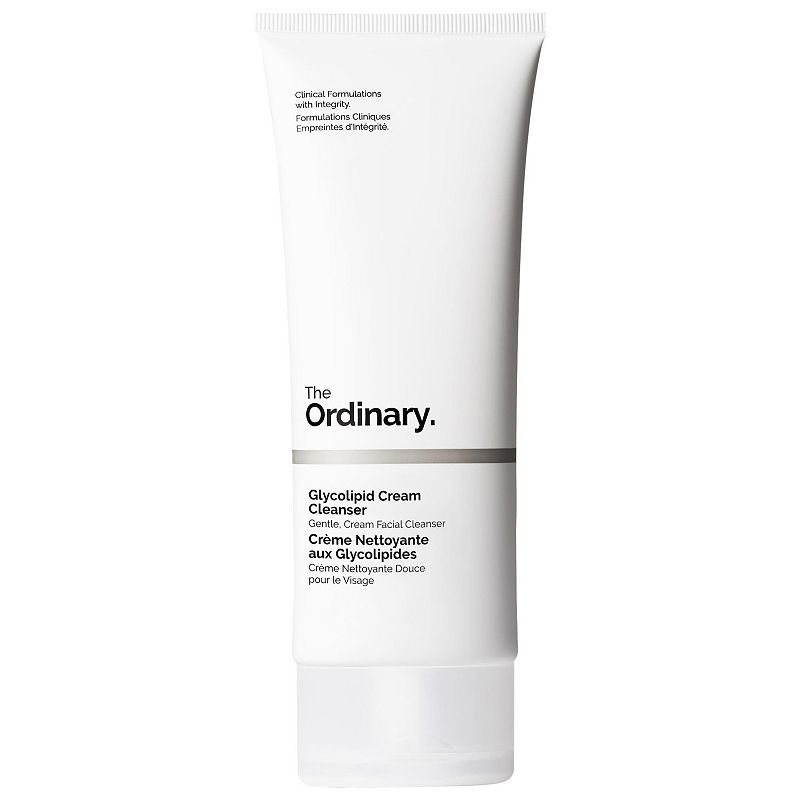


The Ordinary Glycolipid Cream Cleanser for Dry Skin and Makeup Removal, Size: 5 FL Oz, None
OrdinaryAnalysis updated October 2026 · How Scout scores
At a glance
Summary
This face wash contains beneficial ingredients like glycolipids, which help moisturize and protect the skin. However, it also includes phenoxyethanol and chlorphenesin, which are synthetic preservatives that can be concerning for sensitive skin. The presence of polyacrylate crosspolymer-6 indicates a moderate level of processing, which slightly impacts the overall score.
Key ingredients 16
GlycolipidsGood
Glycolipids are natural compounds that help to moisturize and protect the skin. They are known for their ability to enhance skin barrier function. They are considered beneficial in skincare formulations.
Risks
There are minimal risks associated with glycolipids, though they may not be suitable for all skin types.
Benefits
They provide hydration and improve the skin's natural barrier.
Aqua (Water)Neutral
Water is a common solvent used in cosmetic formulations. It helps dissolve other ingredients and provides a base for the product. It is generally considered safe and non-irritating.
Risks
There are no significant risks associated with water in cosmetics.
Benefits
Water helps to hydrate the skin and improve the texture of the product.
Behenyl AlcoholNeutral
Behenyl Alcohol is a fatty alcohol used as an emollient and thickener in cosmetics. It helps to improve the texture and spreadability of the product. It is generally considered safe for use in cosmetics.
Risks
There are minimal risks associated with Behenyl Alcohol, though it may cause irritation in very sensitive skin.
Benefits
It provides moisturizing properties and helps to stabilize emulsions.
Polyglyceryl-2 StearateNeutral
Polyglyceryl-2 Stearate is an emulsifier that helps blend oil and water components in formulations. It is derived from natural sources and is generally considered safe. It is used to improve the consistency and stability of the product.
Risks
There are no significant risks associated with this ingredient.
Benefits
It helps to maintain the product's texture and ensures even application.
Pentylene GlycolNeutral
Pentylene Glycol is a synthetic humectant that helps to retain moisture in the skin. It also acts as a solvent and preservative booster. It is generally considered safe for use in cosmetics.
Risks
There are minimal risks, though it may cause irritation in sensitive skin.
Benefits
It enhances the moisturizing properties of the product and improves skin feel.
Polyglyceryl-6 DicaprateNeutral
Polyglyceryl-6 Dicaprate is an emulsifier that helps to blend oil and water components. It is derived from natural sources and is generally considered safe. It is used to improve the texture and stability of the product.
Risks
There are no significant risks associated with this ingredient.
Benefits
It helps to maintain the product's consistency and ensures even application.
Glyceryl StearateNeutral
Glyceryl Stearate is an emulsifier and emollient that helps to stabilize formulations. It is derived from natural sources and is generally considered safe. It provides a smooth texture to the product.
Risks
There are minimal risks, though it may cause irritation in very sensitive skin.
Benefits
It helps to moisturize the skin and improve product stability.
Stearyl AlcoholNeutral
Stearyl Alcohol is a fatty alcohol used as an emollient and thickener. It helps to improve the texture and spreadability of the product. It is generally considered safe for use in cosmetics.
Risks
There are minimal risks associated with Stearyl Alcohol, though it may cause irritation in very sensitive skin.
Benefits
It provides moisturizing properties and helps to stabilize emulsions.
Diutan GumNeutral
Diutan Gum is a thickening agent used to improve the texture of cosmetic products. It is derived from natural sources and is generally considered safe. It helps to stabilize formulations and improve consistency.
Risks
There are no significant risks associated with Diutan Gum.
Benefits
It enhances the texture and stability of the product.
Polyacrylate Crosspolymer-6Neutral
Polyacrylate Crosspolymer-6 is a synthetic polymer used as a thickener and stabilizer. It helps to improve the texture and spreadability of the product. It is generally considered safe for use in cosmetics.
Risks
There are minimal risks, though it may cause irritation in sensitive skin.
Benefits
It provides a smooth texture and enhances product stability.
Sodium PhytateNeutral
Sodium Phytate is a chelating agent that helps to stabilize formulations by binding metal ions. It is derived from natural sources and is generally considered safe. It helps to improve the shelf life of the product.
Risks
There are no significant risks associated with Sodium Phytate.
Benefits
It enhances the stability and longevity of the product.
Phytic AcidNeutral
Phytic Acid is a natural chelating agent that helps to stabilize formulations. It is derived from plant sources and is generally considered safe. It helps to improve the shelf life of the product.
Risks
There are no significant risks associated with Phytic Acid.
Benefits
It enhances the stability and longevity of the product.
Trisodium Ethylenediamine DisuccinateNeutral
Trisodium Ethylenediamine Disuccinate is a chelating agent that helps to stabilize formulations by binding metal ions. It is generally considered safe for use in cosmetics. It helps to improve the shelf life of the product.
Risks
There are no significant risks associated with this ingredient.
Benefits
It enhances the stability and longevity of the product.
Sodium BenzoateNeutral
Sodium Benzoate is a preservative used to prevent microbial growth in cosmetic products. It is generally considered safe for use in cosmetics at low concentrations. It helps to extend the shelf life of the product.
Risks
There are minimal risks, though it may cause irritation in sensitive skin.
Benefits
It prevents spoilage and maintains product safety.
PhenoxyethanolNeutral
Phenoxyethanol is a preservative used to prevent microbial growth in cosmetic products. It is generally considered safe for use in cosmetics at low concentrations. It helps to extend the shelf life of the product.
Risks
There are minimal risks, though it may cause irritation in sensitive skin.
Benefits
It prevents spoilage and maintains product safety.
ChlorphenesinNeutral
Chlorphenesin is a preservative used to prevent microbial growth in cosmetic products. It is generally considered safe for use in cosmetics at low concentrations. It helps to extend the shelf life of the product.
Risks
There are minimal risks, though it may cause irritation in sensitive skin.
Benefits
It prevents spoilage and maintains product safety.
Get the full breakdown in the Scout appTake Scout shopping
Scan any product to see lab results, healthy alternatives, and your personalized analysis.
Download on theApp Store GET IT ONGoogle Play