
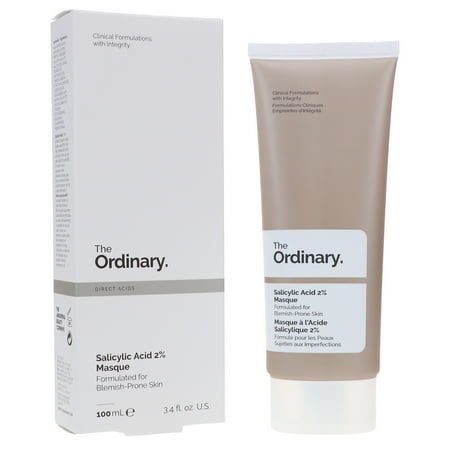


The Ordinary Salicylic Acid 2% Masque 3.3 oz
OrdinaryAnalysis updated October 2026 · How Scout scores
At a glance
Summary
This face mask contains beneficial ingredients like kaolin, squalane, and salicylic acid, which are known for their skin-clearing and moisturizing properties. However, the presence of preservatives such as chlorphenesin and phenoxyethanol, which can cause irritation in sensitive individuals, slightly lowers its safety profile. Overall, the product balances effective natural ingredients with some synthetic preservatives, resulting in a moderate processing level.
Key ingredients 19
SqualaneVery Good
Squalane is a highly effective emollient and natural antioxidant. It mimics the skin's natural oils, making it an excellent moisturizer. It is non-comedogenic and suitable for all skin types.
Risks
Generally considered safe with minimal risk.
Benefits
Provides hydration and improves skin elasticity.
Salicylic AcidVery Good
Salicylic Acid is a beta hydroxy acid (BHA) known for its exfoliating properties. It helps in unclogging pores and reducing acne. It is effective in improving skin texture and clarity.
Risks
May cause irritation or dryness in sensitive skin if overused.
Benefits
Reduces acne and improves skin texture.
KaolinGood
Kaolin is a natural clay that helps absorb excess oil and impurities from the skin. It is gentle and suitable for sensitive skin types. It provides a mattifying effect without stripping the skin.
Risks
Overuse may lead to dryness in some skin types.
Benefits
Helps in detoxifying the skin and controlling oil production.
GlycerinGood
Glycerin is a humectant that attracts moisture to the skin. It helps maintain the skin's water balance on an intercellular level. It is effective in improving skin hydration and resilience.
Risks
Rarely, it may cause irritation in very sensitive skin.
Benefits
Enhances skin hydration and barrier function.
Charcoal PowderGood
Charcoal Powder is known for its detoxifying properties. It helps in drawing out impurities and toxins from the skin. It is effective in reducing excess oil and improving skin clarity.
Risks
Overuse may lead to dryness in some skin types.
Benefits
Detoxifies the skin and reduces oiliness.
Aqua (Water)Neutral
Water is a common solvent used in cosmetics to dissolve other ingredients. It helps in the application and absorption of the product. It does not provide any direct benefits or risks.
Benefits
No direct benefits, but it aids in the formulation of the product.
Dimethyl IsosorbideNeutral
Dimethyl Isosorbide is used as a solvent to enhance the penetration of active ingredients. It helps in delivering ingredients deeper into the skin. It does not have direct skincare benefits or risks.
Benefits
Improves the efficacy of active ingredients by enhancing penetration.
Silica Cetyl SilylateNeutral
Silica Cetyl Silylate is used as a thickening agent and to improve the texture of the product. It provides a smooth application and a matte finish. It does not have direct skincare benefits or risks.
Benefits
Improves product texture and application.
Sodium PolyacrylateNeutral
Sodium Polyacrylate is used as a thickening agent and film-former in cosmetics. It helps in improving the texture and stability of the product. It does not provide direct skincare benefits or risks.
Benefits
Enhances product stability and texture.
Pentylene GlycolNeutral
Pentylene Glycol is a synthetic humectant and solvent. It helps in retaining moisture and improving the spreadability of the product. It does not have direct skincare benefits or risks.
Risks
Generally considered safe with minimal risk.
Benefits
Aids in moisture retention and product application.
4-T-ButylcyclohexanolNeutral
4-T-Butylcyclohexanol is used as a skin conditioning agent. It helps in soothing the skin and reducing irritation. It does not have direct skincare benefits or risks.
Benefits
Soothes the skin and reduces irritation.
Sclerotium GumNeutral
Sclerotium Gum is a natural thickening agent derived from fermentation. It helps in stabilizing and thickening cosmetic formulations. It does not provide direct skincare benefits or risks.
Benefits
Improves product stability and texture.
Acacia Senegal GumNeutral
Acacia Senegal Gum is a natural gum used as a thickening and stabilizing agent. It helps in improving the texture and consistency of the product. It does not have direct skincare benefits or risks.
Benefits
Enhances product texture and stability.
Xanthan GumNeutral
Xanthan Gum is a polysaccharide used as a thickening agent in cosmetics. It helps in stabilizing emulsions and improving product texture. It does not provide direct skincare benefits or risks.
Benefits
Improves product stability and texture.
Phytic AcidNeutral
Phytic Acid is used as a chelating agent and antioxidant in cosmetics. It helps in stabilizing formulations and preventing oxidation. It does not have direct skincare benefits or risks.
Benefits
Stabilizes formulations and prevents oxidation.
Polysorbate 20Neutral
Polysorbate 20 is an emulsifier used to stabilize and blend ingredients. It helps in improving the texture and consistency of the product. It does not provide direct skincare benefits or risks.
Benefits
Enhances product texture and stability.
Trisodium Ethylenediamine DisuccinateNeutral
Trisodium Ethylenediamine Disuccinate is a chelating agent used to improve product stability. It helps in binding metal ions and preventing discoloration. It does not have direct skincare benefits or risks.
Benefits
Improves product stability and prevents discoloration.
ChlorphenesinBad
Chlorphenesin is a preservative used to prevent microbial growth in cosmetics. It can cause irritation or allergic reactions in some individuals. It is considered less favorable due to potential skin sensitivity.
Risks
May cause skin irritation or allergic reactions.
Benefits
Prevents microbial growth and extends product shelf life.
PhenoxyethanolBad
Phenoxyethanol is a preservative used to prevent bacterial growth in cosmetics. It can cause irritation or allergic reactions in sensitive individuals. It is often scrutinized for potential skin sensitivity issues.
Risks
May cause skin irritation or allergic reactions.
Benefits
Prevents bacterial growth and extends product shelf life.
Get the full breakdown in the Scout appTake Scout shopping
Scan any product to see lab results, healthy alternatives, and your personalized analysis.
Download on theApp Store GET IT ONGoogle PlayAmazon pricing & content
Amazon price as of . Product prices and availability are accurate as of the date/time indicated and are subject to change. Any price and availability information displayed on Amazon.com at the time of purchase will apply to the purchase of this product.
CERTAIN CONTENT THAT APPEARS ON THIS SITE COMES FROM AMAZON. THIS CONTENT IS PROVIDED “AS IS” AND IS SUBJECT TO CHANGE OR REMOVAL AT ANY TIME.