






Near you
Whole Foods is carried at Whole Foods stores. Find one within 25 miles.
At a glance
Summary
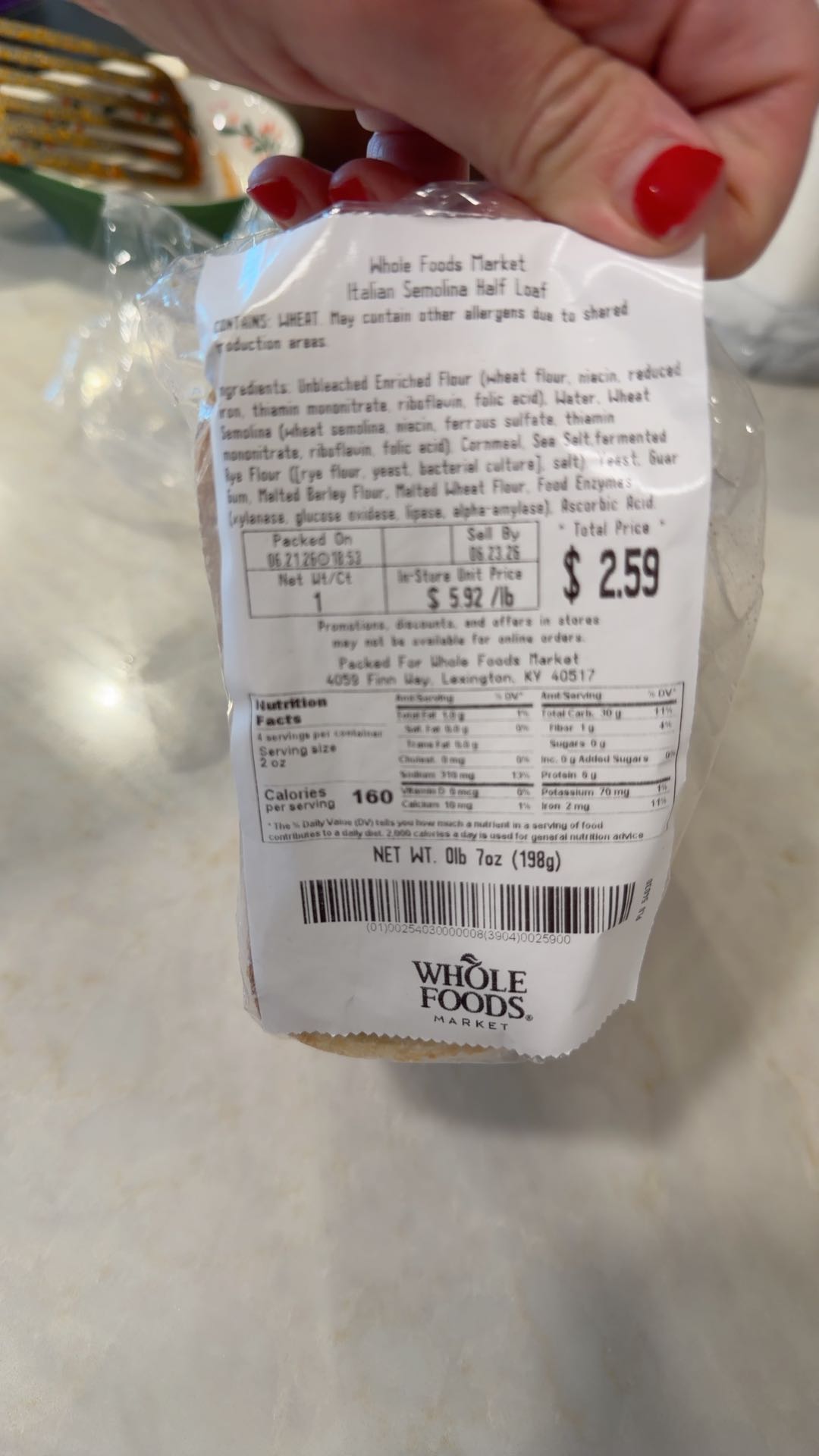
This Italian Semolina Bread contains beneficial ingredients like extra virgin olive oil, wheat semolina, and mixed seeds, which contribute to its nutritional profile. However, it is a processed food with enriched flour and added sugar, which limits its score. The presence of these processed elements and the overall processing level prevent it from achieving a higher rating.
Key ingredients 8
Extra virgin olive oilVery Good
Extra virgin olive oil is a high-quality monounsaturated fat with anti-inflammatory properties. It contains antioxidants that support heart health. Cold-pressed extraction preserves beneficial compounds.
Benefits
Rich in monounsaturated fats that support heart health and provide anti-inflammatory properties. Contains antioxidants like vitamin E and polyphenols that may reduce oxidative stress.
Wheat semolinaGood
Wheat semolina is a coarsely ground flour made from durum wheat, known for its high protein content. It provides a rich source of complex carbohydrates and some fiber. Its use in bread can enhance texture and nutritional profile.
Risks
Contains gluten, which may be a concern for individuals with celiac disease or gluten sensitivity.
Benefits
Rich in protein and complex carbohydrates, supporting sustained energy release.
MilkGood
Milk adds richness and nutritional value to bread, providing protein, calcium, and vitamins. It contributes to a softer crumb and improved texture. Its inclusion enhances the nutritional profile of the bread.
Risks
May cause allergic reactions in individuals with lactose intolerance or milk allergies.
Benefits
Provides protein, calcium, and vitamins, contributing to bone health and improved bread texture.
Mixed seedsGood
Mixed seeds add texture and nutritional benefits, including fiber, healthy fats, and protein. They enhance the bread's nutritional profile with essential fatty acids and minerals. Their inclusion supports heart health and provides a source of plant-based nutrients.
Risks
Potential allergen for individuals with seed allergies.
Benefits
Rich in fiber, healthy fats, and protein, supporting heart health and providing essential nutrients.
WaterNeutral
Water is a fundamental ingredient in bread, providing moisture and aiding in the mixing process. It is a neutral ingredient with no direct nutritional impact. Its primary role is to activate yeast and hydrate flour.
See more about Water →SaltNeutral
Salt is used in bread to enhance flavor and control yeast activity. It is a neutral ingredient in terms of health impact when used in moderation. Excessive consumption can lead to health issues like hypertension.
Risks
High sodium intake can contribute to hypertension and cardiovascular issues.
Benefits
Enhances flavor and helps control yeast fermentation in bread.
Unbleached enriched flourBad
Processed additive flagged under Scout's ingredient doctrine.
Risks
Refined flour can contribute to blood sugar spikes and lacks the fiber of whole grains.
Benefits
Enrichment adds back some nutrients lost during processing, such as iron and B vitamins.
SugarBad
Refined added sugar.
Risks
Excessive sugar intake can contribute to obesity and metabolic disorders.
Benefits
Provides energy for yeast fermentation, aiding in bread rise.
Processing
Processed Foods
Get the full breakdown in the Scout appTake Scout shopping
Scan any product to see lab results, healthy alternatives, and your personalized analysis.
Download on theApp Store GET IT ONGoogle Play