
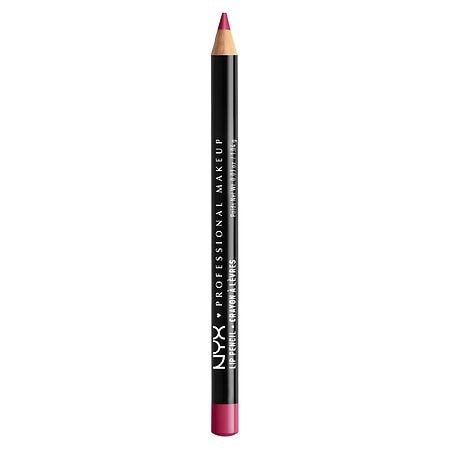

NYX Cosmetics NYX Lipliner Pencil SPL836 Bloom - 0.04 oz
Analysis updated August 2026 · How Scout scores
At a glance
Summary
This lipliner contains several beneficial natural ingredients such as castor seed oil, beeswax, and carnauba wax, which provide moisturizing and protective properties. However, the presence of talc, which has potential contamination concerns, and the use of synthetic colorants contribute to a moderate processing level. The overall formulation is mostly safe, but the inclusion of talc and synthetic dyes prevents it from achieving a higher score.
Key ingredients 15
Ricinus Communis (Castor) Seed OilVery Good
Castor seed oil is a natural oil known for its moisturizing and conditioning properties. It is rich in ricinoleic acid, which provides anti-inflammatory benefits. It is widely used in cosmetics for its ability to enhance skin softness and smoothness.
Risks
In rare cases, it may cause allergic reactions or irritation.
Benefits
It deeply hydrates the skin and helps in maintaining skin elasticity.
BeeswaxVery Good
Beeswax is a natural wax produced by honey bees and is used for its emollient and protective properties. It forms a barrier on the skin's surface, helping to lock in moisture. It is well-tolerated and rarely causes irritation.
Risks
There is a minimal risk of allergic reactions, particularly in individuals allergic to bee products.
Benefits
It provides a protective barrier and helps to retain moisture, enhancing skin hydration.
Caprylic/Capric TriglycerideGood
Caprylic/Capric Triglyceride is derived from coconut oil and glycerin, and is used as an emollient and skin-repairing ingredient. It is lightweight and non-greasy, making it suitable for various skin types. It is well-tolerated by the skin and rarely causes irritation.
Risks
There are minimal risks associated with this ingredient, though it may cause mild irritation in very sensitive individuals.
Benefits
It helps to moisturize and replenish the skin, improving its texture and appearance.
Hydrogenated Coconut OilGood
Hydrogenated coconut oil is used for its emollient properties, providing a barrier to lock in moisture. It is derived from coconut oil, which is known for its nourishing benefits. It is generally safe and non-irritating.
Risks
There is a low risk of comedogenicity, which may cause breakouts in acne-prone skin.
Benefits
It helps to soften and smooth the skin, enhancing the overall feel of the product.
Microcrystalline WaxNeutral
Microcrystalline wax is a refined petroleum product used to provide structure and stability to cosmetic products. It is generally considered safe for topical use. However, it is not derived from natural sources.
Risks
There is a potential risk of contamination with polycyclic aromatic hydrocarbons (PAHs) if not properly refined.
Benefits
It helps in providing a smooth application and enhances the texture of the product.
Copernicia Cerifera (Carnauba) WaxNeutral
Carnauba wax is a natural wax obtained from the leaves of the carnauba palm. It is used to increase the hardness and melting point of cosmetic products. It is considered safe and non-toxic.
Risks
There are minimal risks associated with carnauba wax, though it may cause mild irritation in sensitive individuals.
Benefits
It provides a glossy finish and helps to stabilize the product.
Euphorbia Cerifera (Candelilla) WaxNeutral
Candelilla wax is a plant-based wax used to thicken and stabilize cosmetic formulations. It is derived from the leaves of the candelilla shrub. It is generally considered safe for use in cosmetics.
Risks
There are minimal risks, though it may cause mild irritation in sensitive individuals.
Benefits
It helps to improve the texture and consistency of the product.
SilicaNeutral
Silica is a mineral used in cosmetics for its oil-absorbing properties and to improve the texture of products. It is generally considered safe for topical use. It is non-irritating and suitable for most skin types.
Risks
Inhalation of silica particles can pose respiratory risks, though this is less of a concern in solid cosmetic products.
Benefits
It helps to control shine and provides a smooth, matte finish.
Pentaerythrityl Tetra-Di-T-Butyl HydroxyhydrocinnamateNeutral
This ingredient is an antioxidant used to stabilize cosmetic formulations and prevent oxidation. It is considered safe for use in cosmetics at low concentrations. It does not typically cause irritation or sensitization.
Risks
There are minimal risks associated with this ingredient, though it may cause mild irritation in very sensitive individuals.
Benefits
It helps to extend the shelf life of the product by preventing oxidation.
Iron Oxides (CI 77491, 77499, 77492)Neutral
Iron oxides are pigments used to provide color in cosmetics. They are considered safe and non-toxic for use in cosmetic products. They are stable and do not typically cause irritation.
Risks
There are minimal risks, though they may cause mild irritation in sensitive individuals.
Benefits
They provide vibrant, long-lasting color to cosmetic products.
Manganese Violet (CI 77742)Neutral
Manganese violet is a pigment used to provide color in cosmetics. It is considered safe for use in cosmetic products. It is stable and does not typically cause irritation.
Risks
There are minimal risks, though it may cause mild irritation in sensitive individuals.
Benefits
It provides a unique violet hue to cosmetic products.
Titanium Dioxide (CI 77891)Neutral
Titanium dioxide is used as a pigment and UV filter in cosmetics. It is considered safe for use in cosmetics, though concerns exist about inhalation in powder form. It is non-irritating and suitable for most skin types.
Risks
Inhalation of titanium dioxide particles can pose respiratory risks, though this is less of a concern in solid cosmetic products.
Benefits
It provides opacity and UV protection in cosmetic formulations.
Red 7 Lake (CI 15850)Neutral
Red 7 Lake is a synthetic pigment used to provide color in cosmetics. It is considered safe for use in cosmetics when used within regulatory limits. It is stable and does not typically cause irritation.
Risks
There are minimal risks, though it may cause mild irritation in sensitive individuals.
Benefits
It provides vibrant, long-lasting color to cosmetic products.
Red 6 (CI 15850)Neutral
Red 6 is a synthetic pigment used to provide color in cosmetics. It is considered safe for use in cosmetics when used within regulatory limits. It is stable and does not typically cause irritation.
Risks
There are minimal risks, though it may cause mild irritation in sensitive individuals.
Benefits
It provides vibrant, long-lasting color to cosmetic products.
TalcBad
Talc is a mineral used for its absorbent properties and to improve the texture of cosmetic products. However, it has been controversial due to potential contamination with asbestos, a known carcinogen. Its safety largely depends on the purity and source of the talc.
Risks
There is a risk of respiratory issues if inhaled, and potential contamination with asbestos is a significant concern.
Benefits
It provides a smooth, silky feel and helps to absorb excess moisture.
Get the full breakdown in the Scout appTake Scout shopping
Scan any product to see lab results, healthy alternatives, and your personalized analysis.
Download on theApp Store GET IT ONGoogle PlayAmazon pricing & content
Amazon price as of . Product prices and availability are accurate as of the date/time indicated and are subject to change. Any price and availability information displayed on Amazon.com at the time of purchase will apply to the purchase of this product.
CERTAIN CONTENT THAT APPEARS ON THIS SITE COMES FROM AMAZON. THIS CONTENT IS PROVIDED “AS IS” AND IS SUBJECT TO CHANGE OR REMOVAL AT ANY TIME.