
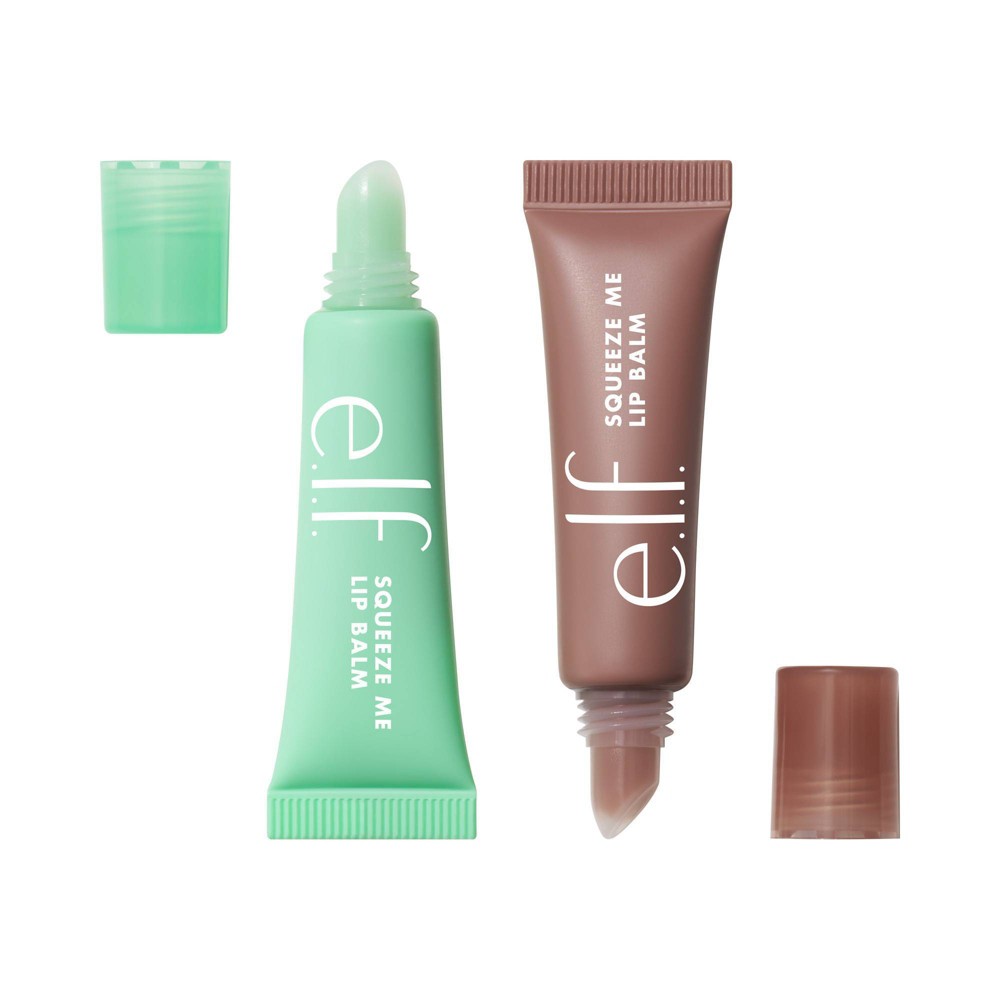


e.l.f. Squeeze Me More Lip Balm Duo - Mint & Chocolate - 2ct: Moisturizing, Vegan, Paraben-Free Lip Gloss Set
Analysis updated July 2026 · How Scout scores
At a glance
Summary
This lip balm contains several beneficial ingredients such as squalane, shea butter, and castor seed oil, which provide excellent moisturizing and skin-replenishing properties. However, the presence of 'fragrance' introduces potential safety concerns due to its undisclosed composition, which can cause skin irritation. The product is moderately processed, which limits its score despite the presence of natural oils and butters.
Key ingredients 42
SqualaneVery Good
Squalane is a highly effective emollient and natural antioxidant. It mimics the skin's natural oils, making it an excellent moisturizer. It is non-irritating and suitable for all skin types.
Risks
There are no significant risks associated with this ingredient.
Benefits
Provides deep hydration and helps maintain skin's moisture balance.
Caprylic/Capric TriglycerideVery Good
Caprylic/Capric Triglyceride is derived from coconut oil and glycerin. It is an excellent emollient and skin-replenishing ingredient. It helps to moisturize and replenish the skin's surface.
Risks
There are no significant risks associated with this ingredient.
Benefits
Provides moisturizing and skin-replenishing benefits.
Butyrospermum Parkii (Shea) ButterVery Good
Shea Butter is a natural fat extracted from the nuts of the shea tree. It is rich in vitamins and fatty acids, providing excellent moisturizing and healing properties. It is highly beneficial for dry and sensitive skin.
Risks
There are no significant risks associated with this ingredient.
Benefits
Deeply moisturizes and nourishes the skin.
Ricinus Communis (Castor) Seed OilVery Good
Castor Seed Oil is a natural oil known for its moisturizing and anti-inflammatory properties. It helps to soothe and hydrate the skin. It is rich in fatty acids and beneficial for dry skin.
Risks
There are no significant risks associated with this ingredient.
Benefits
Provides moisturizing and soothing benefits.
TocopherolVery Good
Tocopherol, also known as Vitamin E, is a potent antioxidant that helps protect the skin from free radical damage. It also provides moisturizing and healing benefits. It is beneficial for maintaining healthy skin.
Risks
There are no significant risks associated with this ingredient.
Benefits
Offers antioxidant protection and moisturizes the skin.
GlycerinGood
Glycerin is a powerful humectant that attracts moisture to the skin. It helps to keep the skin hydrated and improve its barrier function. It is widely used in cosmetics for its moisturizing properties.
Risks
There are no significant risks associated with this ingredient.
Benefits
Provides excellent moisturizing benefits and improves skin hydration.
Sodium HyaluronateGood
Sodium Hyaluronate is a form of hyaluronic acid that provides intense hydration to the skin. It helps to retain moisture and improve skin elasticity. It is highly beneficial for dry and aging skin.
Risks
There are no significant risks associated with this ingredient.
Benefits
Provides deep hydration and improves skin elasticity.
TriisostearinNeutral
Triisostearin is a triester of glycerin and isostearic acid, commonly used as an emollient in cosmetics. It helps to soften and smooth the skin. It is generally considered safe with no significant risks.
Risks
There are no significant risks associated with this ingredient.
Benefits
It provides moisturizing properties and helps improve the texture of the product.
Hydrogenated PolyisobuteneNeutral
Hydrogenated Polyisobutene is a synthetic polymer used as a skin-conditioning agent. It provides a smooth application and enhances the texture of the product. It is generally considered safe for use in cosmetics.
Risks
There are no significant risks associated with this ingredient.
Benefits
It acts as a lubricant on the skin's surface, giving it a soft and smooth appearance.
Polyglyceryl-10 PentaisostearateNeutral
Polyglyceryl-10 Pentaisostearate is an emulsifier that helps blend oil and water components. It is derived from natural sources and is considered safe for use in cosmetics. It helps maintain the stability of the product.
Risks
There are no significant risks associated with this ingredient.
Benefits
It helps improve the consistency and stability of the product.
Dextrin PalmitateNeutral
Dextrin Palmitate is an ester of palmitic acid and dextrin, used as a thickening agent. It helps improve the texture and spreadability of the product. It is generally considered safe for use in cosmetics.
Risks
There are no significant risks associated with this ingredient.
Benefits
It enhances the texture and application of the product.
EthylhexylglycerinNeutral
Ethylhexylglycerin is a conditioning agent and preservative enhancer. It is used to improve the efficacy of preservatives and provide skin conditioning benefits. It is generally considered safe for use in cosmetics.
Risks
There are no significant risks associated with this ingredient.
Benefits
Enhances the effectiveness of preservatives and conditions the skin.
Diethylhexyl SyringylidenemalonateNeutral
Diethylhexyl Syringylidenemalonate is an antioxidant used to protect the skin from free radicals. It helps stabilize the product and extend its shelf life. It is considered safe for use in cosmetics.
Risks
There are no significant risks associated with this ingredient.
Benefits
Provides antioxidant benefits and helps stabilize the product.
SimethiconeNeutral
Simethicone is a silicone-based compound used to reduce surface tension and prevent foaming. It is used in cosmetics to improve the texture and spreadability of products. It is considered safe for use.
Risks
There are no significant risks associated with this ingredient.
Benefits
Improves the texture and application of the product.
Water (Aqua)Neutral
Water is used as a solvent in cosmetic formulations. It helps dissolve other ingredients and provides a base for the product. It is essential for the formulation but does not provide direct skin benefits.
Risks
There are no significant risks associated with this ingredient.
Benefits
Acts as a solvent and base for the formulation.
Butylene GlycolNeutral
Butylene Glycol is a common humectant used in cosmetics to retain moisture. It helps improve the texture and spreadability of products. It is generally considered safe for use in cosmetics.
Risks
There are no significant risks associated with this ingredient.
Benefits
Helps retain moisture and improve product texture.
MaltodextrinNeutral
Maltodextrin is a polysaccharide used as a binding agent in cosmetics. It helps improve the texture and stability of the product. It is generally considered safe for use in cosmetics.
Risks
There are no significant risks associated with this ingredient.
Benefits
Improves product texture and stability.
Hydrogenated Castor OilNeutral
Hydrogenated Castor Oil is used as an emollient and thickening agent in cosmetics. It helps to improve the texture and consistency of the product. It is considered safe for use in cosmetics.
Risks
There are no significant risks associated with this ingredient.
Benefits
Enhances the texture and consistency of the product.
Lycium Chinense Fruit ExtractNeutral
Lycium Chinense Fruit Extract is derived from the goji berry and is used for its antioxidant properties. It helps protect the skin from oxidative stress. It is considered safe for use in cosmetics.
Risks
There are no significant risks associated with this ingredient.
Benefits
Provides antioxidant benefits and protects the skin.
1,2-HexanediolNeutral
1,2-Hexanediol is a synthetic preservative and moisture-binding agent. It helps to improve the shelf life of the product and retain moisture. It is generally considered safe for use in cosmetics.
Risks
There are no significant risks associated with this ingredient.
Benefits
Acts as a preservative and helps retain moisture.
Calcium PantothenateNeutral
Calcium Pantothenate is a form of Vitamin B5 used for its moisturizing and conditioning properties. It helps to improve skin hydration and elasticity. It is considered safe for use in cosmetics.
Risks
There are no significant risks associated with this ingredient.
Benefits
Improves skin hydration and elasticity.
Xanthan GumNeutral
Xanthan Gum is a natural thickening agent used to stabilize cosmetic formulations. It helps to improve the texture and consistency of the product. It is considered safe for use in cosmetics.
Risks
There are no significant risks associated with this ingredient.
Benefits
Stabilizes the formulation and improves texture.
Caprylyl GlycolNeutral
Caprylyl Glycol is a skin-conditioning agent and preservative enhancer. It helps to improve the efficacy of preservatives and provides moisturizing benefits. It is generally considered safe for use in cosmetics.
Risks
There are no significant risks associated with this ingredient.
Benefits
Enhances preservative efficacy and conditions the skin.
UreaNeutral
Urea is a humectant that helps to retain moisture in the skin. It is used to improve skin hydration and texture. It is considered safe for use in cosmetics.
Risks
There are no significant risks associated with this ingredient.
Benefits
Improves skin hydration and texture.
Magnesium LactateNeutral
Magnesium Lactate is a magnesium salt used for its moisturizing properties. It helps to improve skin hydration and maintain moisture balance. It is considered safe for use in cosmetics.
Risks
There are no significant risks associated with this ingredient.
Benefits
Provides moisturizing benefits and maintains moisture balance.
PapainNeutral
Papain is an enzyme derived from papaya used for its exfoliating properties. It helps to remove dead skin cells and improve skin texture. It is considered safe for use in cosmetics.
Risks
There are no significant risks associated with this ingredient.
Benefits
Exfoliates the skin and improves texture.
Soluble CollagenNeutral
Soluble Collagen is used for its moisturizing and skin-conditioning properties. It helps to improve skin hydration and elasticity. It is considered safe for use in cosmetics.
Risks
There are no significant risks associated with this ingredient.
Benefits
Improves skin hydration and elasticity.
Potassium LactateNeutral
Potassium Lactate is a potassium salt of lactic acid used for its moisturizing properties. It helps to improve skin hydration and maintain moisture balance. It is considered safe for use in cosmetics.
Risks
There are no significant risks associated with this ingredient.
Benefits
Provides moisturizing benefits and maintains moisture balance.
Magnesium ChlorideNeutral
Magnesium Chloride is used for its moisturizing and skin-conditioning properties. It helps to improve skin hydration and maintain moisture balance. It is considered safe for use in cosmetics.
Risks
There are no significant risks associated with this ingredient.
Benefits
Provides moisturizing benefits and maintains moisture balance.
ProlineNeutral
Proline is an amino acid used for its moisturizing and skin-conditioning properties. It helps to improve skin hydration and elasticity. It is considered safe for use in cosmetics.
Risks
There are no significant risks associated with this ingredient.
Benefits
Improves skin hydration and elasticity.
AlanineNeutral
Alanine is an amino acid used for its moisturizing and skin-conditioning properties. It helps to improve skin hydration and elasticity. It is considered safe for use in cosmetics.
Risks
There are no significant risks associated with this ingredient.
Benefits
Improves skin hydration and elasticity.
SerineNeutral
Serine is an amino acid used for its moisturizing and skin-conditioning properties. It helps to improve skin hydration and elasticity. It is considered safe for use in cosmetics.
Risks
There are no significant risks associated with this ingredient.
Benefits
Improves skin hydration and elasticity.
Sodium CitrateNeutral
Sodium Citrate is used as a buffering agent to maintain the pH balance of cosmetic formulations. It helps to stabilize the product and improve its shelf life. It is considered safe for use in cosmetics.
Risks
There are no significant risks associated with this ingredient.
Benefits
Stabilizes the formulation and maintains pH balance.
MentholNeutral
Menthol is used for its cooling and soothing properties. It provides a refreshing sensation and can help relieve minor skin irritation. It is considered safe for use in cosmetics.
Risks
May cause irritation in sensitive individuals.
Benefits
Provides a cooling and soothing effect.
CarvoneNeutral
Carvone is a naturally occurring compound used for its fragrance. It provides a minty scent and is considered safe for use in cosmetics. It is generally well-tolerated but can cause irritation in sensitive individuals.
Risks
May cause irritation or allergic reactions in sensitive individuals.
Benefits
Provides a minty fragrance.
Eucalyptus Globulus OilNeutral
Eucalyptus Globulus Oil is used for its fragrance and potential antimicrobial properties. It provides a refreshing scent and can help soothe minor skin irritations. It is generally considered safe for use in cosmetics.
Risks
May cause irritation or allergic reactions in sensitive individuals.
Benefits
Provides fragrance and potential antimicrobial benefits.
AnetholeNeutral
Anethole is a naturally occurring compound used for its fragrance. It provides a sweet, licorice-like scent and is considered safe for use in cosmetics. It is generally well-tolerated but can cause irritation in sensitive individuals.
Risks
May cause irritation or allergic reactions in sensitive individuals.
Benefits
Provides a sweet, licorice-like fragrance.
Titanium Dioxide (CI 77891)Neutral
Titanium Dioxide is used as a pigment and sunscreen agent in cosmetics. It provides opacity and UV protection. It is considered safe for use in cosmetics when used in non-nano form.
Risks
There are no significant risks associated with this ingredient when used in non-nano form.
Benefits
Provides pigmentation and UV protection.
Yellow 5 Lake (CI 19140)Neutral
Yellow 5 Lake is a synthetic dye used for coloring cosmetics. It provides vibrant color and is considered safe for use in cosmetics. It is generally well-tolerated but can cause irritation in sensitive individuals.
Risks
May cause irritation or allergic reactions in sensitive individuals.
Benefits
Provides vibrant color to the product.
LimoneneBad
Processed additive flagged under Scout's ingredient doctrine.
Risks
May cause irritation or allergic reactions in sensitive individuals.
Benefits
Provides fragrance and potential antioxidant benefits.
EugenolBad
Processed additive flagged under Scout's ingredient doctrine.
Risks
May cause irritation or allergic reactions in sensitive individuals.
Benefits
Provides a spicy, clove-like fragrance and potential antimicrobial benefits.
Fragrance (Parfum)Very Bad
Fragrance is used to impart scent to cosmetic products. It can cause allergic reactions and skin irritation in sensitive individuals. The exact composition is often undisclosed, leading to potential safety concerns.
Risks
Potential for allergic reactions and skin irritation.
Benefits
Provides a pleasant scent to the product.
Get the full breakdown in the Scout appTake Scout shopping
Scan any product to see lab results, healthy alternatives, and your personalized analysis.
Download on theApp Store GET IT ONGoogle PlayAmazon pricing & content
Amazon price as of . Product prices and availability are accurate as of the date/time indicated and are subject to change. Any price and availability information displayed on Amazon.com at the time of purchase will apply to the purchase of this product.
CERTAIN CONTENT THAT APPEARS ON THIS SITE COMES FROM AMAZON. THIS CONTENT IS PROVIDED “AS IS” AND IS SUBJECT TO CHANGE OR REMOVAL AT ANY TIME.