
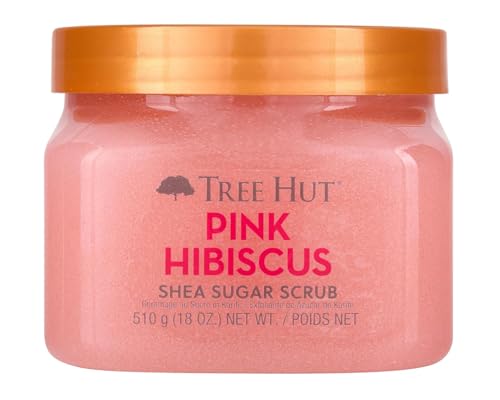

Tree Hut Shea Sugar Scrub Hawaiian Kukui, 18 oz
Analysis updated August 2026 · How Scout scores
At a glance
Summary
This product contains a mix of beneficial natural oils and butters, such as shea butter, avocado oil, and sweet almond oil, which are known for their moisturizing and nourishing properties. However, the presence of synthetic fragrance, which can be an irritant and allergen, slightly lowers its overall safety profile. The formulation is mostly composed of safe and effective ingredients, but the inclusion of fragrance prevents it from achieving a higher rating.
Key ingredients 16
Butyrospermum Parkii (Shea) ButterVery Good
Shea Butter is a natural fat extracted from the nuts of the shea tree. It is highly moisturizing and contains vitamins A and E, which are beneficial for skin health. It is known for its anti-inflammatory and healing properties.
Risks
May cause allergic reactions in individuals with nut allergies.
Benefits
Deeply moisturizes the skin and provides anti-inflammatory benefits.
Persea Gratissima (Avocado) OilVery Good
Avocado Oil is rich in fatty acids and vitamins, making it an excellent moisturizer for the skin. It helps to nourish and protect the skin barrier. It is suitable for dry and sensitive skin types.
Risks
May cause allergic reactions in individuals sensitive to avocados.
Benefits
Nourishes the skin and provides essential fatty acids and vitamins.
Prunus Amygdalus Dulcis (Sweet Almond) OilVery Good
Sweet Almond Oil is a natural oil rich in vitamins E and A, known for its moisturizing and nourishing properties. It helps to soothe and soften the skin. It is suitable for all skin types, including sensitive skin.
Risks
May cause allergic reactions in individuals with nut allergies.
Benefits
Moisturizes and nourishes the skin, providing essential vitamins.
Oenothera Biennis (Evening Primrose) OilVery Good
Evening Primrose Oil is rich in gamma-linolenic acid, which helps to maintain healthy skin. It is known for its anti-inflammatory and moisturizing properties. It is beneficial for dry and sensitive skin.
Risks
May cause mild irritation in rare cases.
Benefits
Provides anti-inflammatory benefits and helps maintain skin hydration.
Carthamus Tinctorius (Safflower) Seed OilVery Good
Safflower Seed Oil is high in linoleic acid, which helps to maintain the integrity of the skin barrier. It is a lightweight oil that absorbs easily into the skin. It is suitable for all skin types.
Risks
Generally considered safe, but may cause irritation in sensitive individuals.
Benefits
Helps maintain skin barrier function and provides lightweight hydration.
GlycerinGood
Glycerin is a humectant that attracts moisture to the skin, helping to keep it hydrated. It is widely used in skincare for its moisturizing properties. It is generally well-tolerated by all skin types.
Risks
There are minimal risks associated with glycerin, though it may cause irritation in very rare cases.
Benefits
It helps maintain skin hydration and improves skin barrier function.
Citrus Aurantium Dulcis (Orange) OilGood
Orange Oil is known for its refreshing scent and potential antioxidant properties. It can help to uplift mood and provide a pleasant fragrance to products. It is generally safe for topical use.
Risks
May cause photosensitivity if used in high concentrations.
Benefits
Provides a refreshing scent and potential antioxidant benefits.
Ascorbic AcidGood
Ascorbic Acid, also known as Vitamin C, is a potent antioxidant that helps to protect the skin from free radical damage. It is known for its brightening and anti-aging properties. It is beneficial for all skin types.
Risks
May cause irritation in sensitive skin if used in high concentrations.
Benefits
Provides antioxidant protection and helps brighten the skin.
SucroseNeutral
Sucrose is a common sugar used as an exfoliant in cosmetic products. It helps to remove dead skin cells, leaving the skin smooth. However, it does not provide any additional skin benefits beyond exfoliation.
Risks
Over-exfoliation can lead to skin irritation or sensitivity.
Benefits
It effectively exfoliates the skin, promoting a smoother texture.
Polysorbate 20Neutral
Polysorbate 20 is an emulsifier used to stabilize products containing oil and water. It helps to improve the texture and consistency of cosmetic formulations. It is considered safe for use in cosmetics.
Risks
May cause mild irritation in sensitive individuals.
Benefits
Improves product texture and ensures even distribution of ingredients.
SilicaNeutral
Silica is used as a thickening agent and absorbent in cosmetics. It helps to improve the texture and feel of the product. It is generally considered safe for use in cosmetics.
Risks
Inhalation of silica dust can be harmful, but this is not a concern in topical applications.
Benefits
Enhances product texture and provides a smooth application.
Caprylyl GlycolNeutral
Standard formulation ingredient — neither beneficial nor harmful at typical use.
Risks
Rarely, it may cause irritation in sensitive skin.
Benefits
Provides moisturizing benefits and enhances product preservation.
Aqua (Water)Neutral
Water is used as a solvent in cosmetic formulations. It helps to dissolve other ingredients and provides a base for the product. It is essential for the formulation but does not provide direct skin benefits.
Benefits
Acts as a solvent and base for the formulation.
Sorbic AcidBad
Processed additive flagged under Scout's ingredient doctrine.
Risks
May cause mild irritation in sensitive individuals.
Benefits
Prevents microbial growth and extends product shelf life.
PhenoxyethanolBad
Processed additive flagged under Scout's ingredient doctrine.
Risks
May cause irritation in sensitive skin or if used in high concentrations.
Benefits
Prevents bacterial growth and ensures product safety.
Fragrance (Parfum)Very Bad
Fragrance is used to impart a pleasant scent to cosmetic products. However, it can be a common irritant and allergen, especially for sensitive skin. It is often associated with allergic reactions and skin sensitivities.
Risks
Can cause allergic reactions and skin irritation.
Benefits
Provides a pleasant scent to the product.
Get the full breakdown in the Scout appTake Scout shopping
Scan any product to see lab results, healthy alternatives, and your personalized analysis.
Download on theApp Store GET IT ONGoogle PlayAmazon pricing & content
Amazon price as of . Product prices and availability are accurate as of the date/time indicated and are subject to change. Any price and availability information displayed on Amazon.com at the time of purchase will apply to the purchase of this product.
CERTAIN CONTENT THAT APPEARS ON THIS SITE COMES FROM AMAZON. THIS CONTENT IS PROVIDED “AS IS” AND IS SUBJECT TO CHANGE OR REMOVAL AT ANY TIME.