e.l.f. Squeeze Me Lip Balm - Blueberry - 0.21oz: Moisturizing, Sheer Finish, Bright Tones, Vegan
E.L.F.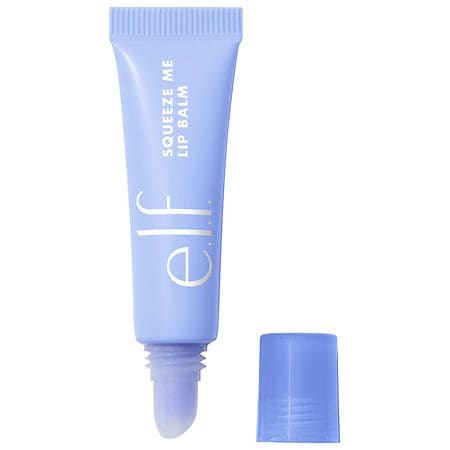
At a glance
Summary
This lip balm contains several beneficial ingredients such as squalane, shea butter, and castor seed oil, which provide excellent moisturizing and antioxidant properties. However, the presence of fragrance, which can cause irritation and allergic reactions, slightly detracts from its overall safety profile. The product is mostly composed of safe and natural ingredients, but the inclusion of synthetic fragrance prevents it from achieving a higher rating. Its plastic packaging can shed microplastics into the product and lowers its score.
Key ingredients 41
SqualaneVery Good
Squalane is a highly effective emollient and natural antioxidant. It mimics the skin's natural oils, making it an excellent moisturizer. It is non-irritating and suitable for all skin types.
Risks
There are no significant risks associated with Squalane.
Benefits
It provides deep hydration and helps to maintain skin barrier function.
Butyrospermum Parkii (Shea) ButterVery Good
Shea Butter is a natural fat extracted from the nuts of the shea tree. It is rich in vitamins and fatty acids, providing excellent moisturizing and healing properties. It is highly beneficial for dry and sensitive skin.
Risks
There are no significant risks associated with Shea Butter.
Benefits
It deeply moisturizes and nourishes the skin, improving elasticity.
Ricinus Communis (Castor) Seed OilVery Good
Castor Seed Oil is a natural oil known for its moisturizing and anti-inflammatory properties. It is rich in ricinoleic acid, which helps to soothe and hydrate the skin. It is beneficial for dry and irritated skin.
Risks
There are no significant risks associated with Castor Seed Oil.
Benefits
It provides deep hydration and soothes the skin.
TocopherolVery Good
Tocopherol, also known as Vitamin E, is a potent antioxidant that protects the skin from free radical damage. It helps to nourish and repair the skin. It is beneficial for maintaining healthy skin.
Risks
There are no significant risks associated with Tocopherol.
Benefits
It provides antioxidant protection and supports skin health.
Caprylic/Capric TriglycerideGood
Caprylic/Capric Triglyceride is derived from coconut oil and glycerin. It is used as an emollient and helps to improve the spreadability of products. It is considered safe and beneficial for the skin.
Risks
There are no significant risks associated with Caprylic/Capric Triglyceride.
Benefits
It provides a lightweight, non-greasy moisturizing effect.
GlycerinGood
Glycerin is a powerful humectant that attracts moisture to the skin. It helps to maintain hydration and improve skin barrier function. It is widely used in cosmetics for its moisturizing properties.
Risks
There are no significant risks associated with Glycerin.
Benefits
It provides long-lasting hydration and improves skin texture.
Sodium HyaluronateGood
Sodium Hyaluronate is a form of hyaluronic acid that provides intense hydration to the skin. It helps to retain moisture and improve skin elasticity. It is highly beneficial for dry and aging skin.
Risks
There are no significant risks associated with Sodium Hyaluronate.
Benefits
It deeply hydrates the skin and enhances elasticity.
Iron Oxides (CI 77492)Good
Beneficial ingredient — whole-food or functional value in this product class.
Risks
There are no significant risks associated with Iron Oxides.
Benefits
They provide natural pigmentation to the product.
TriisostearinNeutral
Triisostearin is a triester of isostearic acid and glycerin, commonly used as an emollient in cosmetics. It helps to improve the texture and spreadability of products. It is generally considered safe with no significant risks.
Risks
There are no significant risks associated with Triisostearin.
Benefits
It provides a smooth application and helps to moisturize the skin.
Hydrogenated PolyisobuteneNeutral
Hydrogenated Polyisobutene is a synthetic polymer used as a skin conditioning agent. It acts as a lubricant on the skin's surface, giving it a soft and smooth appearance. It is considered safe for use in cosmetics.
Risks
There are no significant risks associated with Hydrogenated Polyisobutene.
Benefits
It helps to improve the texture and feel of the product on the skin.
Polyglyceryl-10 PentaisostearateNeutral
Polyglyceryl-10 Pentaisostearate is an emulsifier that helps to blend oil and water-based ingredients. It is derived from natural sources and is considered safe for use in cosmetics. It helps to stabilize formulations.
Risks
There are no significant risks associated with Polyglyceryl-10 Pentaisostearate.
Benefits
It aids in the even distribution of ingredients in the product.
Dextrin PalmitateNeutral
Dextrin Palmitate is a fatty acid ester used as a thickening agent in cosmetics. It helps to improve the texture and consistency of products. It is generally considered safe for use.
Risks
There are no significant risks associated with Dextrin Palmitate.
Benefits
It enhances the texture and stability of the formulation.
Diethylhexyl SyringylidenemalonateNeutral
Diethylhexyl Syringylidenemalonate is an antioxidant used in cosmetics to protect the skin from free radical damage. It helps to stabilize formulations and extend shelf life. It is considered safe for use.
Risks
There are no significant risks associated with Diethylhexyl Syringylidenemalonate.
Benefits
It provides antioxidant protection to the skin.
EthylhexylglycerinNeutral
Ethylhexylglycerin is a conditioning agent and preservative enhancer. It helps to improve the skin feel of cosmetic formulations. It is considered safe for use in cosmetics.
Risks
There are no significant risks associated with Ethylhexylglycerin.
Benefits
It enhances the effectiveness of preservatives and conditions the skin.
SimethiconeNeutral
Simethicone is a silicone-based compound used to reduce surface tension and prevent foaming. It is commonly used in cosmetics to improve texture. It is considered safe for use.
Risks
There are no significant risks associated with Simethicone.
Benefits
It helps to improve the texture and application of the product.
Water (Aqua)Neutral
Water is used as a solvent in cosmetic formulations. It helps to dissolve other ingredients and provides a base for the product. It is essential for hydration.
Risks
There are no significant risks associated with Water.
Benefits
It acts as a solvent and hydrates the skin.
Butylene GlycolNeutral
Butylene Glycol is a humectant that helps to retain moisture in the skin. It also acts as a solvent and improves the texture of formulations. It is considered safe for use in cosmetics.
Risks
There are no significant risks associated with Butylene Glycol.
Benefits
It helps to keep the skin hydrated and improves product texture.
MaltodextrinNeutral
Maltodextrin is a polysaccharide used as a binding agent in cosmetics. It helps to improve the texture and stability of formulations. It is considered safe for use.
Risks
There are no significant risks associated with Maltodextrin.
Benefits
It enhances the texture and stability of the product.
Hydrogenated Castor OilNeutral
Hydrogenated Castor Oil is a derivative of castor oil used as an emollient and thickening agent. It helps to improve the texture and consistency of products. It is considered safe for use.
Risks
There are no significant risks associated with Hydrogenated Castor Oil.
Benefits
It provides a smooth texture and enhances product stability.
Lycium Chinense Fruit ExtractNeutral
Lycium Chinense Fruit Extract is derived from the goji berry and is known for its antioxidant properties. It helps to protect the skin from environmental damage. It is considered safe for use in cosmetics.
Risks
There are no significant risks associated with Lycium Chinense Fruit Extract.
Benefits
It provides antioxidant protection and supports skin health.
1, 2-HexanediolNeutral
1, 2-Hexanediol is a synthetic preservative and moisture-binding agent. It helps to improve the shelf life of products and retain moisture in the skin. It is considered safe for use.
Risks
There are no significant risks associated with 1, 2-Hexanediol.
Benefits
It enhances product preservation and provides moisture retention.
Calcium PantothenateNeutral
Calcium Pantothenate is a form of Vitamin B5 used in cosmetics for its moisturizing and soothing properties. It helps to improve skin hydration and repair. It is considered safe for use.
Risks
There are no significant risks associated with Calcium Pantothenate.
Benefits
It provides moisture and supports skin repair.
Xanthan GumNeutral
Xanthan Gum is a natural thickening agent used to stabilize and thicken cosmetic formulations. It helps to improve the texture and consistency of products. It is considered safe for use.
Risks
There are no significant risks associated with Xanthan Gum.
Benefits
It enhances the texture and stability of the product.
Caprylyl GlycolNeutral
Caprylyl Glycol is a skin conditioning agent and preservative enhancer. It helps to improve the moisture content of the skin and enhance the effectiveness of preservatives. It is considered safe for use.
Risks
There are no significant risks associated with Caprylyl Glycol.
Benefits
It provides moisture and enhances preservative efficacy.
UreaNeutral
Urea is a humectant that helps to retain moisture in the skin. It also has exfoliating properties that help to improve skin texture. It is considered safe for use in cosmetics.
Risks
There are no significant risks associated with Urea.
Benefits
It provides hydration and improves skin texture.
Magnesium LactateNeutral
Magnesium Lactate is a magnesium salt used as a skin conditioning agent. It helps to improve skin hydration and texture. It is considered safe for use in cosmetics.
Risks
There are no significant risks associated with Magnesium Lactate.
Benefits
It provides moisture and supports skin health.
PapainNeutral
Papain is an enzyme derived from papaya used for its exfoliating properties. It helps to remove dead skin cells and improve skin texture. It is considered safe for use in cosmetics.
Risks
There are no significant risks associated with Papain.
Benefits
It provides gentle exfoliation and improves skin texture.
Soluble CollagenNeutral
Soluble Collagen is a protein used in cosmetics for its moisturizing and skin conditioning properties. It helps to improve skin elasticity and hydration. It is considered safe for use.
Risks
There are no significant risks associated with Soluble Collagen.
Benefits
It provides moisture and supports skin elasticity.
Potassium LactateNeutral
Potassium Lactate is a potassium salt of lactic acid used as a humectant and buffering agent. It helps to maintain moisture and stabilize pH levels in formulations. It is considered safe for use.
Risks
There are no significant risks associated with Potassium Lactate.
Benefits
It provides moisture and helps to stabilize product pH.
Magnesium ChlorideNeutral
Magnesium Chloride is a mineral salt used as a skin conditioning agent. It helps to improve skin hydration and texture. It is considered safe for use in cosmetics.
Risks
There are no significant risks associated with Magnesium Chloride.
Benefits
It provides moisture and supports skin health.
ProlineNeutral
Proline is an amino acid used in cosmetics for its skin conditioning properties. It helps to improve skin texture and hydration. It is considered safe for use.
Risks
There are no significant risks associated with Proline.
Benefits
It provides moisture and supports skin health.
AlanineNeutral
Alanine is an amino acid used as a skin conditioning agent in cosmetics. It helps to improve skin hydration and texture. It is considered safe for use.
Risks
There are no significant risks associated with Alanine.
Benefits
It provides moisture and supports skin health.
SerineNeutral
Serine is an amino acid used in cosmetics for its moisturizing properties. It helps to improve skin hydration and texture. It is considered safe for use.
Risks
There are no significant risks associated with Serine.
Benefits
It provides moisture and supports skin health.
Sodium CitrateNeutral
Sodium Citrate is a salt of citric acid used as a buffering agent in cosmetics. It helps to stabilize pH levels in formulations. It is considered safe for use.
Risks
There are no significant risks associated with Sodium Citrate.
Benefits
It helps to stabilize product pH and improve formulation stability.
Titanium Dioxide (CI 77891)Neutral
Titanium Dioxide is a mineral used as a pigment and UV filter in cosmetics. It helps to provide coverage and sun protection. It is considered safe for use.
Risks
There are no significant risks associated with Titanium Dioxide.
Benefits
It provides pigmentation and UV protection.
Blue 1 Lake (CI 42090)Neutral
Blue 1 Lake is a synthetic dye used to impart color to cosmetics. It is approved for use in cosmetics and considered safe in regulated amounts. It provides vibrant color to products.
Risks
There are no significant risks associated with Blue 1 Lake.
Benefits
It provides vibrant color to the product.
Red 28 Lake (CI 45410)Neutral
Red 28 Lake is a synthetic dye used to impart color to cosmetics. It is approved for use in cosmetics and considered safe in regulated amounts. It provides vibrant color to products.
Risks
There are no significant risks associated with Red 28 Lake.
Benefits
It provides vibrant color to the product.
Benzyl AlcoholBad
Processed additive flagged under Scout's ingredient doctrine.
Risks
In high concentrations, it can cause skin irritation.
Benefits
It acts as a preservative and solvent, enhancing product stability.
VanillinBad
Processed additive flagged under Scout's ingredient doctrine.
Risks
There are no significant risks associated with Vanillin.
Benefits
It provides a pleasant scent and flavor to the product.
LinaloolBad
Processed additive flagged under Scout's ingredient doctrine.
Risks
In some individuals, it can cause allergic reactions.
Benefits
It provides a pleasant floral scent to the product.
Fragrance (Parfum)Very Bad
Fragrance is used to impart a pleasant scent to products but can cause allergic reactions and skin irritation in sensitive individuals. It is often a mixture of various chemicals, some of which may be harmful. It is considered a potential irritant.
Risks
Fragrance can cause skin irritation and allergic reactions.
Benefits
It provides a pleasant scent to the product.
Processing
Processed Foods
Get the full breakdown in the Scout appTake Scout shopping
Scan any product to see lab results, healthy alternatives, and your personalized analysis.
Are you E.L.F.? Fix an error Get the badge Get tested
Amazon pricing & content
Amazon price as of . Product prices and availability are accurate as of the date/time indicated and are subject to change. Any price and availability information displayed on Amazon.com at the time of purchase will apply to the purchase of this product.
CERTAIN CONTENT THAT APPEARS ON THIS SITE COMES FROM AMAZON. THIS CONTENT IS PROVIDED “AS IS” AND IS SUBJECT TO CHANGE OR REMOVAL AT ANY TIME.