
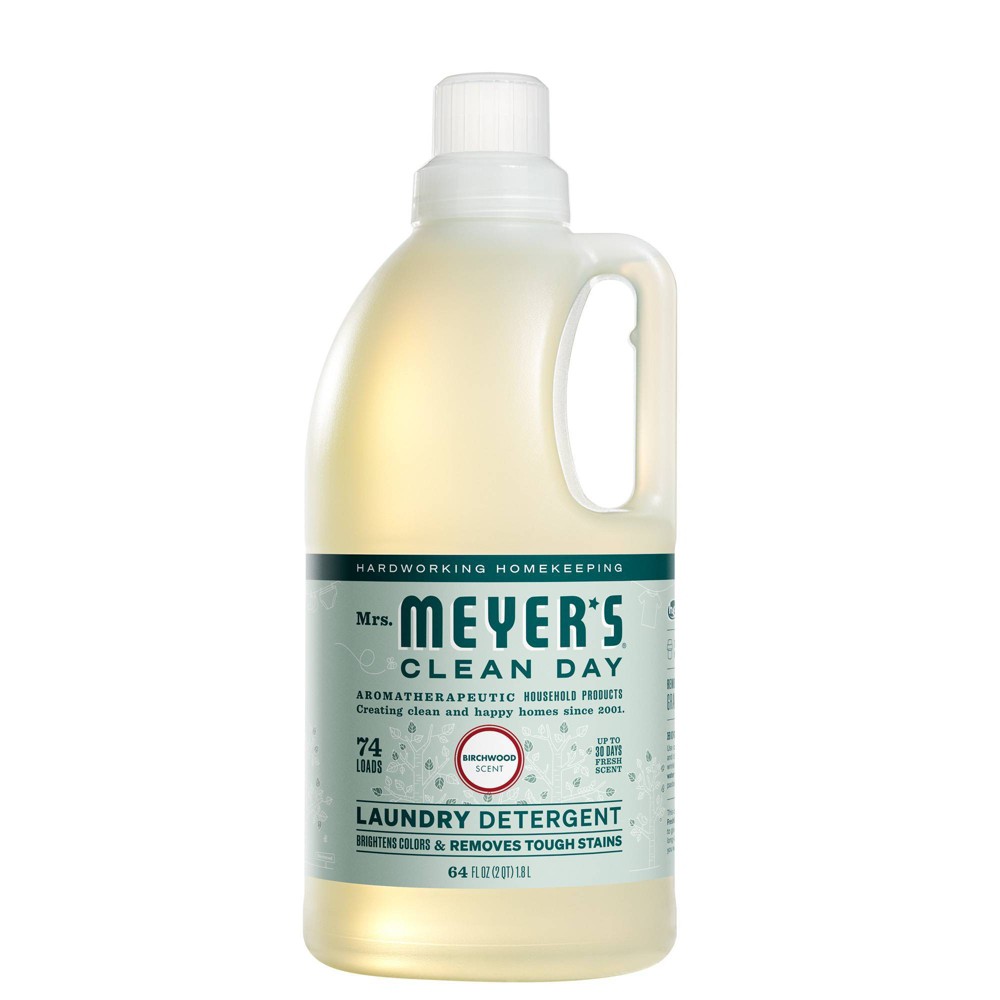


Mrs. Meyer's Clean Day Laundry Detergent 74 Loads - Birchwood - 64 fl oz
Summary
This laundry detergent contains some plant-derived surfactants and essential oils, which are generally safer for indoor use and have a lower environmental impact. However, the presence of synthetic fragrances and other processed ingredients reduces its overall safety and eco-friendliness. The product is moderately processed, which affects its score, but it avoids some of the most harmful chemicals found in harsher cleaning products.
At a glance
Key ingredients 13
Water
Water is used as a solvent in many cleaning products. It helps dissolve other ingredients and facilitates the cleaning process. It is generally considered safe and non-toxic.
Risks
There are no significant risks associated with water in cleaning products.
Benefits
Water is essential for dissolving and distributing cleaning agents effectively.
Laureth-7
Laureth-7 is a surfactant used to help remove dirt and oils. It is derived from ethoxylated alcohols and can be contaminated with 1,4-dioxane. It is considered milder than SLS but still poses some irritation risk.
Risks
Potential contamination with 1,4-dioxane, a possible carcinogen, is a concern.
Benefits
It is effective in removing oils and dirt from surfaces.
Sodium Lauryl Sulfate
Sodium Lauryl Sulfate (SLS) is a harsh surfactant used for its cleaning and foaming properties. It is known to be a strong skin irritant. Despite being effective at removing dirt, it is often criticized for its harshness.
Risks
SLS is a strong skin irritant and can cause dryness and irritation with prolonged exposure.
Benefits
It is effective at breaking down grease and oils.
Sodium Chloride
Sodium Chloride, or table salt, is used to adjust the viscosity of cleaning products. It is generally considered safe and non-toxic. It helps in stabilizing the formula.
Risks
There are minimal risks associated with sodium chloride in cleaning products.
Benefits
It helps in thickening and stabilizing the product formulation.
Trisodium Dicarboxymethyl Alaninate
Trisodium Dicarboxymethyl Alaninate is a chelating agent that helps bind metal ions. It improves the effectiveness of cleaning agents by preventing metal ions from interfering with surfactants. It is considered safe for use in cleaning products.
Risks
There are no significant risks associated with this ingredient in cleaning products.
Benefits
It enhances the performance of surfactants by binding metal ions.
Fragrance
Fragrance is added to cleaning products to provide a pleasant scent. It is often a mixture of various chemicals, some of which can be allergens. Synthetic fragrances are criticized for potential health risks.
Risks
Fragrances can cause allergic reactions and may contain phthalates, which are endocrine disruptors.
Benefits
Provides a pleasant scent to the product.
Alpha-Isomethyl Ionone
Alpha-Isomethyl Ionone is a fragrance ingredient used to impart a floral scent. It is commonly used in personal care and cleaning products. It is considered safe in low concentrations but can be an allergen.
Risks
Potential allergen and may cause skin sensitization in sensitive individuals.
Benefits
Contributes a floral scent to the product.
Citronellol
Citronellol is a fragrance compound with a rose-like scent. It is naturally found in essential oils such as rose and geranium. It is generally considered safe but can be an allergen.
Risks
May cause allergic reactions or skin irritation in sensitive individuals.
Benefits
Provides a pleasant floral scent.
Hexyl Cinnamal
Hexyl Cinnamal is a fragrance ingredient with a jasmine-like scent. It is used in many personal care and cleaning products. It is considered safe but can be an allergen.
Risks
Potential allergen and may cause skin sensitization.
Benefits
Adds a jasmine-like scent to the product.
Lauryl Glucoside
Lauryl Glucoside is a mild, plant-derived surfactant used for its gentle cleansing properties. It is derived from glucose and lauryl alcohol. It is considered safe and non-irritating.
Risks
There are minimal risks associated with lauryl glucoside.
Benefits
It is a gentle, biodegradable surfactant suitable for sensitive skin.
Sodium Methyl 2-Sulfolaurate
Sodium Methyl 2-Sulfolaurate is a surfactant used for its cleansing and foaming properties. It is considered milder than traditional sulfates. It is often used in sulfate-free formulations.
Risks
There are minimal risks associated with this ingredient.
Benefits
Provides effective cleansing with reduced irritation potential.
Fatty Acid C8 - C18
Fatty Acid C8 - C18 are used as emollients and surfactants in cleaning products. They help in breaking down oils and dirt. They are generally considered safe and biodegradable.
Risks
There are minimal risks associated with these fatty acids.
Benefits
They enhance the cleaning power and are biodegradable.
C18 Unsaturated
C18 Unsaturated refers to unsaturated fatty acids used as surfactants or emollients. They help in emulsifying and breaking down oils. They are generally considered safe and biodegradable.
Risks
There are minimal risks associated with this ingredient.
Benefits
They provide effective emulsification and are biodegradable.
Processing
Processed Foods
Get the full breakdown in the Scout app
Scan any product to see lab results, healthy alternatives, and your personalized analysis.
Download on theApp Store