
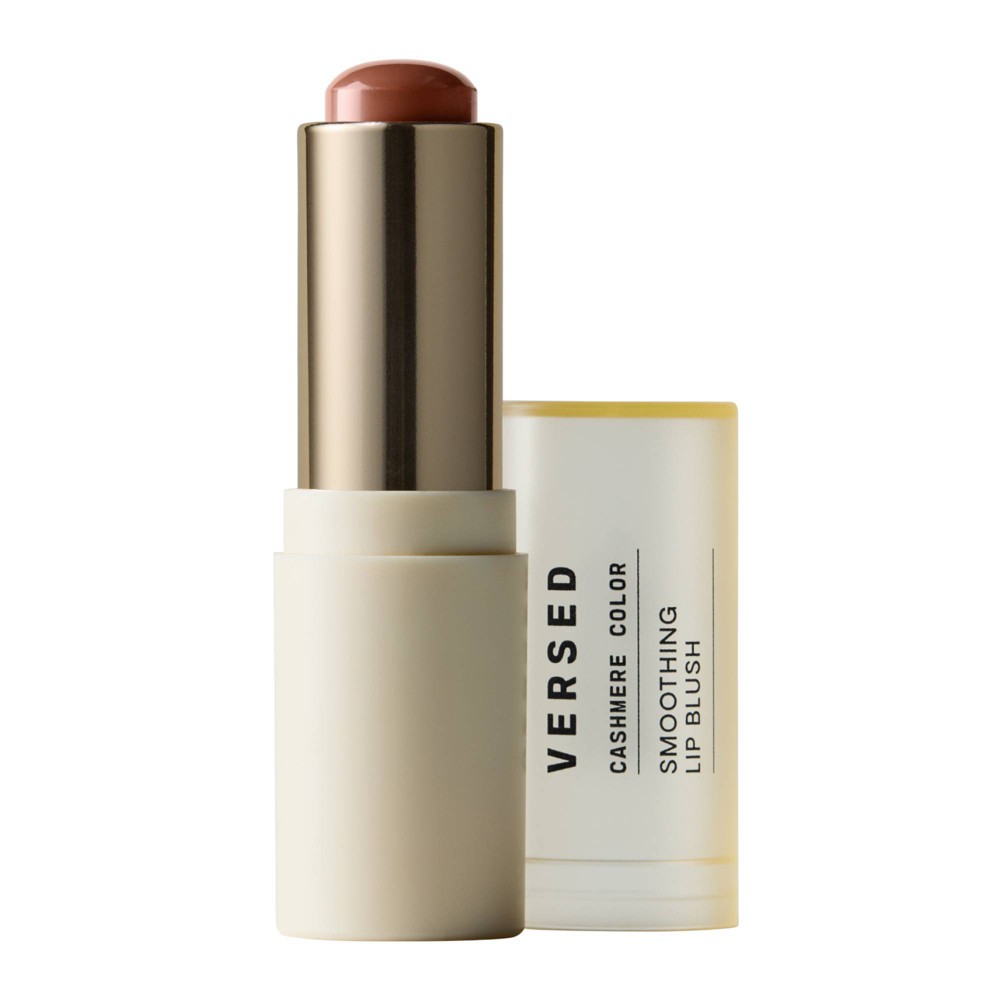
Versed Cashmere Color Smoothing Lip Blush - Lounge - 0.17oz: Moisturizing, Liquid, Semi-Matte
Analysis updated July 2026 · How Scout scores
At a glance
Summary
This lip product contains a mix of natural and synthetic ingredients, including beneficial components like shea butter, jojoba seed oil, and camellia seed oil, which provide moisturizing benefits. However, the presence of synthetic wax and artificial colorants such as Red 7 Lake and Blue 1 Lake, along with a moderate level of processing, slightly detracts from its overall ingredient safety profile. The product does not contain any highly concerning chemicals but is not entirely free from synthetic additives.
Key ingredients 27
Butyrospermum Parkii (Shea) ButterVery Good
Shea Butter is a natural fat extracted from the nuts of the shea tree. It is highly moisturizing and contains vitamins A and E, which are beneficial for skin health. It is widely used for its emollient properties.
Risks
There are minimal risks, primarily related to rare allergic reactions.
Benefits
It deeply moisturizes and nourishes the skin, improving its elasticity.
Camellia Japonica Seed OilVery Good
Camellia Japonica Seed Oil is a natural oil rich in antioxidants and fatty acids. It is highly moisturizing and helps to protect the skin from environmental damage. It is widely used for its emollient properties.
Risks
There are minimal risks, primarily related to rare allergic reactions.
Benefits
It deeply moisturizes and nourishes the skin, improving its elasticity.
Simmondsia Chinensis (Jojoba) Seed OilVery Good
Jojoba Oil is a natural oil that closely resembles the skin's natural sebum. It is highly moisturizing and helps to balance oil production. It is widely used for its emollient properties.
Risks
There are minimal risks, primarily related to rare allergic reactions.
Benefits
It deeply moisturizes and nourishes the skin, improving its elasticity.
Caprylic/Capric TriglycerideGood
Caprylic/Capric Triglyceride is derived from coconut oil and glycerin, used for its skin-repairing and moisturizing properties. It is lightweight and non-greasy, making it suitable for all skin types. It enhances the spreadability of the product.
Risks
There are minimal risks, primarily related to rare allergic reactions.
Benefits
It helps to replenish the skin's surface and resist moisture loss.
TriheptanoinNeutral
Triheptanoin is a triglyceride used as an emollient and skin-conditioning agent. It is generally considered safe and non-irritating. It helps to improve the texture and feel of the product.
Risks
There are no significant risks associated with Triheptanoin.
Benefits
It provides a smooth application and helps to moisturize the skin.
SilicaNeutral
Silica is used as a thickening agent and to improve the texture of cosmetic products. It provides a matte finish and helps to absorb excess oil. It is generally considered safe for use in cosmetics.
Risks
Inhalation of silica dust can be harmful, but this is not a concern in lip products.
Benefits
It helps to control shine and improve the product's texture.
OctyldodecanolNeutral
Octyldodecanol is a fatty alcohol used as an emollient and emulsifier. It helps to improve the texture and spreadability of the product. It is generally considered safe and non-irritating.
Risks
There are minimal risks, primarily related to rare allergic reactions.
Benefits
It provides a smooth application and helps to moisturize the skin.
Synthetic WaxNeutral
Synthetic Wax is used to provide structure and stability to cosmetic products. It helps to form a protective barrier on the skin. It is generally considered safe for use in cosmetics.
Risks
There are minimal risks associated with synthetic waxes.
Benefits
It helps to improve the texture and longevity of the product.
Isostearyl IsostearateNeutral
Isostearyl Isostearate is an emollient that helps to condition the skin and improve the texture of the product. It is derived from isostearic acid and is generally considered safe. It enhances the spreadability of the product.
Risks
There are minimal risks, primarily related to rare allergic reactions.
Benefits
It provides a smooth application and helps to moisturize the skin.
Sorbitan OlivateNeutral
Sorbitan Olivate is an emulsifier derived from olive oil and sorbitol. It helps to stabilize and blend ingredients in cosmetic formulations. It is generally considered safe and non-irritating.
Risks
There are minimal risks, primarily related to rare allergic reactions.
Benefits
It helps to improve the texture and stability of the product.
Calcium CarbonateNeutral
Calcium Carbonate is used as a bulking agent and to improve the texture of cosmetic products. It is generally considered safe for use in cosmetics. It helps to provide a smooth application.
Risks
There are minimal risks associated with calcium carbonate.
Benefits
It helps to improve the texture and feel of the product.
Polyhydroxystearic AcidNeutral
Polyhydroxystearic Acid is used as a thickening agent and to improve the texture of cosmetic products. It is generally considered safe for use in cosmetics. It helps to stabilize emulsions.
Risks
There are minimal risks associated with polyhydroxystearic acid.
Benefits
It helps to improve the texture and stability of the product.
Stearalkonium HectoriteNeutral
Stearalkonium Hectorite is used as a thickening agent and to improve the texture of cosmetic products. It helps to stabilize emulsions and is generally considered safe. It enhances the spreadability of the product.
Risks
There are minimal risks associated with stearalkonium hectorite.
Benefits
It helps to improve the texture and stability of the product.
Diisostearyl MalateNeutral
Diisostearyl Malate is an emollient that helps to condition the skin and improve the texture of the product. It is generally considered safe and non-irritating. It enhances the spreadability of the product.
Risks
There are minimal risks, primarily related to rare allergic reactions.
Benefits
It provides a smooth application and helps to moisturize the skin.
Polyglyceryl-2 TriisostearateNeutral
Polyglyceryl-2 Triisostearate is an emulsifier that helps to blend ingredients in cosmetic formulations. It is generally considered safe and non-irritating. It enhances the spreadability of the product.
Risks
There are minimal risks, primarily related to rare allergic reactions.
Benefits
It helps to improve the texture and stability of the product.
Sorbitan IsostearateNeutral
Sorbitan Isostearate is an emulsifier used to stabilize and blend ingredients in cosmetic formulations. It is generally considered safe and non-irritating. It enhances the spreadability of the product.
Risks
There are minimal risks, primarily related to rare allergic reactions.
Benefits
It helps to improve the texture and stability of the product.
Propylene CarbonateNeutral
Propylene Carbonate is used as a solvent and to improve the texture of cosmetic products. It is generally considered safe for use in cosmetics. It helps to dissolve other ingredients.
Risks
There are minimal risks associated with propylene carbonate.
Benefits
It helps to improve the texture and feel of the product.
Isostearic AcidNeutral
Isostearic Acid is used as an emulsifier and to improve the texture of cosmetic products. It is generally considered safe for use in cosmetics. It helps to stabilize emulsions.
Risks
There are minimal risks associated with isostearic acid.
Benefits
It helps to improve the texture and stability of the product.
Polyglyceryl-3 PolyricinoleateNeutral
Polyglyceryl-3 Polyricinoleate is an emulsifier used to stabilize and blend ingredients in cosmetic formulations. It is generally considered safe and non-irritating. It enhances the spreadability of the product.
Risks
There are minimal risks, primarily related to rare allergic reactions.
Benefits
It helps to improve the texture and stability of the product.
Iron Oxides (CI 77491, 77499)Neutral
Iron Oxides are used as colorants in cosmetic products. They are generally considered safe for use in cosmetics. They provide pigmentation and color to the product.
Risks
There are minimal risks associated with iron oxides.
Benefits
They provide color and pigmentation to the product.
Red 7 Lake (CI 15850)Neutral
Red 7 Lake is a synthetic colorant used in cosmetic products. It is generally considered safe for use in cosmetics. It provides pigmentation and color to the product.
Risks
There are minimal risks associated with Red 7 Lake.
Benefits
It provides color and pigmentation to the product.
Titanium Dioxide (CI 77891)Neutral
Titanium Dioxide is used as a colorant and UV filter in cosmetic products. It is generally considered safe for use in cosmetics. It provides pigmentation and sun protection to the product.
Risks
There are minimal risks associated with titanium dioxide.
Benefits
It provides color and sun protection to the product.
Red 28 Lake (CI 45410)Neutral
Red 28 Lake is a synthetic colorant used in cosmetic products. It is generally considered safe for use in cosmetics. It provides pigmentation and color to the product.
Risks
There are minimal risks associated with Red 28 Lake.
Benefits
It provides color and pigmentation to the product.
Red 6 (CI 15850)Neutral
Red 6 is a synthetic colorant used in cosmetic products. It is generally considered safe for use in cosmetics. It provides pigmentation and color to the product.
Risks
There are minimal risks associated with Red 6.
Benefits
It provides color and pigmentation to the product.
Yellow 6 Lake (CI 15985)Neutral
Yellow 6 Lake is a synthetic colorant used in cosmetic products. It is generally considered safe for use in cosmetics. It provides pigmentation and color to the product.
Risks
There are minimal risks associated with Yellow 6 Lake.
Benefits
It provides color and pigmentation to the product.
Blue 1 Lake (CI 42090)Neutral
Blue 1 Lake is a synthetic colorant used in cosmetic products. It is generally considered safe for use in cosmetics. It provides pigmentation and color to the product.
Risks
There are minimal risks associated with Blue 1 Lake.
Benefits
It provides color and pigmentation to the product.
LecithinBad
Processed additive flagged under Scout's ingredient doctrine.
Risks
There are minimal risks associated with lecithin.
Benefits
It helps to improve the texture and stability of the product.
Get the full breakdown in the Scout appTake Scout shopping
Scan any product to see lab results, healthy alternatives, and your personalized analysis.
Download on theApp Store GET IT ONGoogle Play