
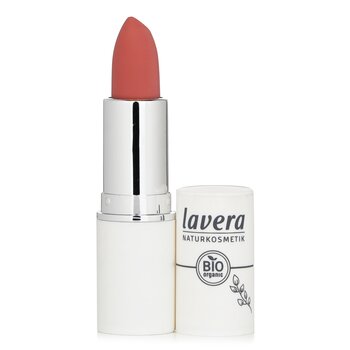

LaveraComfort Matt Lipstick - # 06 Primrose 4.5g
Analysis updated September 2026 · How Scout scores
At a glance
Summary
This lipstick contains several beneficial natural ingredients such as shea butter, cocoa butter, and olive oil, which are known for their moisturizing and nourishing properties. However, the presence of denatured alcohol and fragrance can be potential irritants, especially for sensitive skin, which affects the overall safety profile. The product has a moderate level of processing with a mix of natural and synthetic components, leading to a balanced score.
Key ingredients 34
Butyrospermum Parkii (Shea) ButterVery Good
Shea butter is a natural fat extracted from the nuts of the shea tree. It is highly moisturizing and contains vitamins A and E. It is considered very beneficial for skin hydration and protection.
Risks
There are minimal risks, primarily limited to rare allergic reactions.
Benefits
It provides deep moisture and helps to soothe and protect dry or irritated skin.
Theobroma Cacao (Cocoa) Seed ButterVery Good
Cocoa butter is a natural fat extracted from cocoa beans. It is highly moisturizing and contains antioxidants. It is considered very beneficial for skin hydration and protection.
Risks
There are minimal risks, primarily limited to rare allergic reactions.
Benefits
It provides deep moisture and helps to soothe and protect dry or irritated skin.
Olea Europaea (Olive) Fruit OilVery Good
Olive oil is a natural oil rich in essential fatty acids and antioxidants. It is used for its moisturizing and nourishing properties. It is considered very beneficial for maintaining skin health and hydration.
Risks
Olive oil can cause allergic reactions in individuals with olive allergies.
Benefits
It provides nourishment and helps to maintain skin elasticity and moisture.
TocopherolVery Good
Tocopherol, also known as Vitamin E, is a powerful antioxidant used in cosmetics for its skin-protective properties. It helps to protect the skin from oxidative stress and damage. It is considered very beneficial for skin health.
Risks
There are minimal risks, primarily limited to rare allergic reactions.
Benefits
It provides antioxidant protection and helps to maintain skin health.
Caprylic/Capric TriglycerideGood
Caprylic/Capric Triglyceride is a mixed triester derived from coconut oil and glycerin. It is used as an emollient and helps to improve the spreadability of the product. It is generally considered safe and beneficial for skin hydration.
Risks
There are minimal risks associated with this ingredient, primarily limited to rare allergic reactions.
Benefits
It provides a lightweight, non-greasy barrier of lubrication that helps to retain moisture in the skin.
TriheptanoinGood
Triheptanoin is a triglyceride that acts as an emollient and skin-conditioning agent. It is known for its ability to provide a silky feel and enhance the texture of cosmetic products. It is considered safe and beneficial for skin use.
Risks
There are minimal risks, with rare cases of skin irritation reported.
Benefits
It helps to improve skin texture and provides a smooth application for cosmetic products.
Glycine Soja (Soybean) OilGood
Soybean oil is a natural oil rich in essential fatty acids and vitamin E. It is used for its moisturizing and antioxidant properties. It is considered beneficial for maintaining skin health and hydration.
Risks
Soybean oil can cause allergic reactions in individuals with soy allergies.
Benefits
It provides nourishment and helps to maintain skin elasticity and moisture.
Oryza Sativa (Rice) Bran WaxGood
Rice bran wax is a natural wax derived from rice bran oil. It is used as a thickening agent and emollient in cosmetics. It is considered safe and beneficial for skin conditioning.
Risks
There are minimal risks associated with rice bran wax, primarily limited to rare allergic reactions.
Benefits
It helps to provide a smooth texture and enhances the stability of cosmetic formulations.
Rosa Centifolia Flower ExtractGood
Rosa Centifolia Flower Extract is derived from the cabbage rose and is used for its soothing and antioxidant properties. It is considered beneficial for calming and protecting the skin.
Risks
There are minimal risks, primarily limited to rare allergic reactions.
Benefits
It helps to soothe the skin and provides antioxidant protection.
Olea Europaea (Olive) Oil UnsaponifiablesGood
Olive oil unsaponifiables are the fraction of olive oil that remains after saponification. They are used for their emollient and skin-conditioning properties. They are considered beneficial for maintaining skin health.
Risks
There are minimal risks, primarily limited to rare allergic reactions.
Benefits
They provide nourishment and help to maintain skin elasticity and moisture.
Helianthus Annuus (Sunflower) Seed OilGood
Sunflower seed oil is a natural oil rich in essential fatty acids and vitamin E. It is used for its moisturizing and nourishing properties. It is considered beneficial for maintaining skin health and hydration.
Risks
Sunflower seed oil can cause allergic reactions in individuals with sunflower allergies.
Benefits
It provides nourishment and helps to maintain skin elasticity and moisture.
Dipotassium GlycyrrhizateGood
Dipotassium Glycyrrhizate is a salt derived from licorice root. It is used for its anti-inflammatory and soothing properties. It is considered beneficial for calming and protecting the skin.
Risks
There are minimal risks, primarily limited to rare allergic reactions.
Benefits
It helps to soothe the skin and reduce inflammation.
Ascorbyl PalmitateGood
Ascorbyl Palmitate is a stable form of Vitamin C used for its antioxidant properties. It helps to protect the skin from oxidative stress and damage. It is considered beneficial for skin health.
Risks
There are minimal risks, primarily limited to rare allergic reactions.
Benefits
It provides antioxidant protection and helps to maintain skin health.
SilicaNeutral
Silica is a mineral used in cosmetics for its oil-absorbing properties and to improve the texture of products. It is generally considered safe for use in cosmetics. It does not provide direct skin benefits but enhances product performance.
Risks
Inhalation of silica dust can be harmful, but this is not a concern in solid cosmetic formulations.
Benefits
It helps to control shine and improve the texture of cosmetic products.
Euphorbia Cerifera (Candelilla) WaxNeutral
Standard formulation ingredient — neither beneficial nor harmful at typical use.
Risks
There are minimal risks, with rare cases of skin irritation reported.
Benefits
It helps to create a protective barrier on the skin and enhances the texture of cosmetic products.
Rhus Verniciflua Peel WaxNeutral
Rhus Verniciflua Peel Wax is a natural wax used as a thickening agent in cosmetics. It is derived from the peel of the Rhus Verniciflua tree. It is considered safe for use in cosmetics.
Risks
There are minimal risks associated with this ingredient, primarily limited to rare allergic reactions.
Benefits
It helps to improve the texture and stability of cosmetic formulations.
TrihydroxystearinNeutral
Trihydroxystearin is a triglyceride used as a thickening agent and stabilizer in cosmetics. It is considered safe for use in cosmetic formulations. It does not provide direct skin benefits but enhances product performance.
Risks
There are minimal risks, with rare cases of skin irritation reported.
Benefits
It helps to stabilize emulsions and improve the texture of cosmetic products.
C10-18 TriglyceridesNeutral
C10-18 Triglycerides are mixed triglycerides used as emollients and skin-conditioning agents. They are considered safe for use in cosmetics. They do not provide direct skin benefits but enhance product performance.
Risks
There are minimal risks, with rare cases of skin irritation reported.
Benefits
They help to improve the texture and spreadability of cosmetic products.
Glyceryl RosinateNeutral
Glyceryl Rosinate is a resin used as a film-forming agent in cosmetics. It is considered safe for use in cosmetic formulations. It does not provide direct skin benefits but enhances product performance.
Risks
There are minimal risks, with rare cases of skin irritation reported.
Benefits
It helps to improve the adhesion and longevity of cosmetic products.
Water (Aqua)Neutral
Water is used as a solvent in cosmetic formulations. It is essential for dissolving other ingredients and providing a base for the product. It is considered safe and neutral in terms of skin benefits.
Risks
There are no significant risks associated with water in cosmetics.
Benefits
It acts as a solvent and helps to hydrate the skin.
CitronellolNeutral
Citronellol is a fragrance ingredient derived from plants such as rose and geranium. It is used for its pleasant scent. It is considered safe for use in cosmetics but can be an allergen for some individuals.
Risks
It can cause allergic reactions in sensitive individuals.
Benefits
It provides a pleasant floral scent to cosmetic products.
GeraniolNeutral
Geraniol is a fragrance ingredient derived from plants such as rose and citronella. It is used for its pleasant floral scent. It is considered safe for use in cosmetics but can be an allergen for some individuals.
Risks
It can cause allergic reactions in sensitive individuals.
Benefits
It provides a pleasant floral scent to cosmetic products.
Ultramarines (CI 77007)Neutral
Ultramarines are pigments used to impart color to cosmetic products. They are considered safe for use in cosmetics. They do not provide direct skin benefits but enhance the visual appeal of the product.
Risks
There are minimal risks associated with ultramarines in cosmetics.
Benefits
They provide vibrant color to cosmetic products.
Iron Oxide (CI 77491)Neutral
Iron Oxides are pigments used to impart color to cosmetic products. They are considered safe for use in cosmetics. They do not provide direct skin benefits but enhance the visual appeal of the product.
Risks
There are minimal risks associated with iron oxides in cosmetics.
Benefits
They provide vibrant color to cosmetic products.
Iron Oxide (CI 77492)Neutral
Iron Oxides are pigments used to impart color to cosmetic products. They are considered safe for use in cosmetics. They do not provide direct skin benefits but enhance the visual appeal of the product.
Risks
There are minimal risks associated with iron oxides in cosmetics.
Benefits
They provide vibrant color to cosmetic products.
Iron Oxide (CI 77499)Neutral
Iron Oxides are pigments used to impart color to cosmetic products. They are considered safe for use in cosmetics. They do not provide direct skin benefits but enhance the visual appeal of the product.
Risks
There are minimal risks associated with iron oxides in cosmetics.
Benefits
They provide vibrant color to cosmetic products.
Titanium Dioxide (CI 77891)Neutral
Titanium Dioxide is a mineral used as a pigment and UV filter in cosmetics. It is considered safe for use in cosmetics. It does not provide direct skin benefits but enhances the visual appeal and provides sun protection.
Risks
There are minimal risks associated with titanium dioxide in cosmetics.
Benefits
It provides vibrant color and sun protection to cosmetic products.
LimoneneBad
Processed additive flagged under Scout's ingredient doctrine.
Risks
It can cause allergic reactions in sensitive individuals.
Benefits
It provides a fresh citrus scent to cosmetic products.
LinaloolBad
Processed additive flagged under Scout's ingredient doctrine.
Risks
It can cause allergic reactions in sensitive individuals.
Benefits
It provides a pleasant floral scent to cosmetic products.
Benzyl AlcoholBad
Processed additive flagged under Scout's ingredient doctrine.
Risks
It can cause allergic reactions in sensitive individuals.
Benefits
It helps to preserve the product and provides a mild scent.
EugenolBad
Processed additive flagged under Scout's ingredient doctrine.
Risks
It can cause allergic reactions in sensitive individuals.
Benefits
It provides a spicy, clove-like scent to cosmetic products.
CitralBad
Processed additive flagged under Scout's ingredient doctrine.
Risks
It can cause allergic reactions in sensitive individuals.
Benefits
It provides a fresh lemon scent to cosmetic products.
Alcohol denat.Very Bad
Denatured alcohol is used as a solvent and astringent in cosmetics. It can be drying and irritating to the skin, especially with prolonged use. It is considered a potential irritant and is generally not recommended for sensitive skin.
Risks
It can cause dryness and irritation, particularly in sensitive skin types.
Benefits
It helps to improve the texture and drying time of cosmetic products.
Fragrance (Parfum)Very Bad
Fragrance is used to impart scent to cosmetic products. It can be irritating to the skin and is a common allergen. It is considered a potential irritant and is generally not recommended for sensitive skin.
Risks
It can cause allergic reactions and irritation, particularly in sensitive skin types.
Benefits
It provides a pleasant scent to cosmetic products.
Get the full breakdown in the Scout appTake Scout shopping
Scan any product to see lab results, healthy alternatives, and your personalized analysis.
Download on theApp Store GET IT ONGoogle Play