
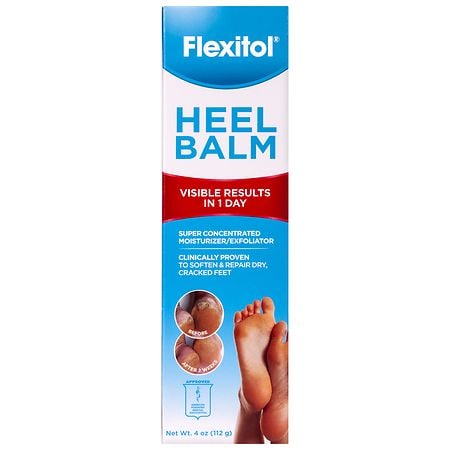
Flexitol Heel Balm 4 oz Tube
Analysis updated August 2026 · How Scout scores
At a glance
Summary
This product contains beneficial ingredients like urea, lanolin, and shea butter, which are known for their moisturizing and skin-soothing properties. However, the presence of perfume, a common allergen, and PEG-20 stearate, a synthetic compound, slightly detracts from its overall safety profile. The product is moderately processed, which also influences its rating.
Key ingredients 21
LanolinVery Good
Lanolin is a natural emollient derived from sheep's wool. It is highly effective in moisturizing and protecting the skin. It forms a barrier that prevents moisture loss.
Risks
Some individuals may experience allergic reactions to lanolin.
Benefits
It deeply moisturizes and protects the skin, making it ideal for dry and cracked areas.
Butyrospermum Parkii (Shea Butter)Very Good
Shea butter is a natural fat extracted from the nuts of the shea tree. It is rich in vitamins and fatty acids, making it an excellent moisturizer. It is highly effective in soothing and nourishing the skin.
Risks
Rarely, it may cause allergic reactions in sensitive individuals.
Benefits
It deeply moisturizes and nourishes the skin, improving elasticity and softness.
PanthenolVery Good
Panthenol, also known as provitamin B5, is a humectant that attracts and retains moisture in the skin. It has soothing and anti-inflammatory properties. It is highly beneficial for improving skin hydration and texture.
Risks
There are minimal risks associated with its use.
Benefits
It enhances skin hydration and promotes healing and repair.
Melaleuca Alternifolia (Tea Tree) OilVery Good
Tea tree oil is a natural essential oil known for its antimicrobial and anti-inflammatory properties. It is effective in treating acne and other skin conditions. It is highly beneficial for its purifying and soothing effects.
Risks
Undiluted use may cause skin irritation or allergic reactions.
Benefits
It provides antimicrobial protection and soothes irritated skin.
Aloe Barbadensis Leaf JuiceVery Good
Aloe vera is a natural plant extract known for its soothing and hydrating properties. It helps calm irritated skin and provides moisture. It is highly effective in promoting skin healing and comfort.
Risks
There are minimal risks associated with its use.
Benefits
It soothes and hydrates the skin, promoting healing and comfort.
UreaGood
Urea is a humectant that helps retain moisture in the skin. It is effective in treating dry and rough skin conditions. It also has mild keratolytic properties, aiding in exfoliation.
Risks
In rare cases, it may cause irritation or allergic reactions.
Benefits
It significantly improves skin hydration and smoothness.
Sodium PCAGood
Sodium PCA is a natural component of the skin's natural moisturizing factor. It is a powerful humectant that attracts moisture to the skin. It is highly effective in improving skin hydration.
Risks
There are minimal risks associated with its use.
Benefits
It significantly enhances skin moisture retention and smoothness.
Tocopheryl AcetateGood
Tocopheryl acetate is a form of vitamin E used for its antioxidant properties. It helps protect the skin from oxidative stress and damage. It is beneficial in improving skin health and appearance.
Risks
There are minimal risks associated with its use.
Benefits
It provides antioxidant protection and supports skin health.
Centipeda Cunninghamii ExtractGood
Centipeda cunninghamii extract is a botanical ingredient known for its anti-inflammatory and soothing properties. It is used to calm and protect the skin. It is beneficial in reducing redness and irritation.
Risks
There are minimal risks associated with its use.
Benefits
It soothes and calms the skin, reducing inflammation and irritation.
Glycolic AcidGood
Glycolic acid is an alpha hydroxy acid used for its exfoliating properties. It helps remove dead skin cells and improve skin texture. It is effective in promoting a smoother and more radiant complexion.
Risks
It may cause irritation or sensitivity, especially in high concentrations.
Benefits
It enhances skin texture and promotes a brighter complexion.
ArginineGood
Arginine is an amino acid that helps improve skin hydration and elasticity. It supports collagen production and skin repair. It is beneficial in maintaining healthy and resilient skin.
Risks
There are minimal risks associated with its use.
Benefits
It enhances skin hydration and supports collagen synthesis.
Purified WaterNeutral
Purified water is used as a solvent in many cosmetic formulations. It helps dissolve other ingredients and provides a base for the product. It is generally considered safe and non-reactive.
Risks
There are no significant risks associated with purified water.
Benefits
It acts as a carrier for other ingredients, ensuring even distribution.
Cetearyl AlcoholNeutral
Cetearyl alcohol is a fatty alcohol used as an emollient and thickener in cosmetics. It helps stabilize formulations and improve texture. It is generally considered safe and non-irritating.
Risks
It may cause mild irritation in sensitive individuals.
Benefits
It enhances the texture and stability of cosmetic products.
Light Liquid ParaffinNeutral
Light liquid paraffin is a mineral oil used as an emollient in skincare products. It helps lock in moisture and soften the skin. It is widely used and generally considered safe.
Risks
Prolonged use may lead to clogged pores in some individuals.
Benefits
It provides a protective barrier that helps retain skin moisture.
Glyceryl MonostearateNeutral
Glyceryl monostearate is an emulsifier that helps blend oil and water components in formulations. It also acts as a skin conditioning agent. It is generally regarded as safe.
Risks
There are minimal risks associated with its use.
Benefits
It improves the consistency and stability of cosmetic products.
Decyl OleateNeutral
Decyl oleate is an ester used as an emollient and skin conditioning agent. It provides a smooth application and enhances skin feel. It is considered safe for use in cosmetics.
Risks
It may cause mild irritation in sensitive skin types.
Benefits
It improves the texture and spreadability of skincare products.
PEG-20 StearateNeutral
PEG-20 stearate is an emulsifier that helps mix oil and water in formulations. It is commonly used in cosmetics for its stabilizing properties. It is generally considered safe.
Risks
There is a potential risk of contamination with ethylene oxide or 1,4-dioxane.
Benefits
It enhances the stability and texture of cosmetic formulations.
Paraffin HardNeutral
Paraffin hard is a form of mineral wax used to provide structure and stability to formulations. It helps create a barrier on the skin to prevent moisture loss. It is widely used and considered safe.
Risks
Prolonged use may lead to clogged pores in some individuals.
Benefits
It helps form a protective barrier to lock in moisture.
PhenoxyethanolBad
Processed additive flagged under Scout's ingredient doctrine.
Risks
High concentrations may cause skin irritation or allergic reactions.
Benefits
It helps maintain product integrity by preventing microbial contamination.
Benzyl AlcoholBad
Processed additive flagged under Scout's ingredient doctrine.
Risks
High concentrations may cause skin irritation or allergic reactions.
Benefits
It helps maintain product integrity by preventing microbial contamination.
PerfumeBad
Perfume is used to add fragrance to cosmetic products. It can enhance the sensory experience of using the product. However, it is a common allergen and can cause irritation or allergic reactions.
Risks
It may cause skin irritation, allergic reactions, or sensitization.
Benefits
It provides a pleasant scent to the product.
Get the full breakdown in the Scout appTake Scout shopping
Scan any product to see lab results, healthy alternatives, and your personalized analysis.
Download on theApp Store GET IT ONGoogle PlayAmazon pricing & content
Amazon price as of . Product prices and availability are accurate as of the date/time indicated and are subject to change. Any price and availability information displayed on Amazon.com at the time of purchase will apply to the purchase of this product.
CERTAIN CONTENT THAT APPEARS ON THIS SITE COMES FROM AMAZON. THIS CONTENT IS PROVIDED “AS IS” AND IS SUBJECT TO CHANGE OR REMOVAL AT ANY TIME.