
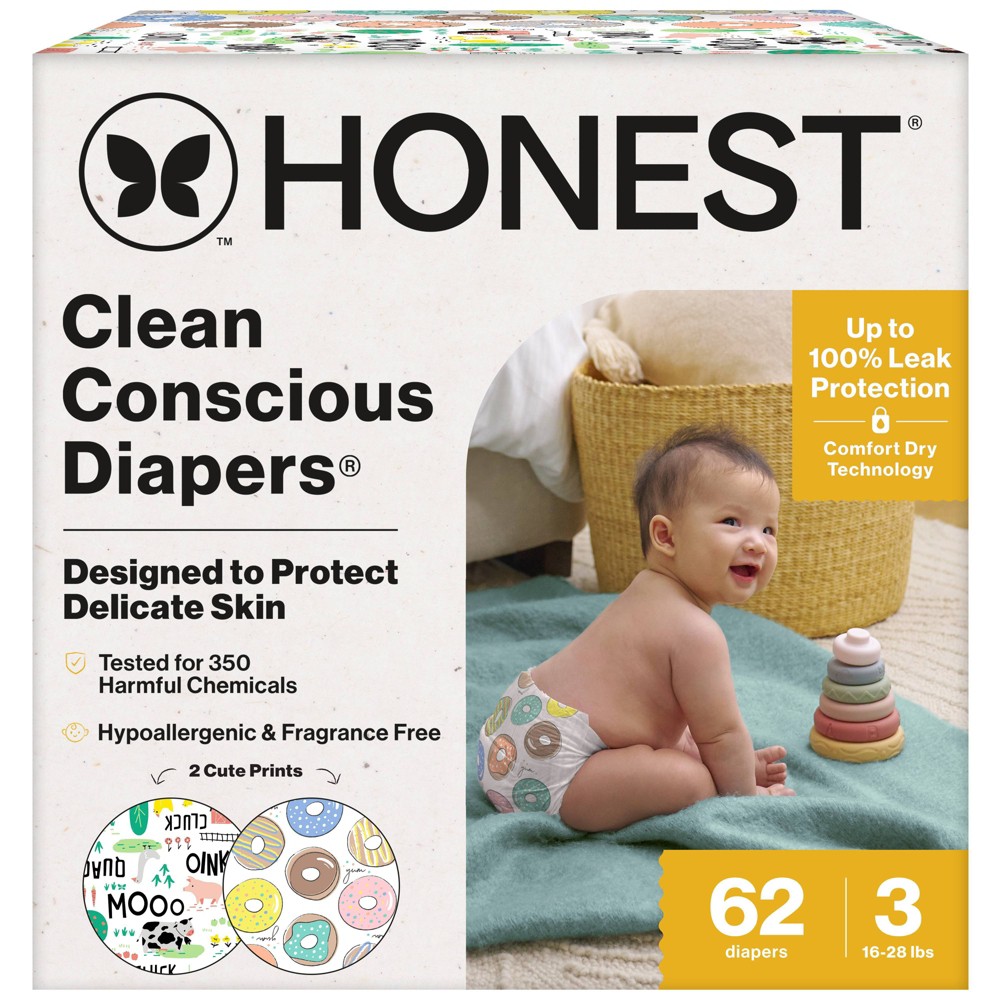


The Honest Company Clean Conscious Diapers - Barnyard Babies + Donut Grow Up - Size 3 - 62ct
Analysis updated August 2026 · How Scout scores
At a glance
Summary
This diaper product uses elemental chlorine-free wood pulp, which is a safer alternative to traditional chlorine bleaching methods, reducing potential exposure to harmful dioxins. The inclusion of polymer spandex and polypropylene indicates a moderate level of processing, but these materials are common in diaper manufacturing for flexibility and durability. The use of polyolefin adhesives is typical for ensuring the diaper's integrity, though it adds to the synthetic component of the product.
Key ingredients 4
Elemental Chlorine Free (ECF) Wood PulpNeutral
Elemental Chlorine Free (ECF) Wood Pulp is used as an absorbent material in diapers. It is processed without elemental chlorine, reducing the formation of harmful dioxins. This makes it a safer choice compared to traditional chlorine-bleached pulp.
Risks
There are minimal risks associated with ECF wood pulp, primarily related to environmental concerns during production.
Benefits
The primary benefit is its reduced environmental impact compared to chlorine-bleached alternatives.
Polymer SpandexNeutral
Polymer Spandex is used in diapers for elasticity and fit. It allows the diaper to stretch and conform to the baby's body, providing comfort. Spandex is a synthetic fiber known for its durability and flexibility.
Risks
Potential risks include skin irritation for sensitive individuals due to its synthetic nature.
Benefits
The benefit of spandex is its ability to provide a snug fit, reducing leaks and enhancing comfort.
PolypropyleneNeutral
Polypropylene is a common plastic used in diapers for its strength and moisture resistance. It forms part of the diaper's outer layer, helping to keep moisture in. This material is lightweight and durable.
Risks
Risks include environmental concerns due to its non-biodegradable nature.
Benefits
Polypropylene is beneficial for its moisture barrier properties, keeping the outer surface of the diaper dry.
Polyolefin AdhesivesNeutral
Polyolefin Adhesives are used to bond different layers of the diaper together. They provide strong adhesion while being flexible. These adhesives are chosen for their compatibility with other diaper materials.
Risks
Potential risks involve chemical exposure during manufacturing, though minimal in the final product.
Benefits
The benefit of polyolefin adhesives is their ability to maintain diaper integrity without compromising flexibility.
Processing
Ultra-Processed Foods
Get the full breakdown in the Scout appTake Scout shopping
Scan any product to see lab results, healthy alternatives, and your personalized analysis.
Download on theApp Store GET IT ONGoogle Play