
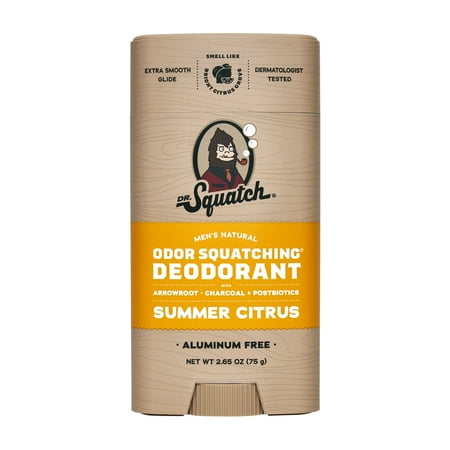
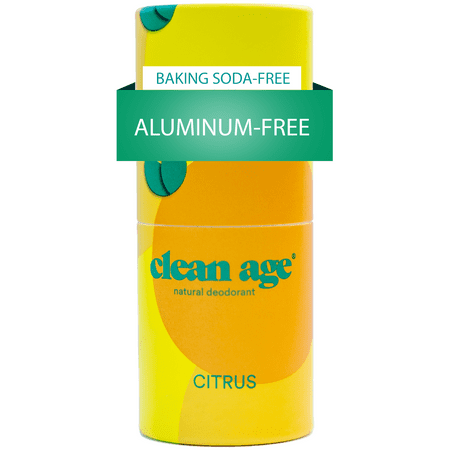


Dr. Squatch Summer Citrus Natural Deodorant for Men 2.65 oz
Analysis updated August 2026 · How Scout scores
At a glance
Summary
This deodorant features a clean formula with beneficial ingredients like magnesium hydroxide, arrowroot powder, and shea butter, which provide natural odor control and skin conditioning. It is free from aluminum, synthetic fragrances, and propylene glycol, making it a safe choice for those seeking a natural deodorant option. The use of naturally derived fragrance and other plant-based ingredients further enhances its appeal as a minimally processed product.
Key ingredients 16
Magnesium HydroxideVery Good
Magnesium Hydroxide is a naturally occurring mineral used as an odor neutralizer in deodorants. It works by raising the pH of the skin, which inhibits the growth of odor-causing bacteria. It is a gentle alternative to baking soda.
Risks
There are minimal risks associated with magnesium hydroxide, making it suitable for sensitive skin.
Benefits
It effectively neutralizes odor without causing irritation, making it ideal for sensitive skin.
Manihot Esculenta (Arrowroot) PowderGood
Arrowroot powder is a natural starch derived from the roots of the arrowroot plant. It is used for its moisture-absorbing properties in deodorants. It is gentle on the skin and helps to keep the underarm area dry.
Risks
There are no significant risks associated with arrowroot powder.
Benefits
It effectively absorbs moisture, reducing wetness and helping to maintain a dry feeling.
BeeswaxGood
Beeswax is a natural wax produced by honeybees. It is used in cosmetics for its emollient and thickening properties. It helps to form a protective barrier on the skin.
Risks
Beeswax is generally safe, but it may cause allergic reactions in individuals sensitive to bee products.
Benefits
It provides a protective barrier that helps to lock in moisture and protect the skin.
Butyrospermum Parkii (Shea) ButterGood
Shea Butter is a fat extracted from the nuts of the shea tree. It is known for its moisturizing and anti-inflammatory properties. It is widely used in skincare products for its ability to nourish and hydrate the skin.
Risks
There are minimal risks, though individuals with nut allergies should exercise caution.
Benefits
It deeply moisturizes and soothes the skin, providing nourishment and improving skin elasticity.
Cocos Nucifera (Coconut) OilGood
Coconut Oil is a natural oil extracted from the meat of coconuts. It is used for its moisturizing and antimicrobial properties. It is a popular ingredient in natural deodorants.
Risks
Coconut oil may cause breakouts or irritation in some individuals with sensitive skin.
Benefits
It provides hydration and has natural antibacterial properties that help to reduce odor.
Simmondsia Chinensis (Jojoba) OilGood
Jojoba Oil is a liquid wax extracted from the seeds of the jojoba plant. It is used for its moisturizing and skin-conditioning properties. It closely resembles the natural oils of the skin.
Risks
There are minimal risks, making it suitable for most skin types.
Benefits
It provides long-lasting moisture and helps to balance the skin's natural oil production.
Helianthus Annuus (Sunflower) Seed OilGood
Sunflower Seed Oil is a non-comedogenic oil rich in vitamins A, D, and E. It is used for its moisturizing and skin-conditioning properties. It is suitable for all skin types.
Risks
There are minimal risks, though it may cause allergic reactions in individuals with seed allergies.
Benefits
It provides hydration and nourishment, helping to maintain healthy skin.
TocopherolGood
Tocopherol, also known as Vitamin E, is an antioxidant that helps to protect the skin from damage caused by free radicals. It is commonly used in skincare products for its protective and moisturizing properties.
Risks
There are minimal risks, though high concentrations may cause irritation.
Benefits
It helps to protect the skin from oxidative stress and supports skin health.
Lactobacillus FermentGood
Lactobacillus Ferment is a probiotic ingredient used for its antimicrobial properties. It helps to balance the skin's microbiome and reduce odor-causing bacteria. It is considered safe and beneficial for skin health.
Risks
There are minimal risks associated with this ingredient.
Benefits
It supports a healthy skin microbiome and helps to control odor naturally.
Caprylic/Capric TriglycerideNeutral
Caprylic/Capric Triglyceride is a mixed triester derived from coconut oil and glycerin. It is commonly used as an emollient and skin-conditioning agent. It is generally considered safe and non-irritating.
Risks
There are minimal risks associated with this ingredient, though some individuals may experience mild irritation.
Benefits
It helps to moisturize and soften the skin, enhancing the overall texture.
Stearyl AlcoholNeutral
Stearyl Alcohol is a fatty alcohol used as an emollient and thickener in cosmetic formulations. It is derived from natural fats and oils. It is generally considered safe for use in personal care products.
Risks
Some individuals may experience mild irritation or allergic reactions.
Benefits
It helps to stabilize and thicken formulations, providing a smooth application.
Triethyl CitrateNeutral
Triethyl Citrate is an ester of citric acid used as a deodorizing agent. It works by inhibiting the enzymatic breakdown of sweat, which reduces odor. It is considered safe for use in cosmetics.
Risks
There are minimal risks, though it may cause irritation in sensitive individuals.
Benefits
It helps to control odor by preventing the breakdown of sweat into malodorous compounds.
Naturally Derived FragranceNeutral
Naturally Derived Fragrance refers to scents obtained from natural sources. It is used to impart a pleasant aroma to products. It is generally considered safer than synthetic fragrances.
Risks
Fragrances, even natural ones, can cause allergic reactions in sensitive individuals.
Benefits
It provides a pleasant scent without the use of synthetic chemicals.
Jojoba EstersNeutral
Jojoba Esters are derived from jojoba oil and used as emollients in cosmetics. They help to improve the texture and feel of products. They are considered safe and non-irritating.
Risks
There are minimal risks associated with jojoba esters.
Benefits
They enhance the texture of products and provide a smooth application.
Charcoal PowderNeutral
Charcoal Powder is used for its adsorptive properties, helping to draw out impurities and absorb moisture. It is a popular ingredient in natural deodorants. It is generally safe for topical use.
Risks
Charcoal can be messy and may cause staining if not properly formulated.
Benefits
It helps to absorb moisture and impurities, contributing to odor control.
MaltodextrinNeutral
Maltodextrin is a polysaccharide used as a binding and stabilizing agent in cosmetics. It is derived from starch and is generally considered safe for use. It helps to improve the texture and stability of formulations.
Risks
There are minimal risks, though it may cause irritation in sensitive individuals.
Benefits
It helps to stabilize formulations and improve product texture.
Get the full breakdown in the Scout appTake Scout shopping
Scan any product to see lab results, healthy alternatives, and your personalized analysis.
Download on theApp Store GET IT ONGoogle PlayAmazon pricing & content
CERTAIN CONTENT THAT APPEARS ON THIS SITE COMES FROM AMAZON. THIS CONTENT IS PROVIDED “AS IS” AND IS SUBJECT TO CHANGE OR REMOVAL AT ANY TIME.