
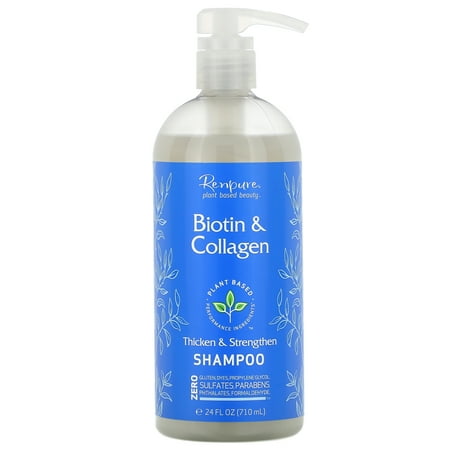

Renpure Plant Based Beauty Biotin & Collagen Shampoo
Analysis updated July 2026 · How Scout scores
At a glance
Summary
This shampoo contains beneficial ingredients like coconut oil and mild surfactants such as cocamidopropyl betaine and lauryl glucoside, which are gentle on the hair and scalp. However, the presence of synthetic fragrance and phenoxyethanol, which can cause irritation and allergic reactions, slightly detracts from its overall safety profile. The product is moderately processed, which also influences its rating.
Key ingredients 7
Lauryl GlucosideVery Good
Lauryl Glucoside is a non-ionic surfactant derived from glucose and coconut oil, known for its mildness and biodegradability. It is suitable for sensitive skin and helps to stabilize foams. It is considered one of the gentlest surfactants available.
Risks
There are minimal risks associated with its use, making it suitable for sensitive skin.
Benefits
It provides gentle cleansing and is environmentally friendly.
Cocos Nucifera (Coconut) OilVery Good
Coconut Oil is a natural emollient that helps to moisturize and condition the hair, reducing protein loss and improving hair health. It is rich in fatty acids and provides deep nourishment. It is widely used for its conditioning properties.
Risks
Overuse can lead to buildup, especially in fine hair.
Benefits
It deeply conditions and nourishes the hair, enhancing shine and softness.
Decyl GlucosideGood
Decyl Glucoside is a mild, non-ionic surfactant derived from natural sources like corn glucose and coconut oil. It is known for its gentle cleansing properties and is often used in formulations for sensitive skin. It is biodegradable and considered safe for use.
Risks
It is generally considered safe with low risk of irritation.
Benefits
It provides effective cleansing while being gentle on the skin and hair.
Hydrolyzed CollagenGood
Hydrolyzed Collagen is a protein that helps to strengthen and condition the hair, improving its elasticity and appearance. It is often used in hair care products to enhance volume and shine. It is beneficial for maintaining healthy hair structure.
Risks
There are minimal risks, though it may not be suitable for those with protein-sensitive hair.
Benefits
It helps to strengthen hair and improve its overall appearance.
Cocamidopropyl BetaineNeutral
Standard formulation ingredient — neither beneficial nor harmful at typical use.
Risks
In rare cases, it may cause allergic reactions or skin irritation.
Benefits
It provides gentle cleansing without stripping natural oils from the hair.
PhenoxyethanolBad
Phenoxyethanol is a preservative used to prevent microbial growth in cosmetic products. While effective, it can cause skin irritation and allergic reactions in some individuals. It is a common alternative to parabens but still poses some health concerns.
Risks
Potential for skin irritation and allergic reactions.
Benefits
Helps to preserve the product and extend its shelf life.
Parfum/FragranceVery Bad
Synthetic fragrances are often used to impart a pleasant scent to products but can contain undisclosed chemicals. They are known to cause allergic reactions and sensitivities in some individuals. The lack of transparency in their composition is a concern.
Risks
May cause skin irritation or allergic reactions in sensitive individuals.
Benefits
Provides a pleasant scent to the product.
Get the full breakdown in the Scout appTake Scout shopping
Scan any product to see lab results, healthy alternatives, and your personalized analysis.
Download on theApp Store GET IT ONGoogle PlayAmazon pricing & content
Amazon price as of . Product prices and availability are accurate as of the date/time indicated and are subject to change. Any price and availability information displayed on Amazon.com at the time of purchase will apply to the purchase of this product.
CERTAIN CONTENT THAT APPEARS ON THIS SITE COMES FROM AMAZON. THIS CONTENT IS PROVIDED “AS IS” AND IS SUBJECT TO CHANGE OR REMOVAL AT ANY TIME.