
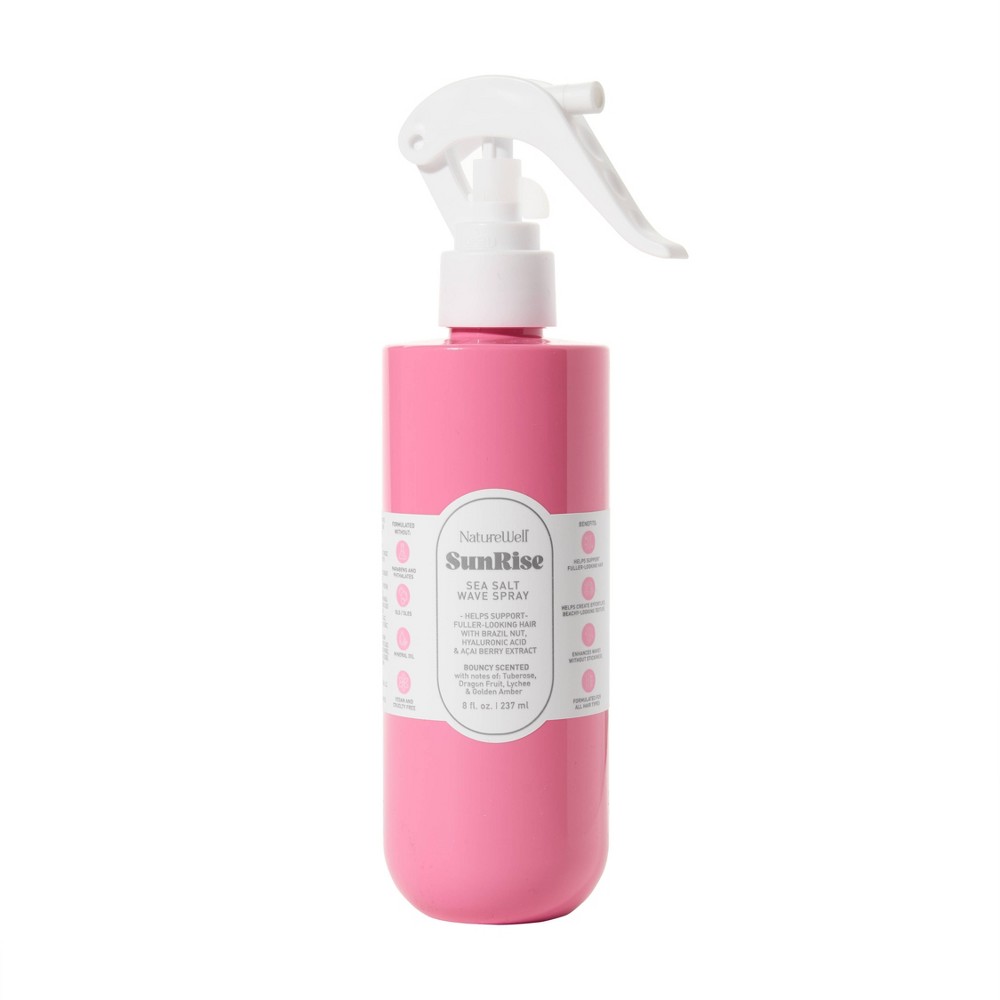
NatureWell SunRise Sea Salt Spray: Texturizing Hair Treatments for All Hair Types
Analysis updated August 2026 · How Scout scores
At a glance
Summary
This hair product contains a mix of beneficial ingredients such as glycerin, hyaluronic acid, and various plant extracts that provide hydration and nourishment to the hair. However, the presence of synthetic fragrance, phenoxyethanol, and hexyl cinnamal, which are potential allergens and irritants, slightly detracts from its overall safety profile. The product is minimally processed, which is a positive aspect, but the inclusion of these synthetic components prevents it from achieving a higher rating.
Key ingredients 39
Sea Salt (Maris Sal)Good
Beneficial ingredient — whole-food or functional value in this product class.
Risks
Excessive use of sea salt can lead to dryness and brittleness in hair.
Benefits
Sea salt can enhance hair texture and volume, providing a beachy look.
GlycerinGood
Glycerin is a humectant that attracts moisture to the hair and skin. It is widely used in cosmetics for its hydrating properties. It helps improve the moisture content of hair, making it softer and more manageable.
Risks
There are minimal risks associated with glycerin, though it can be sticky in high concentrations.
Benefits
Glycerin provides excellent hydration, improving hair softness and manageability.
Hyaluronic AcidGood
Hyaluronic acid is known for its ability to retain moisture, making it a popular ingredient in skincare and haircare products. It helps keep hair hydrated and can improve elasticity. It is beneficial for maintaining moisture balance in hair.
Risks
There are no significant risks associated with hyaluronic acid in haircare.
Benefits
Hyaluronic acid helps retain moisture, improving hair hydration and elasticity.
Euterpe Oleracea Fruit ExtractGood
Euterpe Oleracea, commonly known as acai berry, is rich in antioxidants and vitamins. It is used in haircare for its nourishing and protective properties. It can help protect hair from environmental damage.
Risks
There are minimal risks associated with this extract, though allergic reactions are possible.
Benefits
Acai berry extract provides antioxidant protection and nourishment to hair.
Hydrolyzed Corn ProteinGood
Hydrolyzed corn protein is used to strengthen and repair hair. It penetrates the hair shaft, providing essential amino acids that improve hair strength. It is beneficial for reducing hair breakage and enhancing elasticity.
Risks
There are minimal risks, though protein overload can lead to stiffness in hair.
Benefits
Hydrolyzed corn protein strengthens hair and reduces breakage.
Hydrolyzed Wheat ProteinGood
Hydrolyzed wheat protein is known for its ability to penetrate the hair shaft and improve moisture retention. It helps strengthen and repair damaged hair. It is beneficial for enhancing hair elasticity and reducing breakage.
Risks
Excessive use can lead to protein buildup, causing hair stiffness.
Benefits
Hydrolyzed wheat protein improves hair strength and moisture retention.
Hydrolyzed Soy ProteinGood
Hydrolyzed soy protein is used to strengthen and repair hair. It provides essential amino acids that help improve hair texture and manageability. It is beneficial for enhancing hair strength and reducing damage.
Risks
Protein overload can lead to hair stiffness if used excessively.
Benefits
Hydrolyzed soy protein strengthens hair and improves texture.
Bertholletia Excelsa Seed OilGood
Bertholletia Excelsa Seed Oil, also known as Brazil nut oil, is rich in fatty acids and vitamins. It is used in haircare for its moisturizing and nourishing properties. It helps improve hair softness and shine.
Risks
There is a low risk of allergic reactions in sensitive individuals.
Benefits
Brazil nut oil provides deep nourishment and enhances hair shine.
Helianthus Annuus (Sunflower) Seed OilGood
Sunflower seed oil is rich in essential fatty acids and vitamin E. It is used in haircare for its moisturizing and protective properties. It helps improve hair softness and protects against environmental damage.
Risks
There are minimal risks, though it can be heavy for fine hair.
Benefits
Sunflower seed oil moisturizes and protects hair, enhancing softness.
Prunus Armeniaca (Apricot) Fruit ExtractGood
Apricot fruit extract is rich in vitamins and antioxidants. It is used in haircare for its nourishing and protective properties. It helps improve hair health and adds shine.
Risks
There are minimal risks, though allergic reactions are possible.
Benefits
Apricot extract nourishes hair and enhances shine.
PanthenolGood
Panthenol, also known as provitamin B5, is used for its moisturizing and conditioning properties. It penetrates the hair shaft, improving moisture retention and elasticity. It is beneficial for enhancing hair softness and reducing breakage.
Risks
There are minimal risks associated with panthenol in haircare.
Benefits
Panthenol improves hair moisture and elasticity, reducing breakage.
Chenopodium Quinoa Seed ExtractGood
Quinoa seed extract is rich in amino acids and proteins. It is used in haircare for its strengthening and protective properties. It helps improve hair elasticity and reduce damage.
Risks
There are minimal risks, though protein overload can occur with excessive use.
Benefits
Quinoa extract strengthens hair and enhances elasticity.
Cicer Arietinum Seed ExtractGood
Cicer Arietinum, or chickpea extract, is rich in proteins and vitamins. It is used in haircare for its nourishing and strengthening properties. It helps improve hair texture and reduce breakage.
Risks
There are minimal risks, though allergic reactions are possible.
Benefits
Chickpea extract nourishes and strengthens hair, reducing breakage.
Lens Esculenta (Lentil) Fruit ExtractGood
Lentil fruit extract is rich in proteins and vitamins. It is used in haircare for its strengthening and nourishing properties. It helps improve hair texture and reduce damage.
Risks
There are minimal risks, though protein overload can occur with excessive use.
Benefits
Lentil extract strengthens and nourishes hair, enhancing texture.
Bambusa Arundinacea Leaf ExtractGood
Bamboo leaf extract is rich in silica, which is beneficial for hair strength and elasticity. It is used in haircare for its strengthening and protective properties. It helps improve hair resilience and reduce breakage.
Risks
There are minimal risks associated with bamboo extract in haircare.
Benefits
Bamboo extract strengthens hair and enhances resilience.
Pelvetia Canaliculata ExtractGood
Pelvetia Canaliculata, a type of seaweed, is rich in minerals and antioxidants. It is used in haircare for its nourishing and protective properties. It helps improve hair health and protect against environmental damage.
Risks
There are minimal risks, though allergic reactions are possible.
Benefits
Seaweed extract nourishes and protects hair, enhancing health.
Trametes Versicolor ExtractGood
Trametes Versicolor, also known as turkey tail mushroom, is rich in antioxidants. It is used in haircare for its protective and nourishing properties. It helps improve hair health and protect against oxidative stress.
Risks
There are minimal risks, though allergic reactions are possible.
Benefits
Turkey tail mushroom extract protects and nourishes hair, enhancing health.
TocopherolGood
Tocopherol, also known as vitamin E, is an antioxidant used in cosmetics. It helps protect hair from oxidative stress and environmental damage. It is beneficial for maintaining hair health and enhancing shine.
Risks
There are minimal risks associated with tocopherol in haircare.
Benefits
Vitamin E protects hair from damage and enhances shine.
Leuconostoc/Radish Root Ferment FiltrateGood
This ingredient is used as a natural preservative in cosmetics. It helps inhibit the growth of harmful bacteria and fungi. It is beneficial for extending the shelf life of the product without synthetic preservatives.
Risks
There are minimal risks associated with this natural preservative.
Benefits
It provides natural preservation, extending product shelf life.
Water (Aqua)Neutral
Water is the primary solvent in many cosmetic products. It helps dissolve other ingredients and provides a base for the formulation. It is generally considered neutral in terms of benefits and risks.
Risks
There are no significant risks associated with water in cosmetic formulations.
Benefits
Water helps in the even distribution of other ingredients and provides hydration.
Polysorbate 20Neutral
Polysorbate 20 is an emulsifier that helps blend oil and water-based ingredients. It is commonly used in cosmetics to stabilize formulations. It is generally considered safe for use in cosmetics.
Risks
There is a low risk of skin irritation in sensitive individuals.
Benefits
Polysorbate 20 helps maintain the stability and consistency of the product.
PG-Hydroxyethylcellulose Cocodimonium ChlorideNeutral
This ingredient is used as a conditioning agent in haircare products. It helps improve hair manageability and texture. It is generally considered safe for use in cosmetics.
Risks
There are minimal risks associated with this ingredient in haircare.
Benefits
It improves hair manageability and texture.
Polyquaternium-72Neutral
Polyquaternium-72 is used as a film-forming agent in haircare products. It helps improve hair texture and manageability. It is generally considered safe for use in cosmetics.
Risks
There are minimal risks associated with this ingredient in haircare.
Benefits
It improves hair texture and manageability.
Polyquaternium-11Neutral
Polyquaternium-11 is used as a film-forming agent in haircare products. It helps improve hair texture and manageability. It is generally considered safe for use in cosmetics.
Risks
There are minimal risks associated with this ingredient in haircare.
Benefits
It improves hair texture and manageability.
PVPNeutral
PVP is used as a film-forming agent in haircare products. It helps improve hair texture and manageability. It is generally considered safe for use in cosmetics.
Risks
There are minimal risks associated with this ingredient in haircare.
Benefits
It improves hair texture and manageability.
Trisodium Ethylenediamine DisuccinateNeutral
This ingredient is used as a chelating agent in cosmetics. It helps stabilize formulations by binding metal ions. It is generally considered safe for use in cosmetics.
Risks
There are minimal risks associated with this ingredient in haircare.
Benefits
It stabilizes formulations by binding metal ions.
Citric AcidNeutral
Citric acid is used to adjust the pH of cosmetic formulations. It helps maintain the stability and effectiveness of the product. It is generally considered safe for use in cosmetics.
Risks
There are minimal risks, though it can cause irritation in sensitive individuals.
Benefits
It helps maintain the stability and effectiveness of the product.
EthylhexylglycerinNeutral
Ethylhexylglycerin is used as a preservative and skin conditioning agent in cosmetics. It helps improve the shelf life and texture of the product. It is generally considered safe for use in cosmetics.
Risks
There are minimal risks associated with this ingredient in haircare.
Benefits
It improves the shelf life and texture of the product.
SilanetriolNeutral
Silanetriol is used as a conditioning agent in haircare products. It helps improve hair texture and manageability. It is generally considered safe for use in cosmetics.
Risks
There are minimal risks associated with this ingredient in haircare.
Benefits
It improves hair texture and manageability.
XylitylglucosideNeutral
Xylitylglucoside is used as a humectant in cosmetics. It helps retain moisture in the hair and skin. It is generally considered safe for use in cosmetics.
Risks
There are minimal risks associated with this ingredient in haircare.
Benefits
It helps retain moisture in hair and skin.
AnhydroxylitolNeutral
Anhydroxylitol is used as a humectant in cosmetics. It helps retain moisture in the hair and skin. It is generally considered safe for use in cosmetics.
Risks
There are minimal risks associated with this ingredient in haircare.
Benefits
It helps retain moisture in hair and skin.
XylitolNeutral
Xylitol is used as a humectant in cosmetics. It helps retain moisture in the hair and skin. It is generally considered safe for use in cosmetics.
Risks
There are minimal risks associated with this ingredient in haircare.
Benefits
It helps retain moisture in hair and skin.
PropanediolNeutral
Propanediol is used as a solvent and humectant in cosmetics. It helps improve the texture and moisture retention of the product. It is generally considered safe for use in cosmetics.
Risks
There are minimal risks associated with this ingredient in haircare.
Benefits
It improves product texture and moisture retention.
Cetrimonium ChlorideBad
Processed additive flagged under Scout's ingredient doctrine.
Risks
There are minimal risks associated with this ingredient in haircare.
Benefits
It improves hair manageability and reduces static.
Hexyl CinnamalBad
Hexyl cinnamal is a fragrance ingredient used to impart a floral scent. It is a synthetic compound that can cause allergic reactions in sensitive individuals. It is considered a potential allergen in cosmetics.
Risks
It can cause allergic reactions and skin irritation in sensitive individuals.
Benefits
It provides a floral scent to the product.
MaltitolBad
A sugar alcohol used to label products sugar-free. It still raises blood sugar — roughly half as much as table sugar — and commonly causes bloating and digestive upset at the amounts found in bars and candy.
Risks
There are minimal risks associated with this ingredient in haircare.
Benefits
It helps retain moisture in hair and skin.
Sodium BenzoateBad
Synthetic preservative that can form benzene in the presence of vitamin C.
Risks
There are minimal risks, though it can cause irritation in sensitive individuals.
Benefits
It provides effective preservation, extending product shelf life.
PhenoxyethanolBad
Phenoxyethanol is used as a preservative in cosmetics. It is effective in preventing microbial growth but can cause irritation in sensitive individuals. It is considered a potential allergen and irritant.
Risks
It can cause skin irritation and allergic reactions in sensitive individuals.
Benefits
It provides effective preservation, preventing microbial growth.
Fragrance (Parfum)Very Bad
Fragrance is used to impart scent to cosmetic products. It is a synthetic compound that can cause allergic reactions and irritation. It is considered a potential allergen and irritant in cosmetics.
Risks
It can cause allergic reactions and skin irritation in sensitive individuals.
Benefits
It provides a pleasant scent to the product.
Get the full breakdown in the Scout appTake Scout shopping
Scan any product to see lab results, healthy alternatives, and your personalized analysis.
Download on theApp Store GET IT ONGoogle Play