
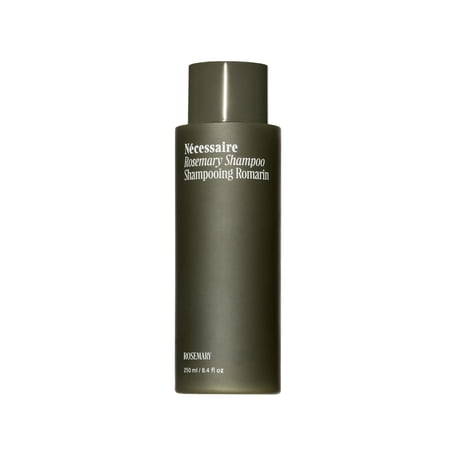

Nécessaire Rosemary Shampoo For Women and Men. Rosemary Oil Ceramides + Proteins For Stronger Hair. Good for All Hair Types/Textures. 250 ml / 8.4 fl oz
At a glance
Summary
This shampoo features a blend of gentle surfactants derived from coconut oil, such as Sodium Lauroyl Methyl Isethionate and Sodium Cocoyl Isethionate, which are known for their mild cleansing properties. It includes beneficial ingredients like rosemary extract and hydrolyzed proteins that support hair health. However, the presence of phenoxyethanol as a preservative and sodium chloride as a thickener slightly detracts from its overall safety profile.
Key ingredients 49
Sodium Cocoyl IsethionateVery Good
Sodium Cocoyl Isethionate is a gentle surfactant derived from coconut oil. It is known for its mild cleansing properties and ability to produce a rich, creamy lather. It is less likely to cause irritation compared to harsher surfactants.
Risks
There are minimal risks, though some individuals may experience mild irritation.
Benefits
It effectively cleanses the hair while maintaining moisture, making it suitable for sensitive scalps.
Sodium Lauroyl Methyl IsethionateGood
Sodium Lauroyl Methyl Isethionate is a mild surfactant derived from coconut oil. It is known for its gentle cleansing properties and ability to produce a creamy lather. It is less likely to irritate the skin compared to harsher surfactants.
Risks
There are minimal risks, though some individuals may experience mild irritation.
Benefits
It effectively cleanses the hair without stripping natural oils, making it suitable for sensitive scalps.
GlycerinGood
Glycerin is a humectant that attracts moisture to the hair and scalp. It helps to maintain hydration and improve the texture of hair. It is widely used in hair care products for its moisturizing properties.
Risks
There are minimal risks, though excessive use can lead to a sticky residue.
Benefits
It helps to keep the hair hydrated and soft, reducing dryness and frizz.
Rosmarinus Officinalis (Rosemary) Leaf ExtractGood
Rosemary Leaf Extract is known for its antioxidant and anti-inflammatory properties. It is used in hair care products to promote scalp health and stimulate hair growth. It also provides a natural fragrance.
Risks
There are minimal risks, though some individuals may experience allergic reactions.
Benefits
It helps to improve scalp circulation and may promote healthier hair growth.
Rosmarinus Officinalis (Rosemary) Leaf OilGood
Rosemary Leaf Oil is used for its antimicrobial and anti-inflammatory properties. It is believed to stimulate hair follicles and promote hair growth. It also provides a natural, refreshing scent.
Risks
There are minimal risks, though some individuals may experience skin irritation.
Benefits
It helps to improve scalp health and may enhance hair growth.
Rosmarinus Officinalis (Rosemary) Leaf WaterGood
Rosemary Leaf Water is used for its soothing and refreshing properties. It is derived from rosemary leaves and is believed to promote scalp health. It also provides a natural fragrance to the product.
Risks
There are minimal risks, though some individuals may experience allergic reactions.
Benefits
It helps to soothe the scalp and may promote healthier hair.
Hydrolyzed Jojoba ProteinGood
Hydrolyzed Jojoba Protein is used for its conditioning and strengthening properties. It is derived from jojoba oil and helps to improve the texture and manageability of hair. It is suitable for all hair types.
Risks
There are minimal risks associated with its use.
Benefits
It helps to strengthen and condition the hair, reducing breakage and improving shine.
Hydrolyzed Rice ProteinGood
Hydrolyzed Rice Protein is known for its ability to strengthen and volumize hair. It is derived from rice and helps to improve the elasticity and texture of hair. It is suitable for all hair types.
Risks
There are minimal risks associated with its use.
Benefits
It helps to strengthen hair and add volume, making it appear fuller and healthier.
Hydrolyzed Pea ProteinGood
Hydrolyzed Pea Protein is used for its conditioning and strengthening properties. It is derived from peas and helps to improve the texture and manageability of hair. It is suitable for all hair types.
Risks
There are minimal risks associated with its use.
Benefits
It helps to strengthen and condition the hair, reducing breakage and improving shine.
Hydrolyzed QuinoaGood
Hydrolyzed Quinoa is known for its ability to strengthen and protect hair. It is derived from quinoa and helps to improve the elasticity and texture of hair. It is suitable for all hair types.
Risks
There are minimal risks associated with its use.
Benefits
It helps to strengthen hair and protect it from environmental damage.
Hydrolyzed Vegetable ProteinGood
Hydrolyzed Vegetable Protein is used for its conditioning and strengthening properties. It is derived from various vegetables and helps to improve the texture and manageability of hair. It is suitable for all hair types.
Risks
There are minimal risks associated with its use.
Benefits
It helps to strengthen and condition the hair, reducing breakage and improving shine.
Ceramide AGGood
Ceramide AG is used for its ability to restore and maintain the natural protective barrier of hair. It helps to retain moisture and improve the overall health of hair. It is suitable for all hair types.
Risks
There are minimal risks associated with its use.
Benefits
It helps to strengthen the hair's natural barrier, reducing moisture loss and improving resilience.
Ceramide APGood
Ceramide AP is known for its ability to restore and maintain the natural protective barrier of hair. It helps to retain moisture and improve the overall health of hair. It is suitable for all hair types.
Risks
There are minimal risks associated with its use.
Benefits
It helps to strengthen the hair's natural barrier, reducing moisture loss and improving resilience.
Ceramide EOPGood
Ceramide EOP is used for its ability to restore and maintain the natural protective barrier of hair. It helps to retain moisture and improve the overall health of hair. It is suitable for all hair types.
Risks
There are minimal risks associated with its use.
Benefits
It helps to strengthen the hair's natural barrier, reducing moisture loss and improving resilience.
Ceramide NGGood
Ceramide NG is known for its ability to restore and maintain the natural protective barrier of hair. It helps to retain moisture and improve the overall health of hair. It is suitable for all hair types.
Risks
There are minimal risks associated with its use.
Benefits
It helps to strengthen the hair's natural barrier, reducing moisture loss and improving resilience.
Ceramide NPGood
Ceramide NP is used for its ability to restore and maintain the natural protective barrier of hair. It helps to retain moisture and improve the overall health of hair. It is suitable for all hair types.
Risks
There are minimal risks associated with its use.
Benefits
It helps to strengthen the hair's natural barrier, reducing moisture loss and improving resilience.
TocopherolGood
Tocopherol, also known as Vitamin E, is an antioxidant that helps to protect hair from environmental damage. It is used in hair care products to improve the health and appearance of hair. It is suitable for all hair types.
Risks
There are minimal risks associated with its use.
Benefits
It helps to protect hair from oxidative stress and improve overall hair health.
Linoleic AcidGood
Linoleic Acid is an essential fatty acid that helps to maintain the health of hair and scalp. It is used in hair care products for its moisturizing and conditioning properties. It is suitable for all hair types.
Risks
There are minimal risks associated with its use.
Benefits
It helps to nourish and condition the hair, improving its texture and appearance.
Linolenic AcidGood
Linolenic Acid is an essential fatty acid that helps to maintain the health of hair and scalp. It is used in hair care products for its moisturizing and conditioning properties. It is suitable for all hair types.
Risks
There are minimal risks associated with its use.
Benefits
It helps to nourish and condition the hair, improving its texture and appearance.
NiacinamideGood
Niacinamide, also known as Vitamin B3, is used for its conditioning and strengthening properties. It helps to improve the health and appearance of hair. It is suitable for all hair types.
Risks
There are minimal risks associated with its use.
Benefits
It helps to strengthen and condition the hair, improving its texture and appearance.
PanthenolGood
Panthenol, also known as Provitamin B5, is used for its moisturizing and conditioning properties. It helps to improve the texture and manageability of hair. It is suitable for all hair types.
Risks
There are minimal risks associated with its use.
Benefits
It helps to moisturize and condition the hair, reducing dryness and improving shine.
GluconolactoneGood
Beneficial ingredient — whole-food or functional value in this product class.
Risks
There are minimal risks associated with its use.
Benefits
It helps to condition the hair and maintain the stability of the shampoo.
Aqua/Water/EauNeutral
Water is a universal solvent used as a base in many cosmetic formulations. It helps dissolve other ingredients and facilitates their application. It is generally considered safe and non-reactive.
Risks
There are no significant risks associated with water in cosmetic formulations.
Benefits
Water helps in the even distribution of the product on hair and scalp.
Cocamidopropyl BetaineNeutral
Standard formulation ingredient — neither beneficial nor harmful at typical use.
Risks
In rare cases, it may cause allergic reactions or irritation.
Benefits
It helps to create a rich lather and improves the conditioning properties of the shampoo.
PropanediolNeutral
Propanediol is a glycol used as a solvent and skin-conditioning agent. It is derived from corn sugar and is considered a safer alternative to propylene glycol. It enhances the absorption of other ingredients.
Risks
There are minimal risks, though some individuals may experience mild irritation.
Benefits
It helps to improve the texture and spreadability of the product.
Sodium Methyl Oleoyl TaurateNeutral
Sodium Methyl Oleoyl Taurate is a mild surfactant used for its cleansing and foaming properties. It is derived from natural sources and is considered gentle on the skin and hair. It is often used in sulfate-free formulations.
Risks
There are minimal risks associated with its use.
Benefits
It provides gentle cleansing without stripping natural oils from the hair.
Sodium Methyl Cocoyl TaurateNeutral
Sodium Methyl Cocoyl Taurate is a mild surfactant derived from coconut oil. It is used for its ability to cleanse and foam without causing irritation. It is suitable for sensitive skin and hair.
Risks
There are minimal risks, though some individuals may experience mild irritation.
Benefits
It helps to cleanse the hair gently while maintaining moisture balance.
Glyceryl StearateNeutral
Glyceryl Stearate is an emulsifier that helps to blend oil and water-based ingredients. It is derived from glycerin and stearic acid and is commonly used in cosmetic formulations. It helps to stabilize the product and improve texture.
Risks
There are minimal risks associated with its use.
Benefits
It enhances the texture and consistency of the shampoo, making it easier to apply.
Acetyl Tetrapeptide-3Neutral
Acetyl Tetrapeptide-3 is a peptide used in hair care products for its potential to promote hair growth. It is believed to strengthen hair follicles and improve hair density. It is suitable for all hair types.
Risks
There are minimal risks associated with its use.
Benefits
It may help to promote healthier hair growth and improve hair density.
Acrylates Crosspolymer-4Neutral
Acrylates Crosspolymer-4 is used as a thickening agent in cosmetic formulations. It helps to improve the texture and stability of the product. It is generally considered safe for use in hair care products.
Risks
There are minimal risks associated with its use.
Benefits
It helps to improve the texture and consistency of the shampoo, making it easier to apply.
Butylene GlycolNeutral
Butylene Glycol is a solvent and humectant used in cosmetic formulations. It helps to improve the texture and spreadability of the product. It is generally considered safe for use in hair care products.
Risks
There are minimal risks, though some individuals may experience mild irritation.
Benefits
It helps to improve the texture and spreadability of the product.
CholesterolNeutral
Cholesterol is used in hair care products for its conditioning and moisturizing properties. It helps to improve the texture and manageability of hair. It is suitable for all hair types.
Risks
There are minimal risks associated with its use.
Benefits
It helps to condition and moisturize the hair, improving its texture and appearance.
Trifolium Pratense (Clover) Flower ExtractNeutral
Clover Flower Extract is used in hair care products for its potential to promote hair growth and improve scalp health. It is believed to have antioxidant and anti-inflammatory properties. It is suitable for all hair types.
Risks
There are minimal risks, though some individuals may experience allergic reactions.
Benefits
It may help to promote healthier hair growth and improve scalp health.
Citrus Aurantium Peel OilNeutral
Citrus Aurantium Peel Oil is used for its refreshing scent and potential antimicrobial properties. It is derived from the peel of bitter orange and is used in hair care products for its fragrance. It is suitable for all hair types.
Risks
There are minimal risks, though some individuals may experience skin irritation.
Benefits
It provides a refreshing scent and may have antimicrobial benefits.
Calcium GluconateNeutral
Calcium Gluconate is used as a conditioning agent in hair care products. It helps to improve the texture and manageability of hair. It is generally considered safe for use in cosmetic formulations.
Risks
There are minimal risks associated with its use.
Benefits
It helps to condition the hair, improving its texture and appearance.
Citric AcidNeutral
Citric Acid is used to adjust the pH of cosmetic formulations. It helps to maintain the stability and effectiveness of the product. It is generally considered safe for use in hair care products.
Risks
There are minimal risks, though excessive use can lead to irritation.
Benefits
It helps to maintain the pH balance of the shampoo, ensuring its effectiveness.
DextranNeutral
Dextran is used as a thickening agent in cosmetic formulations. It helps to improve the texture and stability of the product. It is generally considered safe for use in hair care products.
Risks
There are minimal risks associated with its use.
Benefits
It helps to improve the texture and consistency of the shampoo, making it easier to apply.
Guar Hydroxypropyltrimonium ChlorideNeutral
Guar Hydroxypropyltrimonium Chloride is used as a conditioning agent in hair care products. It helps to improve the texture and manageability of hair. It is generally considered safe for use in cosmetic formulations.
Risks
There are minimal risks associated with its use.
Benefits
It helps to condition the hair, improving its texture and appearance.
Sucrose DistearateNeutral
Sucrose Distearate is used as an emulsifier in cosmetic formulations. It helps to blend oil and water-based ingredients and improve the texture of the product. It is generally considered safe for use in hair care products.
Risks
There are minimal risks associated with its use.
Benefits
It helps to improve the texture and consistency of the shampoo, making it easier to apply.
Dipropylene GlycolNeutral
Dipropylene Glycol is used as a solvent and humectant in cosmetic formulations. It helps to improve the texture and spreadability of the product. It is generally considered safe for use in hair care products.
Risks
There are minimal risks, though some individuals may experience mild irritation.
Benefits
It helps to improve the texture and spreadability of the product.
Sodium CarbonateNeutral
Sodium Carbonate is used to adjust the pH of cosmetic formulations. It helps to maintain the stability and effectiveness of the product. It is generally considered safe for use in hair care products.
Risks
There are minimal risks, though excessive use can lead to irritation.
Benefits
It helps to maintain the pH balance of the shampoo, ensuring its effectiveness.
Sodium ChlorideNeutral
Standard formulation ingredient — neither beneficial nor harmful at typical use.
Risks
It may cause dryness and irritation to the scalp and hair, especially with frequent use.
Benefits
It helps to thicken the product, improving its texture and consistency.
Sodium HydroxideNeutral
Sodium Hydroxide is used to adjust the pH of cosmetic formulations. It helps to maintain the stability and effectiveness of the product. It is generally considered safe for use in hair care products.
Risks
There are minimal risks, though excessive use can lead to irritation.
Benefits
It helps to maintain the pH balance of the shampoo, ensuring its effectiveness.
Sodium BenzoateBad
Synthetic preservative that can form benzene in the presence of vitamin C.
Risks
There are minimal risks, though some individuals may experience mild irritation.
Benefits
It helps to preserve the product and prevent microbial growth.
PhenoxyethanolBad
Phenoxyethanol is used as a preservative in cosmetic formulations. It helps to prevent the growth of bacteria and mold, extending the shelf life of the product. However, it can cause skin irritation and allergic reactions in some individuals.
Risks
It may cause skin irritation and allergic reactions, especially in sensitive individuals.
Benefits
It helps to preserve the product and prevent microbial growth.
Potassium SorbateBad
Synthetic preservative — flagged in daily-use products.
Risks
There are minimal risks, though some individuals may experience mild irritation.
Benefits
It helps to preserve the product and prevent microbial growth.
Acrylates/C10-30 Alkyl Acrylate CrosspolymerBad
Processed additive flagged under Scout's ingredient doctrine.
Risks
There are minimal risks associated with its use.
Benefits
It helps to improve the texture and consistency of the shampoo, making it easier to apply.
LimoneneBad
Processed additive flagged under Scout's ingredient doctrine.
Risks
There are minimal risks, though some individuals may experience skin irritation.
Benefits
It provides a refreshing scent and may have antimicrobial benefits.
LinaloolBad
Processed additive flagged under Scout's ingredient doctrine.
Risks
There are minimal risks, though some individuals may experience skin irritation.
Benefits
It provides a pleasant scent and may have antimicrobial benefits.
Get the full breakdown in the Scout appTake Scout shopping
Scan any product to see lab results, healthy alternatives, and your personalized analysis.
Download on theApp Store GET IT ONGoogle PlayAmazon pricing & content
Amazon price as of . Product prices and availability are accurate as of the date/time indicated and are subject to change. Any price and availability information displayed on Amazon.com at the time of purchase will apply to the purchase of this product.
CERTAIN CONTENT THAT APPEARS ON THIS SITE COMES FROM AMAZON. THIS CONTENT IS PROVIDED “AS IS” AND IS SUBJECT TO CHANGE OR REMOVAL AT ANY TIME.