
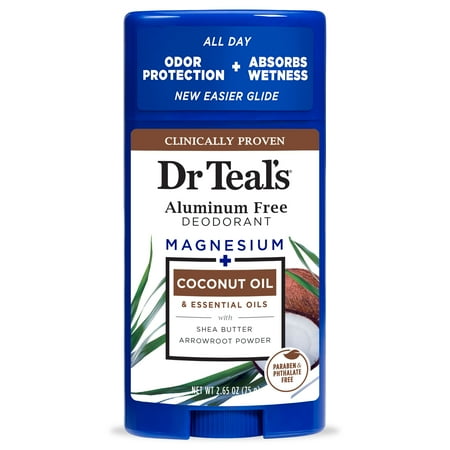
Dr Teal s Aluminum Free Deodorant Coconut Oil with Essential Oils 2.65 oz
Summary
This deodorant is aluminum-free, which is a significant positive factor for safety. It contains coconut oil and essential oils, which are beneficial natural ingredients. However, the product is processed and may include some synthetic components, which slightly lowers its overall rating compared to completely natural alternatives.
At a glance
Key ingredients 19
MAGNESIUM HYDROXIDE
Magnesium hydroxide is a gentle and effective natural odor neutralizer. It works by raising the pH of the skin, which inhibits the growth of odor-causing bacteria. This makes it a popular choice in natural deodorants.
Risks
There are minimal risks associated with magnesium hydroxide when used in deodorants.
Benefits
It provides a non-irritating alternative to baking soda for odor control.
MARANTA ARUNDINACEA ROOT POWDER (ARROWROOT)
Arrowroot powder is used for its moisture-absorbing properties. It helps to keep the underarm area dry by absorbing sweat. This makes it a beneficial ingredient in deodorants.
Risks
There are no significant risks associated with arrowroot powder in topical applications.
Benefits
It is a natural ingredient that helps to absorb moisture and reduce wetness.
COCOS NUCIFERA (COCONUT) OIL
Coconut oil is known for its moisturizing and antimicrobial properties. It helps to nourish the skin and can reduce the growth of bacteria that cause odor. This makes it a valuable ingredient in deodorants.
Risks
Some individuals may experience skin sensitivity or allergic reactions to coconut oil.
Benefits
It provides natural hydration and has antibacterial effects.
STEARYL ALCOHOL
Stearyl alcohol is a fatty alcohol used as an emollient and thickener. It helps to stabilize the deodorant formula and provides a smooth application. It is generally considered safe for use in cosmetics.
Risks
There is a low risk of skin irritation, particularly for those with sensitive skin.
Benefits
It helps to improve the texture and consistency of the product.
CAPRYLIC/CAPRIC TRIGLYCERIDE
Caprylic/capric triglyceride is derived from coconut oil and glycerin. It is used as an emollient and helps to disperse active ingredients evenly. It is well-tolerated by most skin types.
Risks
There are minimal risks associated with this ingredient.
Benefits
It enhances the spreadability and absorption of the product.
HYDROGENATED CASTOR OIL
Hydrogenated castor oil is used as an emollient and thickening agent. It helps to provide a smooth texture and consistency to the deodorant. It is generally considered safe for use in cosmetics.
Risks
There is a low risk of skin irritation for sensitive individuals.
Benefits
It contributes to the product's stability and application.
SODIUM BICARBONATE (BAKING SODA)
Baking soda is a common natural deodorizer that neutralizes odors by balancing pH levels. It is effective in controlling odor but can be irritating to some skin types.
Risks
It may cause irritation or rash in sensitive individuals due to its alkaline nature.
Benefits
It is a powerful natural deodorizer that helps to control odor effectively.
POLYGLYCERYL-3 BEESWAX
Polyglyceryl-3 beeswax is used as an emulsifier and stabilizer in cosmetic formulations. It helps to blend oil and water components and provides a smooth application. It is derived from beeswax and is considered safe.
Risks
There are minimal risks associated with this ingredient.
Benefits
It enhances the texture and stability of the product.
BUTYROSPERMUM PARKII (SHEA) BUTTER
Shea butter is a natural fat extracted from the nuts of the shea tree. It is known for its moisturizing and anti-inflammatory properties, making it beneficial for soothing and nourishing the skin.
Risks
There is a low risk of allergic reactions, particularly for those with nut allergies.
Benefits
It provides deep hydration and helps to soothe irritated skin.
ZINC RICINOLEATE
Zinc ricinoleate is used as an odor absorber in deodorants. It traps and absorbs odor molecules, reducing unpleasant smells. It is considered safe for use in personal care products.
Risks
There are minimal risks associated with zinc ricinoleate.
Benefits
It effectively absorbs and neutralizes odors.
FRAGRANCE (PARFUM)
Fragrance is used to provide a pleasant scent to the product. However, it can be a mixture of various chemicals, some of which may cause irritation or allergic reactions.
Risks
Fragrance can cause skin irritation and allergic reactions in sensitive individuals.
Benefits
It enhances the sensory experience of the product.
EUCALYPTUS GLOBULUS LEAF EXTRACT
Eucalyptus leaf extract is known for its antimicrobial and refreshing properties. It helps to reduce odor-causing bacteria and provides a cooling sensation.
Risks
There is a low risk of skin irritation for sensitive individuals.
Benefits
It offers natural antimicrobial benefits and a refreshing scent.
MENTHA VIRIDIS (SPEARMINT) EXTRACT
Spearmint extract is used for its refreshing and antimicrobial properties. It helps to mask body odor and provides a cooling effect on the skin.
Risks
There is a low risk of skin irritation for sensitive individuals.
Benefits
It provides a natural, refreshing scent and antimicrobial benefits.
MAGNESIUM CHLORIDE
Magnesium chloride is used for its potential deodorizing properties. It helps to neutralize odors and may provide additional skin benefits.
Risks
There are minimal risks associated with magnesium chloride in topical applications.
Benefits
It may help to neutralize odors and support skin health.
MAGNESIUM SULFATE (EPSOM SALT)
Magnesium sulfate, commonly known as Epsom salt, is used for its soothing and anti-inflammatory properties. It can help to calm irritated skin and reduce inflammation.
Risks
There are minimal risks associated with magnesium sulfate in topical applications.
Benefits
It provides soothing and anti-inflammatory benefits to the skin.
SIMMONDSIA CHINENSIS (JOJOBA) SEED OIL
Jojoba oil is a natural emollient that closely resembles the skin's natural oils. It helps to moisturize and protect the skin without clogging pores.
Risks
There are minimal risks associated with jojoba oil.
Benefits
It provides hydration and helps to balance the skin's natural oils.
GLYCERYL CAPRYLATE
Glyceryl caprylate is used as an emulsifier and skin conditioning agent. It helps to stabilize formulations and provides antimicrobial properties.
Risks
There are minimal risks associated with glyceryl caprylate.
Benefits
It enhances product stability and provides antimicrobial benefits.
GLYCERYL UNDECYLENATE
Glyceryl undecylenate is used for its antimicrobial properties. It helps to inhibit the growth of odor-causing bacteria in deodorants.
Risks
There are minimal risks associated with glyceryl undecylenate.
Benefits
It provides antimicrobial benefits, helping to control odor.
MALTODEXTRIN
Maltodextrin is used as a binding agent and stabilizer in cosmetic formulations. It helps to improve the texture and consistency of the product.
Risks
There are minimal risks associated with maltodextrin in topical applications.
Benefits
It enhances the texture and stability of the product.
Processing
Processed Foods
Get the full breakdown in the Scout app
Scan any product to see lab results, healthy alternatives, and your personalized analysis.
Download on theApp Store