
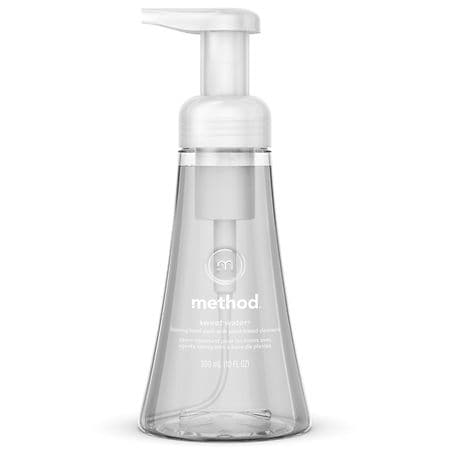




Method Foaming Hand Soap Sweet Water 10 Ounce Bottle
Analysis updated August 2026 · How Scout scores
At a glance
Summary
This hand soap contains beneficial ingredients like glycerin, aloe extract, and tocopheryl acetate, which provide moisturizing and antioxidant benefits. However, the presence of sodium lauryl sulfate, a harsh surfactant, can cause skin irritation and dryness, which impacts the overall ingredient quality. The product is moderately processed, which also influences its rating.
Key ingredients 7
Aloe Barbadensis ExtractVery Good
Aloe Barbadensis Extract is known for its soothing and moisturizing properties. It is often used to calm irritated skin and provide hydration. It is a natural ingredient with a long history of safe use.
Risks
Rarely, it may cause allergic reactions in sensitive individuals.
Benefits
Provides soothing relief and hydration to the skin.
Tocopheryl AcetateGood
Tocopheryl Acetate is a form of Vitamin E used for its antioxidant properties. It helps protect the skin from damage caused by free radicals. It is commonly used in skincare products for its protective benefits.
Risks
Generally considered safe, though high concentrations may cause skin irritation.
Benefits
Acts as an antioxidant and helps maintain skin health.
WaterNeutral
Water is a universal solvent and is used as a base in many products. It helps dissolve other ingredients and facilitates their application. It is generally considered safe and non-reactive.
Risks
There are no significant risks associated with water in this context.
Benefits
Water hydrates and helps in the even distribution of other ingredients.
Cocamidopropyl BetaineNeutral
Cocamidopropyl Betaine is a mild surfactant derived from coconut oil. It is used to reduce irritation caused by other surfactants. It is generally considered safe for use in personal care products.
Risks
May cause allergic reactions in some individuals.
Benefits
Helps to create a rich lather and is less irritating than harsher surfactants.
GlycerinNeutral
Standard formulation ingredient — neither beneficial nor harmful at typical use.
Risks
There are minimal risks associated with glycerin in topical applications.
Benefits
Helps to keep the skin hydrated and soft.
Citric AcidNeutral
Citric Acid is used to adjust the pH of products and as a preservative. It is naturally found in citrus fruits and is generally recognized as safe. It helps maintain the stability and effectiveness of the product.
Risks
May cause irritation if used in high concentrations.
Benefits
Helps to stabilize the product and maintain its pH balance.
Sodium Lauryl SulfateVery Bad
Sodium Lauryl Sulfate is a surfactant used for its cleaning and foaming properties. It can be harsh on the skin, causing irritation or dryness. It is often criticized for its potential to strip natural oils from the skin.
Risks
May cause skin irritation, especially in sensitive individuals.
Benefits
Effective in removing dirt and oil due to its surfactant properties.
Processing
Processed Foods
Get the full breakdown in the Scout appTake Scout shopping
Scan any product to see lab results, healthy alternatives, and your personalized analysis.
Download on theApp Store GET IT ONGoogle PlayAmazon pricing & content
Amazon price as of . Product prices and availability are accurate as of the date/time indicated and are subject to change. Any price and availability information displayed on Amazon.com at the time of purchase will apply to the purchase of this product.
CERTAIN CONTENT THAT APPEARS ON THIS SITE COMES FROM AMAZON. THIS CONTENT IS PROVIDED “AS IS” AND IS SUBJECT TO CHANGE OR REMOVAL AT ANY TIME.