
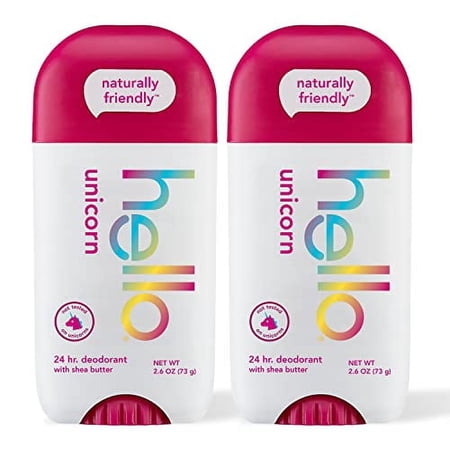
hello Unicorn Aluminum Free Deodorant for Women Girls Safe for Kids Dermatologically tested Natural Fragrance 2 Pack
Analysis updated August 2026 · How Scout scores
At a glance
Summary
This deodorant is aluminum-free and contains beneficial natural ingredients like arrowroot powder, coconut oil, and shea butter, which are known for their skin-friendly properties. However, the presence of synthetic fragrance, which can cause skin irritation or allergic reactions, slightly lowers its score. Despite being processed, the product maintains a relatively clean ingredient list with only one notable synthetic component.
Key ingredients 11
MARANTA ARUNDINACEA ROOT POWDERGood
Maranta arundinacea root powder, commonly known as arrowroot powder, is used for its moisture-absorbing properties. It helps keep the skin dry and reduces the risk of bacterial growth. This ingredient is natural and gentle on the skin.
Risks
There are minimal risks associated with arrowroot powder, though some individuals may experience mild irritation.
Benefits
Arrowroot powder effectively absorbs moisture, making it a beneficial ingredient in deodorants.
COCOS NUCIFERA (COCONUT) OILGood
Coconut oil is known for its moisturizing and antimicrobial properties. It helps nourish the skin and can reduce the presence of odor-causing bacteria. This natural oil is widely used in personal care products for its skin-friendly benefits.
Risks
Coconut oil can cause breakouts or irritation in individuals with sensitive skin.
Benefits
It provides hydration and has natural antibacterial effects, which are beneficial in deodorant formulations.
BUTYROSPERMUM PARKII (SHEA) BUTTERGood
Shea butter is a natural fat extracted from the nuts of the shea tree. It is known for its moisturizing and anti-inflammatory properties, making it beneficial for soothing and nourishing the skin. Shea butter is a popular ingredient in skincare products due to its rich texture and skin benefits.
Risks
There is a low risk of allergic reactions, particularly in individuals with nut allergies.
Benefits
It provides deep hydration and can help soothe irritated skin, making it ideal for use in deodorants.
SODIUM BICARBONATEGood
Sodium bicarbonate, commonly known as baking soda, is an effective natural odor neutralizer. It helps maintain a neutral pH and reduces the growth of odor-causing bacteria. This ingredient is widely used in natural deodorants for its efficacy in controlling odor.
Risks
Some individuals may experience skin irritation or sensitivity to baking soda.
Benefits
It effectively neutralizes odors and is a key ingredient in natural deodorant formulations.
VITIS VINIFERA (GRAPE) SEED OILGood
Grape seed oil is a lightweight oil known for its antioxidant properties and ability to moisturize the skin. It is rich in vitamin E and essential fatty acids, which help nourish and protect the skin. This oil is commonly used in skincare products for its beneficial effects on skin health.
Risks
There is a low risk of allergic reactions, though it is generally well-tolerated.
Benefits
It provides antioxidant protection and helps maintain skin hydration.
TOCOPHEROLGood
Tocopherol, or vitamin E, is a powerful antioxidant that helps protect the skin from oxidative stress. It is commonly used in skincare products to enhance skin health and stability of the formulation. Tocopherol is well-regarded for its skin-conditioning properties.
Risks
There are minimal risks, though high concentrations may cause skin irritation in sensitive individuals.
Benefits
It provides antioxidant benefits and helps maintain the integrity of the product.
CAPRYLIC/CAPRIC TRIGLYCERIDENeutral
Caprylic/capric triglyceride is a mixed triester derived from coconut oil and glycerin. It is used as an emollient and helps improve the spreadability of the product. This ingredient is generally considered safe and non-irritating.
Risks
There are minimal risks, though it may cause mild irritation in sensitive individuals.
Benefits
It enhances the texture and application of the deodorant without clogging pores.
STEARYL ALCOHOLNeutral
Stearyl alcohol is a fatty alcohol used as an emollient and thickener in cosmetic formulations. It helps stabilize the product and provides a smooth application. This ingredient is generally considered safe for use in personal care products.
Risks
It may cause mild irritation or allergic reactions in some individuals.
Benefits
Stearyl alcohol helps improve the texture and consistency of the deodorant.
SODIUM STEARATENeutral
Sodium stearate is a sodium salt of stearic acid used as a thickener and emulsifier in cosmetic products. It helps stabilize the formulation and provides a smooth texture. This ingredient is generally considered safe for use in personal care products.
Risks
There are minimal risks, though it may cause mild irritation in sensitive individuals.
Benefits
It contributes to the stability and consistency of the deodorant.
CITRIC ACIDNeutral
Citric acid is used in cosmetic formulations to adjust the pH and act as a preservative. It helps maintain the stability and effectiveness of the product. This ingredient is generally considered safe for use in personal care products.
Risks
Citric acid can cause skin irritation or allergic reactions in some individuals.
Benefits
It helps maintain the pH balance and stability of the deodorant.
FRAGRANCEVery Bad
Fragrance in personal care products can be a mixture of various chemicals, some of which may cause skin irritation or allergic reactions. Synthetic fragrances are often criticized for their potential to cause endocrine disruption. The exact composition of 'fragrance' is typically undisclosed, leading to concerns about transparency and safety.
Risks
Fragrances can cause allergic reactions and may contain phthalates, which are linked to reproductive and organ damage.
Benefits
Fragrances can enhance the sensory experience of using the product, though natural alternatives are preferred.
Processing
Processed Foods
Get the full breakdown in the Scout appTake Scout shopping
Scan any product to see lab results, healthy alternatives, and your personalized analysis.
Download on theApp Store GET IT ONGoogle PlayAmazon pricing & content
Amazon price as of . Product prices and availability are accurate as of the date/time indicated and are subject to change. Any price and availability information displayed on Amazon.com at the time of purchase will apply to the purchase of this product.
CERTAIN CONTENT THAT APPEARS ON THIS SITE COMES FROM AMAZON. THIS CONTENT IS PROVIDED “AS IS” AND IS SUBJECT TO CHANGE OR REMOVAL AT ANY TIME.