
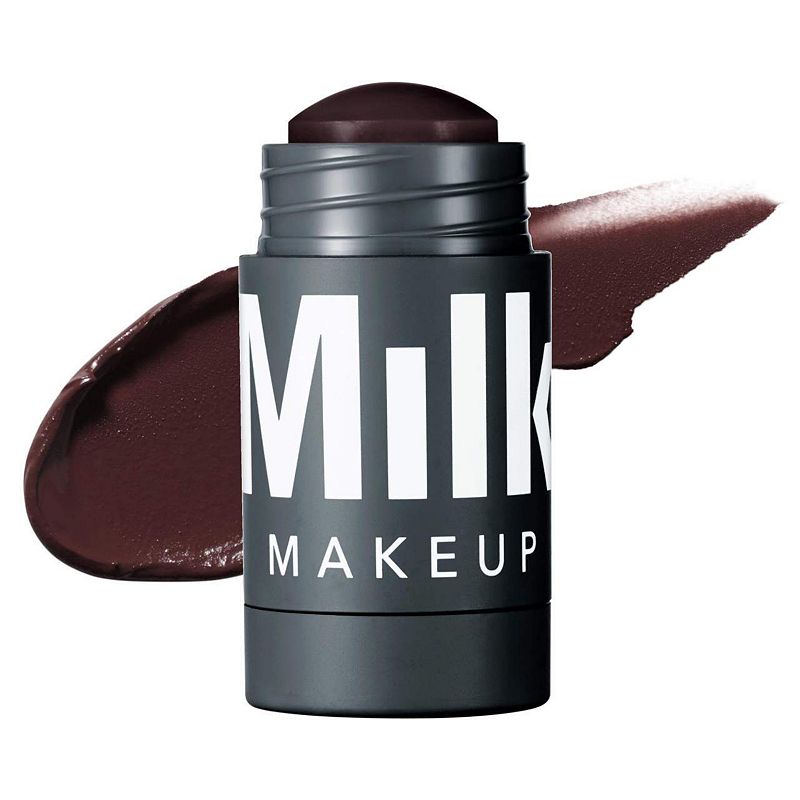
MILK Makeup Sculpt Cream Contour Stick - Buildable Cool-Toned Color Matte Finish - 0.19 Oz (Sizzle)
Analysis updated August 2026 · How Scout scores
At a glance
Summary
This product contains a variety of beneficial natural oils and waxes, such as castor seed oil, sunflower seed oil, and mango seed butter, which are known for their moisturizing and nourishing properties. However, the presence of 'fragrance' as an ingredient introduces a potential risk for skin irritation and allergic reactions, which slightly lowers the overall safety profile. The product is processed, but the use of mostly natural ingredients helps maintain a relatively high score.
Key ingredients 21
Ricinus Communis (Castor) Seed OilVery Good
Castor seed oil is a natural oil known for its moisturizing properties. It helps to nourish and hydrate the skin, making it a beneficial ingredient in cosmetics. Its emollient nature makes it suitable for dry skin.
Risks
There is a low risk of allergic reactions, but it is generally considered safe for topical use.
Benefits
It provides deep hydration and can help soothe irritated skin.
Helianthus Annuus (Sunflower) Seed OilVery Good
Sunflower seed oil is a natural oil rich in vitamins A, D, and E. It is known for its moisturizing and skin barrier-enhancing properties. It is suitable for all skin types, including sensitive skin.
Risks
There is a low risk of allergic reactions, but it is generally safe for topical use.
Benefits
It helps to maintain the skin's natural barrier and provides antioxidant protection.
Mangifera Indica (Mango) Seed ButterVery Good
Mango seed butter is a natural butter known for its moisturizing and nourishing properties. It helps to hydrate and soften the skin, making it a beneficial ingredient in cosmetics. It is rich in fatty acids and vitamins.
Risks
There is a low risk of allergic reactions, but it is generally considered safe for topical use.
Benefits
It provides deep hydration and helps to improve skin elasticity.
Prunus Armeniaca (Apricot) Kernel OilVery Good
Apricot kernel oil is a natural oil known for its moisturizing and nourishing properties. It helps to hydrate and soften the skin, making it a beneficial ingredient in cosmetics. It is rich in vitamins and fatty acids.
Risks
There is a low risk of allergic reactions, but it is generally considered safe for topical use.
Benefits
It provides deep hydration and helps to improve skin texture.
Helianthus Annuus (Sunflower) Seed WaxGood
Sunflower seed wax is a natural wax used as a thickening agent in cosmetics. It helps to stabilize formulations and improve texture. It is derived from sunflower oil and is considered safe for use.
Risks
There are no significant risks associated with sunflower seed wax.
Benefits
It provides a smooth texture and helps to stabilize cosmetic formulations.
Coconut AlkanesGood
Coconut alkanes are derived from coconut oil and are used as a natural alternative to silicones. They provide a lightweight, non-greasy feel to cosmetic products. They are biodegradable and considered safe for use.
Risks
There are no significant risks associated with coconut alkanes.
Benefits
They improve the texture and spreadability of products without leaving a greasy residue.
KaolinGood
Beneficial ingredient — whole-food or functional value in this product class.
Risks
There is a low risk of skin dryness with excessive use.
Benefits
It helps to control shine and provides a smooth finish to the skin.
Citrus Aurantium Dulcis (Orange) Peel WaxGood
Orange peel wax is a natural wax used as a thickening agent and emollient in cosmetics. It helps to improve the texture and stability of products. It is derived from orange peels and is considered safe for use.
Risks
There are no significant risks associated with orange peel wax.
Benefits
It provides a smooth texture and helps to stabilize cosmetic formulations.
Thymus Vulgaris (Thyme) ExtractGood
Thyme extract is a botanical ingredient known for its antioxidant and antimicrobial properties. It helps to protect the skin from environmental stressors and reduce the risk of microbial contamination. It is considered safe for use in cosmetics.
Risks
There is a low risk of skin irritation, but it is generally considered safe for topical use.
Benefits
It provides antioxidant protection and helps to maintain skin health.
Tocopheryl AcetateGood
Tocopheryl acetate is a form of vitamin E used in cosmetics for its antioxidant properties. It helps to protect the skin from free radical damage and improve skin texture. It is considered safe for use in cosmetics.
Risks
There is a low risk of skin irritation, but it is generally considered safe for topical use.
Benefits
It provides antioxidant protection and helps to improve skin texture.
Coco-Caprylate/CaprateGood
Coco-caprylate/caprate is an ester derived from coconut oil used as an emollient in cosmetics. It provides a lightweight, non-greasy feel to products. It is considered safe for use in cosmetics.
Risks
There are no significant risks associated with coco-caprylate/caprate.
Benefits
It improves the texture and spreadability of products without leaving a greasy residue.
C12-15 Alkyl BenzoateNeutral
C12-15 Alkyl Benzoate is an ester used as an emollient and texture enhancer in cosmetics. It helps to improve the spreadability of products. It is generally considered safe for use in cosmetics.
Risks
There is a minimal risk of skin irritation, but it is rare.
Benefits
It enhances the texture and feel of cosmetic products, making them more pleasant to apply.
SilicaNeutral
Silica is a mineral used in cosmetics for its oil-absorbing properties. It helps to mattify the skin and improve the texture of products. It is generally considered safe for use in cosmetics.
Risks
Inhalation of silica dust can be harmful, but this is not a concern in cosmetic formulations.
Benefits
It helps to control shine and provides a smooth finish to the skin.
Euphorbia Cerifera (Candelilla) WaxNeutral
Standard formulation ingredient — neither beneficial nor harmful at typical use.
Risks
There are no significant risks associated with candelilla wax.
Benefits
It provides a smooth texture and helps to stabilize cosmetic formulations.
Hydrogenated Vegetable OilNeutral
Hydrogenated vegetable oil is used in cosmetics as an emollient and thickening agent. It helps to improve the texture and stability of products. It is generally considered safe for use in cosmetics.
Risks
There is a low risk of skin irritation, but it is generally considered safe for topical use.
Benefits
It provides a smooth texture and helps to stabilize cosmetic formulations.
Bis-Stearyl DimethiconeNeutral
Bis-stearyl dimethicone is a silicone used in cosmetics for its conditioning and smoothing properties. It helps to improve the texture and feel of products. It is considered safe for use in cosmetics.
Risks
There is a low risk of skin irritation, but it is generally considered safe for topical use.
Benefits
It provides a smooth texture and helps to improve the feel of cosmetic products.
Sorbitan TristearateNeutral
Sorbitan tristearate is an emulsifier used in cosmetics to stabilize formulations. It helps to blend oil and water-based ingredients. It is considered safe for use in cosmetics.
Risks
There is a low risk of skin irritation, but it is generally considered safe for topical use.
Benefits
It helps to stabilize cosmetic formulations and improve texture.
Isopropyl Titanium TriisostearateNeutral
Isopropyl titanium triisostearate is used in cosmetics as a pigment dispersant and binding agent. It helps to improve the texture and stability of products. It is considered safe for use in cosmetics.
Risks
There is a low risk of skin irritation, but it is generally considered safe for topical use.
Benefits
It helps to stabilize cosmetic formulations and improve texture.
Titanium Dioxide (CI 77891)Neutral
Titanium dioxide is a mineral used in cosmetics as a pigment and UV filter. It helps to provide coverage and sun protection. It is generally considered safe for use in cosmetics.
Risks
Inhalation of titanium dioxide dust can be harmful, but this is not a concern in cosmetic formulations.
Benefits
It provides coverage and sun protection in cosmetic products.
Iron Oxides (CI 77491, CI 77492, CI 77499)Neutral
Iron oxides are pigments used in cosmetics to provide color. They are stable and non-toxic, making them suitable for use in cosmetics. They are generally considered safe for use in cosmetics.
Risks
There are no significant risks associated with iron oxides.
Benefits
They provide stable and non-toxic color to cosmetic products.
Fragrance (Parfum)Very Bad
Fragrance is used in cosmetics to provide a pleasant scent. However, it can cause skin irritation and allergic reactions in sensitive individuals. It is considered a potential irritant in cosmetics.
Risks
There is a risk of skin irritation and allergic reactions, especially in sensitive individuals.
Benefits
It provides a pleasant scent to cosmetic products.
Get the full breakdown in the Scout appTake Scout shopping
Scan any product to see lab results, healthy alternatives, and your personalized analysis.
Download on theApp Store GET IT ONGoogle PlayAmazon pricing & content
Amazon price as of . Product prices and availability are accurate as of the date/time indicated and are subject to change. Any price and availability information displayed on Amazon.com at the time of purchase will apply to the purchase of this product.
CERTAIN CONTENT THAT APPEARS ON THIS SITE COMES FROM AMAZON. THIS CONTENT IS PROVIDED “AS IS” AND IS SUBJECT TO CHANGE OR REMOVAL AT ANY TIME.